Knowledge What is the function of high-vacuum systems in CVD? Precision Control for Superior Oxidation Catalysts
Author avatar

Tech Team · Kintek Solution

Updated 2 days ago

What is the function of high-vacuum systems in CVD? Precision Control for Superior Oxidation Catalysts


High-vacuum systems act as the primary control mechanism in the Chemical Vapor Deposition (CVD) process, essential for achieving high-performance oxidation catalysts. Their function is to create and maintain a contamination-free environment that facilitates the precise transport of precursor vapors to the support material. By eliminating atmospheric interference, these systems allow operators to strictly regulate the deposition rate and the density of metal precursors on surfaces like carbon fibers or oxides.

By removing gas interference, high-vacuum systems enable nanometer-scale precision in catalyst design. They prevent the random clumping of particles, ensuring that active sites are distributed uniformly rather than agglomerating into ineffective clusters.

Mechanisms of Control in CVD

To understand the value of high-vacuum systems, one must look beyond simple air removal. The vacuum level is an active variable used to dictate the physical structure of the catalyst.

Ensuring Contamination-Free Transport

The primary function of the vacuum is to evacuate background gases that could contaminate the reaction.

This creates a "clean" pathway for precursor vapors to travel from their source to the substrate. In this environment, the chemical integrity of the precursor is preserved until it makes contact with the support material.

Regulating Deposition Density

Vacuum pressure is directly correlated to how precursor molecules land on the support.

By modulating the vacuum level, operators can control the distribution density of the metal precursors. This ensures that the active metal components are spread across the support surface according to exact specifications, rather than accumulating unevenly.

Preventing Unintended Agglomeration

In non-vacuum or low-vacuum environments, gas interference can cause particles to collide and stick together before reaching the substrate.

High-vacuum systems eliminate this interference, preventing the unintended agglomeration of particles. This results in discrete, well-defined active sites rather than large, ineffective masses of material.

Understanding the Trade-offs

While high-vacuum CVD offers superior control, it introduces specific operational constraints that must be managed.

Complexity vs. Precision

The primary trade-off in using high-vacuum systems is the requirement for rigorous environmental maintenance. Achieving nanometer-scale precision requires ensuring the vacuum seal is absolute; any leak introduces gas interference that immediately degrades the quality of the deposition.

The Cost of Agglomeration

If the vacuum level fluctuates or is insufficient, the system loses its ability to prevent particle clumping.

This loss of control leads to "dead" active sites—areas where the catalyst material is too thick to be effective. Relying on high vacuum is a commitment to precision over the simpler, but less controlled, conditions found in atmospheric deposition methods.

Making the Right Choice for Your Goal

The use of high-vacuum CVD is driven by the need for specific architectural properties in your oxidation catalyst.

  • If your primary focus is Maximizing Active Surface Area: Prioritize high vacuum to prevent particle agglomeration and ensure metal precursors remain dispersed as individual active sites.
  • If your primary focus is Catalyst Uniformity: Use strict vacuum controls to regulate the deposition rate, ensuring an even distribution density across the entire support material.

High-vacuum systems transform CVD from a simple coating process into a precision engineering tool for nanometer-scale catalyst synthesis.

Summary Table:

Key Function Benefit to Catalyst Mechanism of Action
Contamination Removal High Chemical Integrity Evacuates background gases to create a clean reaction pathway.
Density Regulation Uniform Surface Distribution Modulates pressure to control the landing density of precursors.
Agglomeration Prevention Maximized Active Surface Area Eliminates gas interference to prevent particles from clumping.
Precision Deposition Nanometer-Scale Accuracy Enables strict regulation of deposition rates on the substrate.

Elevate Your Catalyst Synthesis with KINTEK Precision

Unlock nanometer-scale precision in your chemical vapor deposition processes with KINTEK’s advanced laboratory solutions. Whether you are engineering high-performance oxidation catalysts or developing next-generation materials, our comprehensive range of CVD and PECVD systems, high-temperature furnaces, and vacuum solutions provide the absolute control required to prevent agglomeration and ensure uniform deposition.

From high-temperature high-pressure reactors to specialized ceramics and crucibles, KINTEK supports researchers and industrial professionals in achieving superior material density and active surface area. Partner with the experts in lab equipment—Contact KINTEK today to optimize your deposition workflow!

References

  1. Md. Eaqub Ali, Sharifah Bee Abd Hamid. Heterogeneous Metal Catalysts for Oxidation Reactions. DOI: 10.1155/2014/192038

This article is also based on technical information from Kintek Solution Knowledge Base .

Related Products

People Also Ask

Related Products

Customer Made Versatile CVD Tube Furnace Chemical Vapor Deposition Chamber System Equipment

Customer Made Versatile CVD Tube Furnace Chemical Vapor Deposition Chamber System Equipment

Get your exclusive CVD furnace with KT-CTF16 Customer Made Versatile Furnace. Customizable sliding, rotating, and tilting functions for precise reactions. Order now!

HFCVD Machine System Equipment for Drawing Die Nano-Diamond Coating

HFCVD Machine System Equipment for Drawing Die Nano-Diamond Coating

The nano-diamond composite coating drawing die uses cemented carbide (WC-Co) as the substrate, and uses the chemical vapor phase method ( CVD method for short ) to coat the conventional diamond and nano-diamond composite coating on the surface of the inner hole of the mold.

Inclined Rotary Plasma Enhanced Chemical Vapor Deposition PECVD Equipment Tube Furnace Machine

Inclined Rotary Plasma Enhanced Chemical Vapor Deposition PECVD Equipment Tube Furnace Machine

Upgrade your coating process with PECVD coating equipment. Ideal for LED, power semiconductors, MEMS and more. Deposits high-quality solid films at low temps.

304 316 Stainless Steel Vacuum Ball Valve Stop Valve for High Vacuum Systems

304 316 Stainless Steel Vacuum Ball Valve Stop Valve for High Vacuum Systems

Discover 304/316 stainless steel vacuum ball valves, Ideal for high vacuum systems, Ensure precise control and durability. Explore now!

Vacuum Induction Melting Spinning System Arc Melting Furnace

Vacuum Induction Melting Spinning System Arc Melting Furnace

Develop metastable materials with ease using our Vacuum Melt Spinning System. Ideal for research and experimental work with amorphous and microcrystalline materials. Order now for effective results.

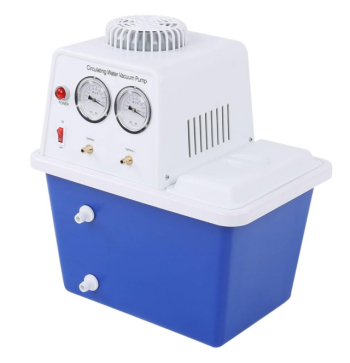
Laboratory Benchtop Water Circulating Vacuum Pump for Lab Use

Laboratory Benchtop Water Circulating Vacuum Pump for Lab Use

Need a water circulating vacuum pump for your lab or small-scale industry? Our Benchtop Water Circulating Vacuum Pump is perfect for evaporation, distillation, crystallization, and more.

Stainless Steel Quick Release Vacuum Chain Three-Section Clamp

Stainless Steel Quick Release Vacuum Chain Three-Section Clamp

Discover our stainless steel quick release clamp vacuum clamp, Ideal for high vacuum applications, Strong connections, reliable sealing, Easy installation, and durable design.

Circulating Water Vacuum Pump for Laboratory and Industrial Use

Circulating Water Vacuum Pump for Laboratory and Industrial Use

Efficient circulating water vacuum pump for labs - oil-free, corrosion-resistant, quiet operation. Multiple models available. Get yours now!

Vacuum Bellows for Efficient Connection and Stable Vacuum in High-Performance Systems

Vacuum Bellows for Efficient Connection and Stable Vacuum in High-Performance Systems

Discover high-quality vacuum bellows for stable vacuum in high-performance systems. Made from 304 and 316 stainless steel, these bellows ensure efficient connections and excellent sealing. Ideal for

Molybdenum Vacuum Heat Treat Furnace

Molybdenum Vacuum Heat Treat Furnace

Discover the benefits of a high-configuration molybdenum vacuum furnace with heat shield insulation. Ideal for high-purity, vacuum environments like sapphire crystal growth and heat treatment.

2200 ℃ Tungsten Vacuum Heat Treat and Sintering Furnace

2200 ℃ Tungsten Vacuum Heat Treat and Sintering Furnace

Experience the ultimate refractory metal furnace with our Tungsten vacuum furnace. Capable of reaching 2200℃, perfect for sintering advanced ceramics and refractory metals. Order now for high-quality results.

Vacuum Heat Treat Sintering Brazing Furnace

Vacuum Heat Treat Sintering Brazing Furnace

A vacuum brazing furnace is a type of industrial furnace used for brazing, a metalworking process that joins two pieces of metal using a filler metal that melts at a lower temperature than the base metals. Vacuum brazing furnaces are typically used for high-quality applications where a strong, clean joint is required.

2200 ℃ Graphite Vacuum Heat Treat Furnace

2200 ℃ Graphite Vacuum Heat Treat Furnace

Discover the power of the KT-VG Graphite Vacuum Furnace - with a maximum working temperature of 2200℃, it's perfect for vacuum sintering of various materials. Learn more now.

Heated Hydraulic Press Machine with Heated Plates for Vacuum Box Laboratory Hot Press

Heated Hydraulic Press Machine with Heated Plates for Vacuum Box Laboratory Hot Press

Enhance your lab's precision with our lab press for vacuum box. Press pills and powders with ease and precision in a vacuum environment, reducing oxidation and improving consistency. Compact and easy to use with a digital pressure gauge.

Oil Free Diaphragm Vacuum Pump for Laboratory and Industrial Use

Oil Free Diaphragm Vacuum Pump for Laboratory and Industrial Use

Oil-free diaphragm vacuum pump for labs: clean, reliable, chemical-resistant. Ideal for filtration, SPE, and rotary evaporation. Maintenance-free operation.

30T 40T Split Automatic Heated Hydraulic Press Machine with Heated Plates for Laboratory Hot Press

30T 40T Split Automatic Heated Hydraulic Press Machine with Heated Plates for Laboratory Hot Press

Discover our split automatic heated lab press 30T/40T for precise sample preparation in material research, pharmacy, ceramics, and electronics industries. With a small footprint and heating up to 300°C, it's perfect for processing under vacuum environment.

Vacuum Arc Induction Melting Furnace

Vacuum Arc Induction Melting Furnace

Discover the power of Vacuum Arc Furnace for melting active & refractory metals. High-speed, remarkable degassing effect, and free of contamination. Learn more now!

Graphite Vacuum Furnace Bottom Discharge Graphitization Furnace for Carbon Materials

Graphite Vacuum Furnace Bottom Discharge Graphitization Furnace for Carbon Materials

Bottom-out graphitization furnace for carbon materials, ultra-high temperature furnace up to 3100°C, suitable for graphitization and sintering of carbon rods and carbon blocks. Vertical design, bottom discharging, convenient feeding and discharging, high temperature uniformity, low energy consumption, good stability, hydraulic lifting system, convenient loading and unloading.

Small Vacuum Heat Treat and Tungsten Wire Sintering Furnace

Small Vacuum Heat Treat and Tungsten Wire Sintering Furnace

The small vacuum tungsten wire sintering furnace is a compact experimental vacuum furnace specially designed for universities and scientific research institutes. The furnace features a CNC welded shell and vacuum piping to ensure leak-free operation. Quick-connect electrical connections facilitate relocation and debugging, and the standard electrical control cabinet is safe and convenient to operate.

Graphite Vacuum Continuous Graphitization Furnace

Graphite Vacuum Continuous Graphitization Furnace

High-temperature graphitization furnace is a professional equipment for graphitization treatment of carbon materials. It is a key equipment for the production of high-quality graphite products. It has high temperature, high efficiency and uniform heating. It is suitable for various high-temperature treatments and graphitization treatments. It is widely used in metallurgy, electronics, aerospace, etc. industry.


Leave Your Message