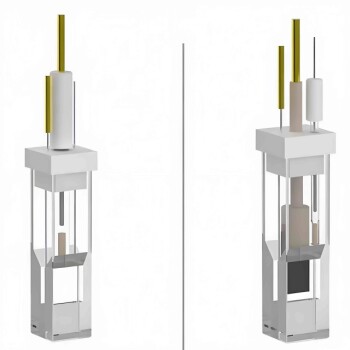
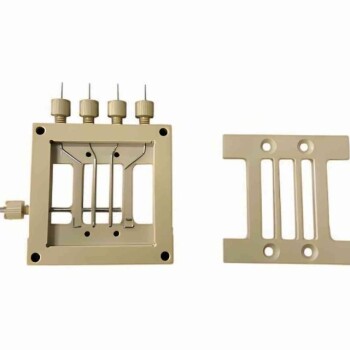
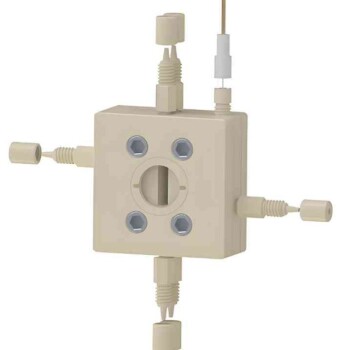
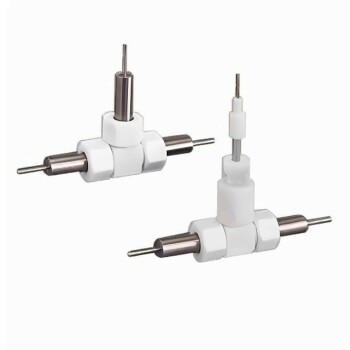
The electrolytic cell functions as the primary reactor within the Copper-Chlorine cycle, utilizing electrical energy to drive the separation of hydrogen. Specifically, it electrolyzes a solution of cuprous chloride ($CuCl$) and hydrochloric acid ($HCl$) to produce clean hydrogen gas while converting monovalent copper back into divalent copper for reuse.
The cell acts as the cycle's electrochemical engine: it consumes electricity to facilitate the critical step of hydrogen evolution and copper oxidation, directly determining the system's overall energy consumption and efficiency.
The Core Electrochemical Mechanisms
The electrolytic cell is not merely a passive vessel; it is an active environment designed to force non-spontaneous chemical reactions using electricity.
Hydrogen Evolution
The most visible function of the cell is the production of hydrogen gas.
Through the application of electrical energy, protons (hydrogen ions) are reduced at the cathode. This is the "payoff" phase of the cycle where the desired fuel product is generated.
Copper Oxidation
Simultaneously, the cell performs a critical regeneration function.
It oxidizes monovalent copper (cuprous) into divalent copper (cupric). This ensures the chemical loop is closed, allowing the copper compounds to be recycled for subsequent steps in the thermochemical cycle.
Critical Component: The Cation Exchange Membrane
To function correctly, the cell relies on a Cation Exchange Membrane (CEM). This component performs two distinct, vital roles.
Proton Conduction
The CEM acts as a selective bridge.
It serves as a proton-conducting medium, allowing hydrogen ions to pass freely from the anode chamber into the cathode chamber. This migration is essential for the reduction process that creates hydrogen gas.
Preventing Copper Crossover
The membrane also acts as a rigorous barrier.
It must limit the migration of copper ions, a phenomenon known as copper crossover. If copper ions breach the membrane and reach the cathode, they can cause catalyst poisoning.
Preventing this ensures the long-term stability of the cell and maintains high performance.
Understanding the Trade-offs
Optimizing an electrolytic cell involves balancing hardware design with operational reality.
Efficiency vs. Energy Consumption
The design of the cell structure dictates its energy profile.
Optimizing hardware can enhance current density (the rate of reaction) and reduce cell voltage (the energy cost). However, poor design increases voltage requirements, leading to wasted energy and lower overall cycle efficiency.
Permeability vs. Selectivity
The membrane faces a physical conflict.
It must be permeable enough to let protons flow rapidly for efficient hydrogen production. However, if it is too permeable, it risks allowing copper ions to cross over, degrading the cathode and shortening the cell's lifespan.
Making the Right Choice for Your Goal
The effectiveness of the Cu-Cl cycle depends heavily on how you prioritize the electrolytic cell's operating parameters.
- If your primary focus is Energy Efficiency: Prioritize optimizing hardware structures to lower cell voltage and maximize current density.
- If your primary focus is System Longevity: Focus on the quality of the Cation Exchange Membrane to strictly minimize copper crossover and prevent catalyst poisoning.
Ultimately, the electrolytic cell is the linchpin of the Cu-Cl cycle, where electrical input is directly converted into chemical potential and clean hydrogen fuel.
Summary Table:
| Feature | Function | Impact on Performance |
|---|---|---|
| Cathode Reaction | Hydrogen Evolution | Primary output: Generates clean hydrogen fuel. |
| Anode Reaction | Copper Oxidation | Recycles cuprous (I) to cupric (II) for cycle closure. |
| CEM Membrane | Proton Conduction | Allows ion flow while preventing copper crossover. |
| Cell Voltage | Energy Input | Determines the overall thermodynamic efficiency. |
| Current Density | Reaction Rate | Dictates the volume of hydrogen produced per unit time. |
Maximize Your Research Precision with KINTEK
As a leader in laboratory innovation, KINTEK provides the specialized equipment and consumables essential for advanced electrochemical research. Whether you are optimizing the Cu-Cl thermochemical cycle or developing next-generation energy systems, our expertise in high-performance electrolytic cells, precision electrodes, and high-temperature reactors ensures your lab achieves maximum efficiency and repeatable results.
Our comprehensive portfolio includes:
- Electrolytic Cells & Electrodes: Engineered for durability and high conductivity.
- High-Temperature & High-Pressure Systems: Advanced autoclaves and furnaces (muffle, vacuum, CVD) for rigorous testing.
- Battery Research Tools: Specialized tools and consumables for energy storage innovation.
- Crucial Consumables: High-purity PTFE products, ceramics, and crucibles designed for chemical stability.
Empower your team with reliable technology and expert support. Contact KINTEK today to discuss your project requirements!
References
- G.F. Naterer, Jurij Avsec. Progress of international hydrogen production network for the thermochemical Cu–Cl cycle. DOI: 10.1016/j.ijhydene.2012.10.023
This article is also based on technical information from Kintek Solution Knowledge Base .
Related Products
- Electrolytic Electrochemical Cell with Five-Port
- PTFE Electrolytic Cell Electrochemical Cell Corrosion-Resistant Sealed and Non-Sealed
- Super Sealed Electrolytic Electrochemical Cell
- Electrolytic Electrochemical Cell Gas Diffusion Liquid Flow Reaction Cell
- Electrolytic Electrochemical Cell for Coating Evaluation
People Also Ask
- How does the design of an electrochemical electrolytic cell influence the coating uniformity? Optimize Your Catalysts
- What is the correct shutdown and disassembly procedure after an experiment? Ensure Safety and Protect Your Equipment
- What are the three essential components that comprise an electrolytic cell? Key Elements of Chemical Synthesis
- How does the design of an electrolytic cell affect the production yield of ferrate(VI)? Optimize Efficiency & Purity
- What is galvanic cell or electrolytic cell? Unlock the Secrets of Electrochemical Power