Knowledge What is the function of autoclaves in self-healing cement? Ensure Pure MICP for Superior Biomineralization
Author avatar

Tech Team · Kintek Solution

Updated 1 day ago

What is the function of autoclaves in self-healing cement? Ensure Pure MICP for Superior Biomineralization


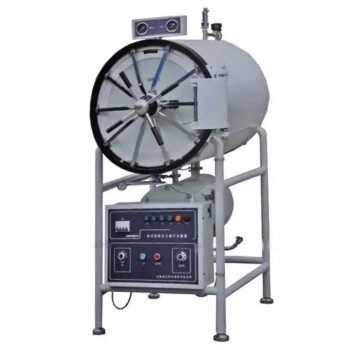
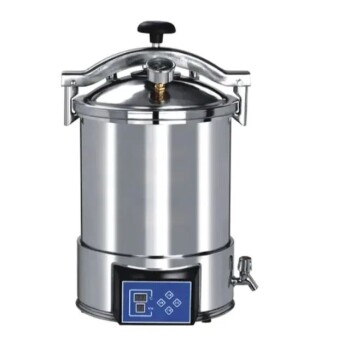
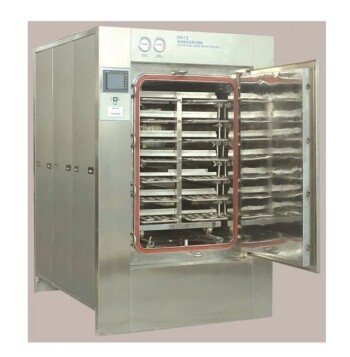
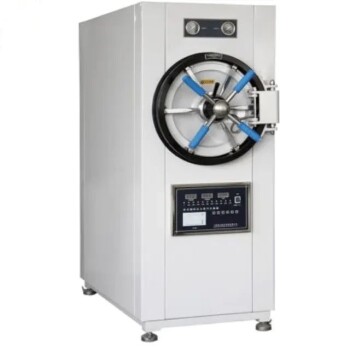
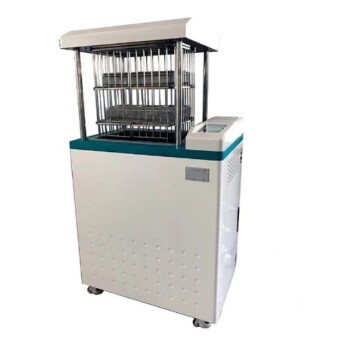
High-pressure steam sterilizers, or autoclaves, serve as the fundamental control mechanism in the engineering of self-healing cement. Their primary function is to sterilize raw materials and equipment prior to the biomineralization process, ensuring that only specific, functional microorganisms—such as Bacillus pasteurii—drive the reaction.

By eliminating environmental contaminants, autoclaves guarantee that the Microbially Induced Calcium Carbonate Precipitation (MICP) process remains pure, resulting in a stronger and more reliable structural bond between the mineral and the cement matrix.

The Critical Role of Sterility in Biomineralization

The production of self-healing cement is not merely a mixing process; it is a biological cultivation process. The success of the material depends entirely on the behavior of specific bacteria.

Selective Microbial Activity

The core mechanism of self-healing cement is Microbially Induced Calcium Carbonate Precipitation (MICP).

This process relies on specific strains of bacteria, such as Bacillus pasteurii, to metabolize nutrients and produce minerals.

If the raw materials are not sterilized, wild bacteria from the environment will compete with the functional microbes.

Ensuring Chemical Purity

The goal of the bacteria is to produce pure calcium carbonate (CaCO3) to fill cracks in the cement.

Contaminating bacteria often produce different metabolic byproducts that do not possess the same structural properties as calcium carbonate.

Autoclaving ensures that the chemical output of the biological process is exactly what the engineering specifications require.

Structural Bonding Integrity

The efficacy of self-healing cement is measured by how well the new minerals bond with the existing cement matrix.

A pure culture ensures a consistent, high-quality precipitate that integrates seamlessly with the cement structure.

Contamination introduces impurities that can weaken this bond, rendering the "healing" mechanism ineffective.

Common Pitfalls and Process Risks

While the concept of sterilization is straightforward, the implications of failure in this step are significant.

The Risk of Bacterial Competition

If the autoclave process is insufficient, unwanted bacteria survive and reproduce rapidly.

These contaminants consume the nutrients intended for Bacillus pasteurii, starving the functional bacteria and halting the healing process.

Compromised Material Strength

The presence of foreign biological matter can disrupt the crystallization of calcium carbonate.

This results in a filler material that is structurally inferior, failing to restore the mechanical strength of the concrete.

Making the Right Choice for Your Project

The use of an autoclave is not optional; it is a prerequisite for reproducible biomineralization.

  • If your primary focus is Research Accuracy: Ensure rigorous sterilization cycles for all equipment to isolate the specific catalytic efficiency of Bacillus pasteurii.
  • If your primary focus is Material Durability: Prioritize the purity of your raw materials to guarantee the strongest possible bond between the calcium carbonate and the cement matrix.

A high-quality self-healing material begins with a perfectly sterile environment.

Summary Table:

Feature Role in Biomineralization Impact on Material Performance
Selective Activity Eliminates wild bacteria to favor Bacillus pasteurii Ensures targeted healing mechanism
Chemical Purity Prevents non-structural metabolic byproducts Guarantees high-quality CaCO3 precipitation
Bonding Integrity Removes impurities from the cement matrix Enhances integration between mineral and cement
Nutrient Control Prevents bacterial competition for nutrients Maximizes functional microbial growth

Elevate Your Advanced Material Research with KINTEK

Precision in biomineralization starts with absolute sterility. KINTEK provides industry-leading high-temperature high-pressure reactors and autoclaves specifically designed to meet the rigorous demands of material science and bio-engineering.

Whether you are optimizing MICP processes for self-healing concrete or developing next-generation building materials, our comprehensive range of laboratory equipment—from crushing and milling systems to high-temperature furnaces—ensures your research is backed by reliability and purity.

Ready to achieve superior structural bonding and reproducible results? Contact our specialists today to find the perfect sterilization solution!

References

  1. Xu Chen. Nanoscale Construction Biotechnology for Cementitious Materials: A Prospectus. DOI: 10.3389/fmats.2020.594989

This article is also based on technical information from Kintek Solution Knowledge Base .

Related Products

People Also Ask

Related Products

VHP Sterilization Equipment Hydrogen Peroxide H2O2 Space Sterilizer

VHP Sterilization Equipment Hydrogen Peroxide H2O2 Space Sterilizer

A hydrogen peroxide space sterilizer is a device that uses vaporized hydrogen peroxide to decontaminate enclosed spaces. It kills microorganisms by damaging their cellular components and genetic material.

High Pressure Laboratory Vacuum Tube Furnace Quartz Tubular Furnace

High Pressure Laboratory Vacuum Tube Furnace Quartz Tubular Furnace

KT-PTF High Pressure Tube Furnace: Compact split tube furnace with strong positive pressure resistance. Working temp up to 1100°C and pressure up to 15Mpa. Also works under controller atmosphere or high vacuum.

Benchtop Laboratory Freeze Dryer for Lab Use

Benchtop Laboratory Freeze Dryer for Lab Use

Premium benchtop laboratory freeze dryer for lyophilization, preserving samples with ≤ -60°C cooling. Ideal for pharmaceuticals & research.

Custom PTFE Teflon Parts Manufacturer for PTFE Mesh F4 Sieve

Custom PTFE Teflon Parts Manufacturer for PTFE Mesh F4 Sieve

PTFE mesh sieve is a specialized test sieve designed for particle analysis in various industries, featuring a non-metallic mesh woven from PTFE filament. This synthetic mesh is ideal for applications where metal contamination is a concern . PTFE sieves are crucial for maintaining the integrity of samples in sensitive environments, ensuring accurate and reliable results in particle size distribution analysis.

Vacuum Hot Press Furnace Machine for Lamination and Heating

Vacuum Hot Press Furnace Machine for Lamination and Heating

Experience clean and precise lamination with Vacuum Lamination Press. Perfect for wafer bonding, thin-film transformations, and LCP lamination. Order now!

Graphite Vacuum Furnace Bottom Discharge Graphitization Furnace for Carbon Materials

Graphite Vacuum Furnace Bottom Discharge Graphitization Furnace for Carbon Materials

Bottom-out graphitization furnace for carbon materials, ultra-high temperature furnace up to 3100°C, suitable for graphitization and sintering of carbon rods and carbon blocks. Vertical design, bottom discharging, convenient feeding and discharging, high temperature uniformity, low energy consumption, good stability, hydraulic lifting system, convenient loading and unloading.

Twin Screw Extruder Plastic Granulation Machine

Twin Screw Extruder Plastic Granulation Machine

Twin screw extruder plastic granulation machine is designed for the mixing and processing experiments of engineering plastics, modified plastics, waste plastics and masterbatches.

Stainless Steel Quick Release Vacuum Chain Three-Section Clamp

Stainless Steel Quick Release Vacuum Chain Three-Section Clamp

Discover our stainless steel quick release clamp vacuum clamp, Ideal for high vacuum applications, Strong connections, reliable sealing, Easy installation, and durable design.

Small Vacuum Heat Treat and Tungsten Wire Sintering Furnace

Small Vacuum Heat Treat and Tungsten Wire Sintering Furnace

The small vacuum tungsten wire sintering furnace is a compact experimental vacuum furnace specially designed for universities and scientific research institutes. The furnace features a CNC welded shell and vacuum piping to ensure leak-free operation. Quick-connect electrical connections facilitate relocation and debugging, and the standard electrical control cabinet is safe and convenient to operate.

Graphite Vacuum Furnace Negative Material Graphitization Furnace

Graphite Vacuum Furnace Negative Material Graphitization Furnace

Graphitization furnace for battery production has uniform temperature and low energy consumption. Graphitization furnace for negative electrode materials: an efficient graphitization solution for battery production and advanced functions to enhance battery performance.

Molybdenum Vacuum Heat Treat Furnace

Molybdenum Vacuum Heat Treat Furnace

Discover the benefits of a high-configuration molybdenum vacuum furnace with heat shield insulation. Ideal for high-purity, vacuum environments like sapphire crystal growth and heat treatment.

Electric button battery sealing machine

Electric button battery sealing machine

The electric button battery sealing machine is a high-performance packaging equipment designed for mass production of button batteries (such as CR series, LR series, SR series, etc.), suitable for electronic manufacturing, new energy research and development, and industrial automation production lines.

Horizontal High Temperature Graphite Vacuum Graphitization Furnace

Horizontal High Temperature Graphite Vacuum Graphitization Furnace

Horizontal Graphitization Furnace: This type of furnace is designed with the heating elements placed horizontally, allowing for uniform heating of the sample. It's well-suited for graphitizing large or bulky samples that require precise temperature control and uniformity.

Vacuum Heat Treat Furnace with Ceramic Fiber Liner

Vacuum Heat Treat Furnace with Ceramic Fiber Liner

Vacuum furnace with polycrystalline ceramic fiber insulation liner for excellent heat insulation and uniform temperature field. Choose from 1200℃ or 1700℃ max. working temperature with high vacuum performance and precise temperature control.

Dental Porcelain Zirconia Sintering Ceramic Vacuum Press Furnace

Dental Porcelain Zirconia Sintering Ceramic Vacuum Press Furnace

Get precise dental results with Dental Vacuum Press Furnace. Automatic temperature calibration, low noise tray, and touch screen operation. Order now!

Graphite Vacuum Furnace IGBT Experimental Graphitization Furnace

Graphite Vacuum Furnace IGBT Experimental Graphitization Furnace

IGBT experimental graphitization furnace, a tailored solution for universities and research institutions, with high heating efficiency, user-friendliness, and precise temperature control.

Vacuum Sealed Continuous Working Rotary Tube Furnace Rotating Tube Furnace

Vacuum Sealed Continuous Working Rotary Tube Furnace Rotating Tube Furnace

Experience efficient material processing with our vacuum-sealed rotary tube furnace. Perfect for experiments or industrial production, equipped with optional features for controlled feeding and optimized results. Order now.

Circulating Water Vacuum Pump for Laboratory and Industrial Use

Circulating Water Vacuum Pump for Laboratory and Industrial Use

Efficient circulating water vacuum pump for labs - oil-free, corrosion-resistant, quiet operation. Multiple models available. Get yours now!

Electric Rotary Kiln Continuous Working Small Rotary Furnace Heating Pyrolysis Plant

Electric Rotary Kiln Continuous Working Small Rotary Furnace Heating Pyrolysis Plant

Efficiently calcine and dry bulk powder and lump fluid materials with an electric heating rotary furnace. Ideal for processing lithium ion battery materials and more.


Leave Your Message