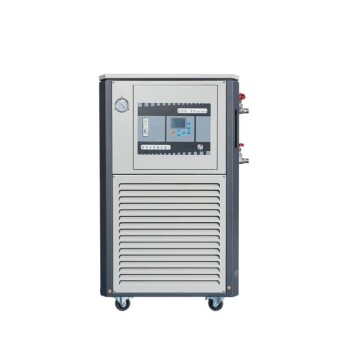
The laboratory electric constant temperature drying oven is the fundamental tool for establishing a reliable baseline in biomass analysis. Its primary function is to dry corn stover residues after hydrolysis at a specific temperature of 105°C until they reach a "constant weight." By completely removing moisture, this equipment eliminates significant measurement errors, enabling researchers to perform the precise mass balance calculations necessary to determine degradation efficiency.
Core Takeaway Moisture content in biomass is highly variable and distorts weight measurements, rendering raw data unreliable. The drying oven eliminates this variable, providing the "dry weight" standard that is mathematically required to calculate accurate sugar yields and lignin degradation rates.
The Critical Role of Moisture Removal
Eliminating Environmental Variables
Corn stover is hygroscopic, meaning it absorbs moisture from the surrounding air. This causes its weight to fluctuate based on the humidity of the laboratory.
Using a drying oven removes this variable entirely. It ensures that the mass you measure is solely the biomass itself, not the water trapped within it.
The 105°C Standard
The primary reference specifies an operating temperature of 105°C. This temperature is the standard for ensuring water evaporation without inducing significant thermal decomposition of the structural biomass components.
Maintaing this specific temperature is crucial for consistency across different samples and experimental runs.
Achieving Constant Weight
The goal is not simply to "dry" the sample for a set time, but to dry it until it reaches a constant weight. This indicates that all evaporable moisture has been removed.
Without reaching this state, any calculation performed on the sample would be based on an unstable number.
Calculating Efficiency Metrics
Precise Mass Balance
To analyze degradation efficiency, you must know exactly how much matter remains after the chemical process (hydrolysis). The drying oven allows for a precise mass balance calculation by comparing the initial dry weight to the final dry weight.
Determining Sugar Yield
Sugar yield is a primary metric of corn stover degradation. To calculate this accurately, the denominator in your equation must be the total dry solids.
If moisture remains in the sample, the total mass will be artificially high, resulting in a calculated sugar yield that is lower than the actual efficiency.
Assessing Lignin Degradation Rates
Similarly, tracking how much lignin has degraded requires an exact measurement of the solid residue. The drying oven ensures that the residue weight reflects only the remaining structural components.
This enables a factual comparison between the pre-treatment and post-hydrolysis states of the lignin.
Common Pitfalls to Avoid
The Risk of Premature Weighing
A common error is removing samples from the oven before they have achieved true constant weight. If the sample is still losing mass (water) between weighs, the drying process is incomplete.
Using these premature values will introduce positive bias to the residue weight, skewing your degradation data.
Temperature Fluctuations
The "constant temperature" feature of the oven is not a luxury; it is a requirement. Fluctuations below 105°C may fail to drive off all bound moisture.
Conversely, significantly higher temperatures could char the corn stover, chemically altering the lignin or sugars you are trying to measure.
Ensuring Data Integrity in Your Workflow
To ensure your degradation analysis is scientifically valid, you must strictly apply these drying principles.
- If your primary focus is Sugar Yield: Ensure samples are dried to constant weight to prevent water mass from diluting your calculated yield percentage.
- If your primary focus is Lignin Degradation: Use the 105°C standard to establish a precise dry mass baseline, ensuring observed weight loss is due to degradation, not evaporation.
Ultimately, the drying oven transforms variable biological samples into absolute mathematical values, making your efficiency data reproducible and trustworthy.
Summary Table:
| Feature | Role in Corn Stover Analysis | Scientific Importance |
|---|---|---|
| 105°C Standard | Maintains precise heat without decomposition | Ensures data consistency & structural integrity |
| Moisture Removal | Eliminates hygroscopic weight fluctuations | Provides stable "dry weight" baseline |
| Constant Weight | Confirms all evaporable water is gone | Essential for reliable mass balance calculations |
| Precision Control | Prevents charring or incomplete drying | Protects sugar yield and lignin degradation data |
Elevate Your Biomass Research with KINTEK Precision
Accuracy in degradation efficiency starts with reliable thermal processing. KINTEK specializes in high-performance laboratory equipment, providing the precision constant temperature drying ovens, muffle furnaces, and crushing systems essential for biomass research. Whether you are calculating sugar yields or assessing lignin degradation, our solutions ensure your data is reproducible and trustworthy.
Our value to you:
- Comprehensive Portfolio: From high-temperature furnaces and vacuum systems to hydraulic presses and cooling solutions.
- Research-Grade Quality: Specialized equipment designed for the rigorous demands of material science and chemical analysis.
- Expert Support: Tailored consumables like ceramic crucibles and PTFE products to complete your workflow.
Contact KINTEK today to optimize your laboratory efficiency!
References
- Zhicai Zhang, Keping Chen. Lignin degradation in corn stalk by combined method of H2O2 hydrolysis and Aspergillus oryzae CGMCC5992 liquid-state fermentation. DOI: 10.1186/s13068-015-0362-4
This article is also based on technical information from Kintek Solution Knowledge Base .
Related Products
- Laboratory Scientific Electric Heating Blast Drying Oven
- 23L Laboratory Vacuum Drying Oven
- 56L Vertical Laboratory Vacuum Drying Oven
- 1700℃ Muffle Oven Furnace for Laboratory
- 1400℃ Muffle Oven Furnace for Laboratory
People Also Ask
- How does a laboratory electric drying oven contribute to the formation of the initial coating? Expert Insights
- What role does a precision laboratory drying oven play in the synthesis of GO-PANI nanocomposites? Protect Material Integrity
- What role does a laboratory drying oven play in the preparation of zinc oxide nanoparticle precursors?
- What is the necessity of using a laboratory drying oven when processing MoO3/GO composite nanopowders? Find out here.
- What is the role of a laboratory drying oven in cellulose citrate production? Ensure Material Stability & Purity