Precise control over timing and temperature is the critical factor in transforming phosphorylated microfibrillated cellulose (MFC) from a raw modified product into a chemically active precursor. This process utilizes extended low-temperature drying to ensure the complete removal of residual solvents and moisture, which is necessary to stabilize the fiber's surface chemistry.
The drying phase is not simply about dehydration; it is a vital functionalization step that stabilizes phosphate groups and exposes the active sites required for effective bonding with hydroxyapatite.
The Mechanics of Chemical Stabilization
Eliminating Residual Contaminants
Following phosphorylation, the cellulose structure retains trace amounts of volatile washing agents and moisture.
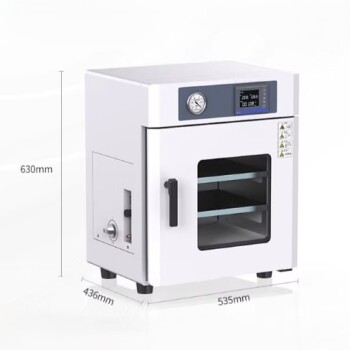
A precision constant temperature oven ensures these contaminants are removed thoroughly. This yields a stable solid product capable of consistent performance in downstream applications.
Preserving Phosphate Integrity
The drying environment must be strictly controlled to protect the newly introduced phosphate groups.
By utilizing extended low-temperature drying, typically lasting 24 hours, you stabilize these groups on the fiber surface without inducing thermal degradation that high heat would cause.
Preparing for Composite Interactions
Exposing Active Sites
The ultimate goal of this drying process is to prepare the material for future chemical interactions.
Proper drying clears physical and chemical obstructions, effectively exposing the active sites on the cellulose microfibrils. Without this exposure, the material's reactivity is significantly blunted.
Facilitating Hydroxyapatite Bonding
The most critical downstream implication involves the reaction with hydroxyapatite.
Residual moisture acts as an interference agent, inhibiting the formation of composites. By ensuring a strictly dry environment, you allow the phosphorylated surface to interact unimpeded with hydroxyapatite, which is essential for creating high-performance composite materials.
Understanding the Trade-offs
The Risk of Rushing
There is often a temptation to accelerate drying by increasing temperature or reducing time.
However, insufficient drying time leaves residual solvents trapped within the fibrillated structure. This leads to weak interface bonding and unpredictable chemical behavior during subsequent synthesis steps.
Temperature Sensitivity
While drying is necessary, excessive heat is detrimental to the phosphorylated cellulose.
You must maintain low-temperature parameters. High temperatures can compromise the structural integrity of the microfibrils or degrade the phosphate groups, rendering the previous modification steps useless.
Optimizing Your Drying Protocol
To ensure your phosphorylated MFC achieves its maximum potential, align your drying parameters with your specific end goals:
- If your primary focus is Chemical Reactivity: Prioritize the full 24-hour duration to guarantee active sites are fully exposed and free of moisture interference.
- If your primary focus is Structural Integrity: Adhere strictly to low-temperature settings to prevent thermal degradation of the fiber surface while removing solvents.
Mastering this drying stage transforms your material from a simple chemical mixture into a stable, highly reactive foundation for advanced composites.
Summary Table:
| Parameter | Role in Phosphorylated MFC Drying | Impact on Material Quality |
|---|---|---|
| Drying Time | Extended 24-hour duration | Ensures complete removal of residual solvents and moisture. |
| Temperature | Controlled Low-Temperature | Prevents thermal degradation and stabilizes phosphate groups. |
| Surface Chemistry | Exposure of Active Sites | Clears obstructions to enable effective chemical bonding. |
| Final Quality | Chemical Stabilization | Provides a stable precursor for hydroxyapatite composite synthesis. |
Elevate Your Material Research with KINTEK Precision
Achieving the perfect balance of timing and temperature is essential for transforming phosphorylated microfibrillated cellulose into a high-performance precursor. KINTEK specializes in advanced laboratory equipment designed to meet the rigorous demands of material science.
Our comprehensive range of constant temperature ovens, high-temperature furnaces, and high-pressure reactors provides the stability and precision required to protect your chemical modifications. From battery research tools to PTFE products and ceramics, KINTEK is your partner in achieving consistent, high-quality results.
Ready to optimize your drying protocol and enhance your lab's efficiency? Contact us today to discover how our tailored solutions can support your specific research goals.
References
- Vipul Vilas Kusumkar, Martin Daňo. Sorptive Removal of 133Ba from Aqueous Solution Using a Novel Cellulose Hydroxyapatite Composite Derived from Cigarette Waste. DOI: 10.1007/s11270-024-07026-3
This article is also based on technical information from Kintek Solution Knowledge Base .
Related Products
- High Temperature Constant Temperature Heating Circulator Water Bath Chiller Circulator for Reaction Bath
- Graphite Vacuum Continuous Graphitization Furnace
- 1700℃ Muffle Oven Furnace for Laboratory
- 10L Chilling Circulator Cooling Water Bath Low Temperature Constant Temperature Reaction Bath
- 30L Heating Chilling Circulator Cooling Water Bath Circulator for High and Low Temperature Constant Temperature Reaction
People Also Ask
- What is the necessity of a circulating water bath in chlorate production? Optimize Yield & Purity with Precision
- How do constant temperature circulators impact weight-loss immersion tests? Ensure Precision in Corrosion Analysis
- How does a constant temperature circulator support the leaching reaction of gold scrap? Optimize Gold Recovery Results
- Why is a constant temperature water bath used for precursor storage in CVD? Achieve Stable Nanocrystalline SiC Deposition
- Why is a high-precision constant temperature water bath necessary for anaerobic digestion? Ensure Success at 37±0.02°C