Knowledge What is the primary function of a hammer mill crushing system? Optimize Biomass Pretreatment for Better Yields
Author avatar

Tech Team · Kintek Solution

Updated 20 hours ago

What is the primary function of a hammer mill crushing system? Optimize Biomass Pretreatment for Better Yields


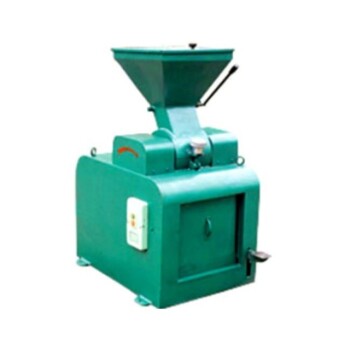
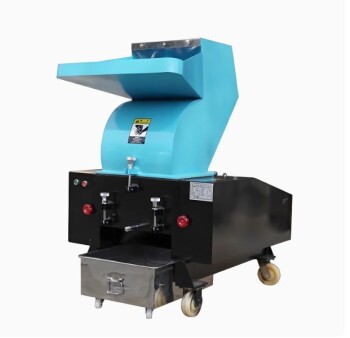
The primary function of a hammer mill crushing system is to mechanically reduce the particle size of lignocellulosic biomass, such as peanut shells, by processing the material through screens of various apertures. This reduction is a critical pretreatment step designed to disrupt the rigid physical structure of the plant material before it enters the digestion phase.

Core Insight: The hammer mill does not just make particles smaller; it fundamentally alters the biomass architecture. By increasing the specific surface area and breaking down cell walls, it unlocks the cellulose and hemicellulose, making them accessible to microorganisms for efficient enzymatic hydrolysis.

The Mechanics of Structural Disruption

Controlled Particle Size Reduction

The hammer mill operates by forcing raw biomass through screens with specific aperture sizes.

This allows operators to achieve a consistent, defined particle size distribution. This uniformity is essential for predictable behavior in downstream processing.

Breaking the Cell Wall Barrier

Lignocellulosic biomass possesses a naturally rigid structure designed to protect the plant.

The mechanical force of the hammer mill physically shatters this structure. This disruption is necessary to expose the inner components of the biomass that are otherwise locked away behind the cell walls.

Impact on Biological Conversion

Increasing Specific Surface Area

The most significant outcome of this process is a drastic increase in the specific surface area of the material.

By turning coarse shells into finer particles, you exponentially increase the area available for reaction. This serves as the foundation for all subsequent biological or chemical interactions.

Enhancing Enzyme Accessibility

The ultimate goal of this mechanical pretreatment is to facilitate enzymatic hydrolysis.

In an anaerobic digestion context, microorganisms require direct contact with cellulose and hemicellulose. The hammer mill removes physical barriers, allowing these biological agents to access and degrade the biomass more effectively.

Lowering Crystallinity

Beyond simple size reduction, the high-energy impact helps reduce the crystallinity of the cellulose.

Crystalline cellulose is notoriously difficult to digest. By physically disrupting this ordered structure, the biomass becomes more reactive and requires less time for biological conversion.

Understanding the Trade-offs

Optimization vs. Energy Input

While smaller particles generally react faster, grinding biomass to an extremely fine powder requires significant energy input.

You must balance the benefits of increased surface area against the operational costs of running the mill.

The Importance of Target Size

There is often a "diminishing return" regarding particle size.

References suggest that a final particle size between 0.2 and 2 mm is often the optimal range. Grinding finer than necessary increases energy consumption without proportionally increasing the hydrolysis yield.

Making the Right Choice for Your Goal

To maximize the efficiency of your pretreatment phase, align your grinding specifications with your downstream requirements.

  • If your primary focus is biological conversion efficiency: Target a particle size (typically 0.2–2 mm) that maximizes surface area to ensure enzymes can easily penetrate the cellulose structure.
  • If your primary focus is energy conservation: Avoid over-processing; reduce the material only enough to achieve the necessary flowability and surface exposure for your specific reactor type.

Success in biomass pretreatment relies not on making the smallest particle possible, but on creating the most accessible surface area for your specific biological process.

Summary Table:

Feature Impact on Biomass Pretreatment
Particle Size Reduction Increases specific surface area for faster chemical/biological reaction.
Structural Disruption Shatters rigid cell walls to unlock cellulose and hemicellulose.
Crystallinity Reduction Lowers cellulose crystallinity, making it more reactive for enzymes.
Optimal Size Range Achieving 0.2–2 mm balances energy input with hydrolysis yield.
Downstream Efficiency Ensures uniform material flow and improved anaerobic digestion rates.

Maximize Your Biomass Potential with KINTEK

Ready to transform raw biomass into high-efficiency energy sources? KINTEK specializes in advanced crushing and milling systems designed to optimize surface area and accelerate enzymatic hydrolysis. Whether you are processing peanut shells or complex lignocellulosic materials, our precision laboratory equipment—including high-performance hammer mills, crushing systems, and sieving tools—ensures you achieve the perfect particle size distribution for your research or production.

Why choose KINTEK?

  • Precision Engineering: Achieve consistent 0.2–2 mm sizing to balance energy costs and yield.
  • Comprehensive Solutions: From milling to high-temperature high-pressure reactors and autoclaves, we support your entire workflow.
  • Expert Support: Our team helps you select the right tools for battery research, cooling solutions, and material processing.

Contact KINTEK today to optimize your pretreatment phase!

References

  1. Kehinde O. Olatunji, Oyetola Ogunkunle. Effect of Combined Particle Size Reduction and Fe3O4 Additives on Biogas and Methane Yields of Arachis hypogea Shells at Mesophilic Temperature. DOI: 10.3390/en15113983

This article is also based on technical information from Kintek Solution Knowledge Base .

Related Products

People Also Ask

Related Products

Powerful Plastic Crusher Machine

Powerful Plastic Crusher Machine

KINTEK's powerful plastic crusher machines process 60-1350 KG/H of diverse plastics, ideal for labs and recycling. Durable, efficient, and customizable.

Laboratory Ten-Body Horizontal Jar Mill for Lab Use

Laboratory Ten-Body Horizontal Jar Mill for Lab Use

The Ten-body horizontal jar mill is for 10 ball mill pots (3000ml or less). It has frequency conversion control, rubber roller movement, and PE protective cover.

Small Lab Rubber Calendering Machine

Small Lab Rubber Calendering Machine

Small lab rubber calendering machine is used for producing thin, continuous sheets of plastic or rubber materials. It is commonly employed in laboratories, small-scale production facilities, and prototyping environments to create films, coatings, and laminates with precise thickness and surface finish.

Laboratory Test Sieves and Vibratory Sieve Shaker Machine

Laboratory Test Sieves and Vibratory Sieve Shaker Machine

Efficiently process powders, granules, and small blocks with a high-frequency vibration sieve. Control vibration frequency, screen continuously or intermittently, and achieve accurate particle size determination, separation, and classification.

Metallographic Specimen Mounting Machine for Laboratory Materials and Analysis

Metallographic Specimen Mounting Machine for Laboratory Materials and Analysis

Precision metallographic mounting machines for labs—automated, versatile, and efficient. Ideal for sample prep in research and quality control. Contact KINTEK today!

Lab Internal Rubber Mixer Rubber Kneader Machine for Mixing and Kneading

Lab Internal Rubber Mixer Rubber Kneader Machine for Mixing and Kneading

Lab internal rubber mixer is suitable for mixing, kneading and dispersing various chemical raw materials such as plastics, rubber, synthetic rubber, hot melt adhesive and various low-viscosity materials.

Laboratory Sterilizer Lab Autoclave Herbal Powder Sterilization Machine for Plant

Laboratory Sterilizer Lab Autoclave Herbal Powder Sterilization Machine for Plant

The herbal powder sterilization autoclave machine for Chinese medicine uses saturated steam for effective sterilization. It utilizes the heat and penetrative properties of steam, achieves sterilization after heat preservation, and maintains a good drying effect with a dedicated drying system.

Rubber Vulcanizer Vulcanizing Machine Plate Vulcanizing Press for Lab

Rubber Vulcanizer Vulcanizing Machine Plate Vulcanizing Press for Lab

The Plate vulcanizing press is a kind of equipment used in the production of rubber products, mainly used for the vulcanization of rubber products. Vulcanization is a key step in rubber processing.

Precision Wire Saw Laboratory Cutting Machine with 800mm x 800mm Workbench for Diamond Single Wire Circular Small Cutting

Precision Wire Saw Laboratory Cutting Machine with 800mm x 800mm Workbench for Diamond Single Wire Circular Small Cutting

Diamond wire cutting machines are mainly used for precision cutting of ceramics, crystals, glass, metals, rocks, thermoelectric materials, infrared optical materials, composite materials, biomedical materials and other material analysis samples. Especially suitable for precision cutting of ultra-thin plates with thickness up to 0.2mm.

Electric Split Lab Cold Isostatic Press CIP Machine for Cold Isostatic Pressing

Electric Split Lab Cold Isostatic Press CIP Machine for Cold Isostatic Pressing

Split cold isostatic presses are capable of providing higher pressures, making them suitable for testing applications that require high pressure levels.

Lab Plastic PVC Calender Stretch Film Casting Machine for Film Testing

Lab Plastic PVC Calender Stretch Film Casting Machine for Film Testing

The cast film machine is designed for the molding of polymer cast film products and has multiple processing functions such as casting, extrusion, stretching, and compounding.

Single Punch Tablet Press Machine and Mass Production Rotary Tablet Punching Machine for TDP

Single Punch Tablet Press Machine and Mass Production Rotary Tablet Punching Machine for TDP

Rotary tablet punching machine is an automatic rotating and continuous tableting machine. It is mainly used for tablet manufacturing in the pharmaceutical industry, and is also suitable for industrial sectors such as food, chemicals, batteries, electronics, ceramics, etc. to compress granular raw materials into tablets.

Small Injection Molding Machine for Lab Use

Small Injection Molding Machine for Lab Use

The small injection molding machinehas fast and stable movements; good controllability and repeatability, super energy saving; the product can be automatically dropped and formed; the machine body is low, convenient for feeding, easy to maintain, and no height restrictions on the installation site.

Laboratory Vibratory Sieve Shaker Machine Slap Vibrating Sieve

Laboratory Vibratory Sieve Shaker Machine Slap Vibrating Sieve

KT-T200TAP is a slapping and oscillating sieving instrument for laboratory desktop use, with 300 rpm horizontal circular motion and 300 vertical slapping motions to simulate manual sieving to help sample particles pass through better.

Laboratory Vibratory Sieve Shaker Machine for Dry and Wet Three-Dimensional Sieving

Laboratory Vibratory Sieve Shaker Machine for Dry and Wet Three-Dimensional Sieving

KT-VD200 can be used for sieving tasks of dry and wet samples in the laboratory. The screening quality is 20g-3kg. The product is designed with a unique mechanical structure and an electromagnetic vibrating body with a vibration frequency of 3000 times per minute.

Automatic High Temperature Heated Hydraulic Press Machine with Heated Plates for Lab

Automatic High Temperature Heated Hydraulic Press Machine with Heated Plates for Lab

The High Temperature Hot Press is a machine specifically designed for pressing, sintering and processing materials in a high temperature environment. It is capable of operating in the range of hundreds of degrees Celsius to thousands of degrees Celsius for a variety of high temperature process requirements.

Automatic Laboratory Hydraulic Pellet Press Machine for Lab Use

Automatic Laboratory Hydraulic Pellet Press Machine for Lab Use

Experience efficient sample preparation with our Automatic Lab Press Machine. Ideal for material research, pharmacy, ceramics, and more. Features a compact size and hydraulic press functionality with heating plates. Available in various sizes.

Single Punch Electric Tablet Press Machine TDP Tablet Punching Machine

Single Punch Electric Tablet Press Machine TDP Tablet Punching Machine

The electric tablet punching machine is a laboratory equipment designed for pressing various granular and powdery raw materials into discs and other geometric shapes. It is commonly used in pharmaceutical, healthcare products, food, and other industries for small batch production and processing. The machine is compact, lightweight, and easy to operate, making it suitable for use in clinics, schools, laboratories, and research units.

Vibratory Sieve Shaker Machine Dry Three-Dimensional Vibrating Sieve

Vibratory Sieve Shaker Machine Dry Three-Dimensional Vibrating Sieve

The KT-V200 product focuses on solving common sieving tasks in the laboratory. It is suitable for sieving 20g-3kg dry samples.

Heated Hydraulic Press Machine with Integrated Manual Heated Plates for Lab Use

Heated Hydraulic Press Machine with Integrated Manual Heated Plates for Lab Use

Efficiently process heat-pressing samples with our Integrated Manual Heated Lab Press. With a heating range up to 500°C, it's perfect for various industries.


Leave Your Message