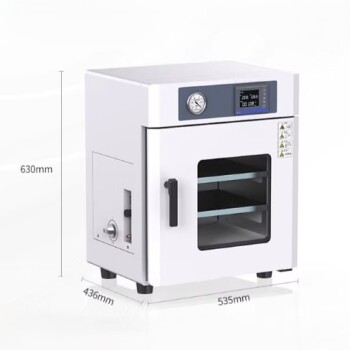
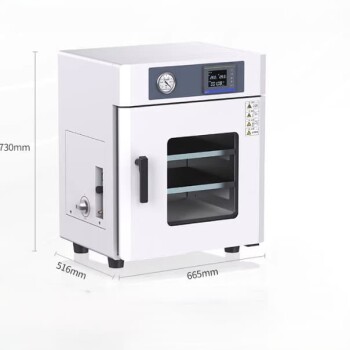
The primary function of a laboratory oven in this specific context is to drive off physically adsorbed water from the zeolite’s internal pores through constant temperature heating, typically at 105°C. This step is essential to transition the material from a wet, filtered solid into a chemically active and physically stable powder ready for application.
Core Takeaway The laboratory oven serves as the critical activation stage for coal fly ash zeolite; by removing moisture that occupies internal voids, it stabilizes the material's phase and frees up active sites, ensuring consistent performance as an adsorbent or catalyst carrier.
The Mechanism of Water Removal
Eliminating Physically Adsorbed Moisture
Following the washing and filtration stages, zeolite powder retains significant moisture. The laboratory oven is specifically tasked with removing physically adsorbed water trapped within the interior structure and the pores of the sample.
The Importance of Constant Temperature
The process relies on constant temperature heating, generally set at 105°C. This specific temperature is sufficient to evaporate water without altering the fundamental chemical composition of the zeolite.
Activation and Stabilization
Activating the Zeolite Framework
Drying is not merely about weight reduction; it is an activation process. By clearing water molecules from the pores, the oven exposes the zeolite's active sites, allowing them to function effectively in chemical reactions or adsorption tasks.
Ensuring a Stable Phase
The heating process helps stabilize the zeolite phase. This ensures that the structural integrity of the material is fixed before it is put to use.
Establishing a Reference Weight
For any analytical or industrial application, the material must have a stable initial weight. The oven removes variable moisture content, ensuring that any subsequent weighing of the powder reflects the zeolite itself, not the water it is holding.
Understanding the Critical Dependencies
The Risk of Incomplete Drying
If the oven cycle is shortened or the temperature fluctuates below the target, water remains in the pores. This blocks active sites, rendering the zeolite less effective as a catalyst or adsorbent.
Stability vs. Volatility
Without this stabilization step, the zeolite's weight would fluctuate with ambient humidity. This makes it impossible to accurately measure dosages for catalytic or adsorption processes, leading to inconsistent experimental or industrial results.
Making the Right Choice for Your Goal
- If your primary focus is Adsorption Capacity: Ensure the oven maintains a constant 105°C to fully clear the pores and maximize the surface area of available active sites.
- If your primary focus is Analytical Precision: Prioritize the duration of the drying phase to guarantee a stable initial weight, eliminating moisture as a variable in your measurements.
Proper oven drying turns a raw synthesis product into a functional, reliable tool for chemical engineering.
Summary Table:
| Process Stage | Function of Laboratory Oven | Impact on Zeolite Quality |
|---|---|---|
| Moisture Removal | Evaporates physically adsorbed water at 105°C | Prevents pore blockage and ensures structural purity |
| Activation | Clears internal voids and pores | Maximizes surface area for adsorption and catalytic reactions |
| Stabilization | Fixes the material's chemical phase | Guarantees consistent performance and structural integrity |
| Weight Accuracy | Establishes a constant dry weight | Eliminates humidity variables for precise analytical dosing |
Elevate Your Materials Research with KINTEK Precision
Don't let inconsistent drying compromise your catalytic or adsorption results. KINTEK specializes in high-performance laboratory equipment designed for the rigorous demands of material science. Whether you are synthesizing zeolites, developing battery technologies, or performing advanced chemical engineering, our comprehensive range of high-temperature furnaces, precision laboratory ovens, and vacuum systems ensures total control over your activation processes.
From high-pressure reactors to specialized ceramics and crucibles, KINTEK provides the tools you need for absolute analytical precision. Contact us today to find the perfect thermal solution for your lab!
References
- Silviya Boycheva, Margarita Popova. Progress in the Utilization of Coal Fly Ash by Conversion to Zeolites with Green Energy Applications. DOI: 10.3390/ma13092014
This article is also based on technical information from Kintek Solution Knowledge Base .
Related Products
- Laboratory Scientific Electric Heating Blast Drying Oven
- 23L Laboratory Vacuum Drying Oven
- 56L Vertical Laboratory Vacuum Drying Oven
- 1200℃ Muffle Furnace Oven for Laboratory
- 1700℃ Muffle Oven Furnace for Laboratory
People Also Ask
- How does a laboratory electric drying oven contribute to the formation of the initial coating? Expert Insights
- What role does a precision laboratory drying oven play in the synthesis of GO-PANI nanocomposites? Protect Material Integrity
- What role does a laboratory drying oven play in the preparation of zinc oxide nanoparticle precursors?
- What is the necessity of using a laboratory drying oven when processing MoO3/GO composite nanopowders? Find out here.
- What is the role of a laboratory drying oven in cellulose citrate production? Ensure Material Stability & Purity