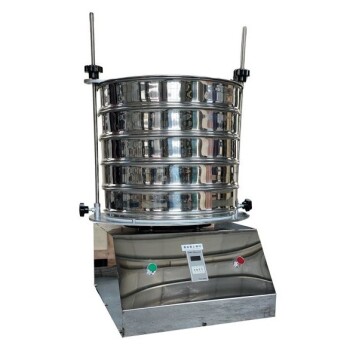
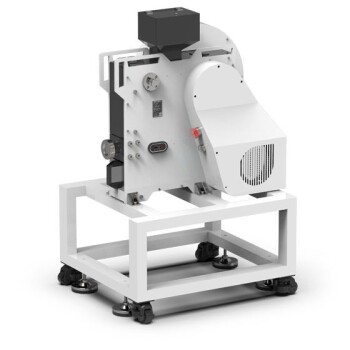
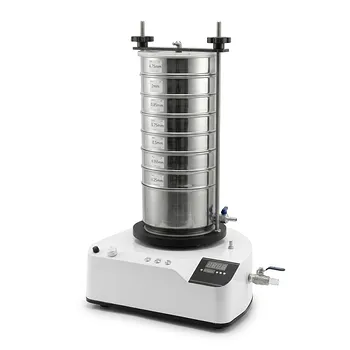
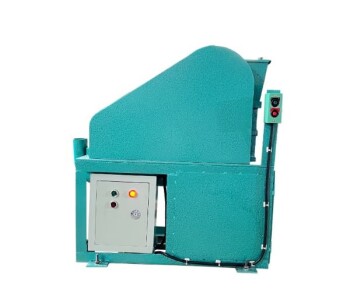
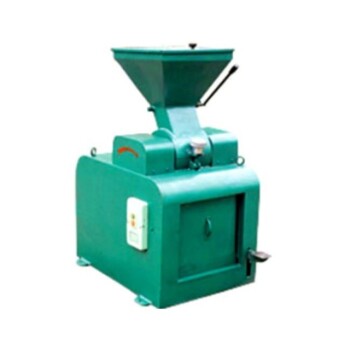
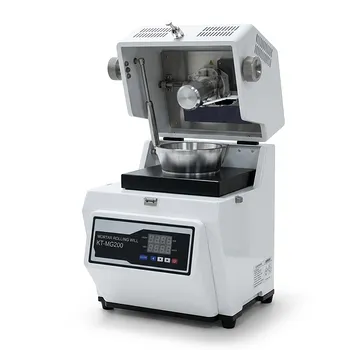
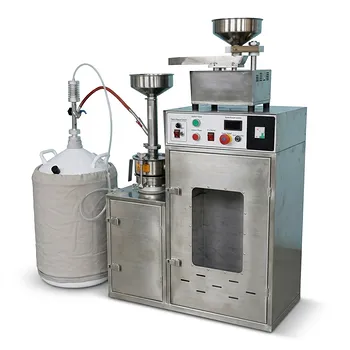
The primary function of high-precision crushing and sieving systems in coal pyrolysis is to mechanically standardize raw coal samples into specific, uniform particle size ranges, most commonly between 150 and 250 μm. This physical refinement is the foundational step required to generate valid, reproducible experimental data.
By eliminating variations in particle dimensions, these systems remove interference caused by differing diffusion paths. This uniformity is essential for accurately measuring reaction kinetics, particularly regarding the release rate of chlorine and the formation of hydrogen chloride (HCl).
The Science of Particle Standardization
Eliminating Kinetic Interference
The core objective of sieving is to ensure that every particle reacts under similar physical conditions. When particle sizes are uniform, you eliminate diffusion path differences as a variable in your analysis.
If particles vary significantly in size, the time it takes for heat to penetrate the coal and for volatiles to escape differs for every fragment. This creates "noise" in your data, making it impossible to distinguish between the intrinsic chemical reaction rate and physical transport delays.
Impact on Chlorine and HCl Analysis
In coal pyrolysis specifically, the release of volatile elements is highly sensitive to particle geometry. The primary reference highlights that the release rate of chlorine is directly influenced by particle dimensions.
Furthermore, the distribution of hydrogen chloride (HCl) formation changes based on size. High-precision preparation ensures that the data you collect reflects the coal's chemical properties, not artifacts of inconsistent sample preparation.
Minimizing Transport Resistance
Reducing Internal Temperature Gradients
While the primary goal is kinetic accuracy, physical refinement also addresses heat transfer. Large or irregular particles suffer from internal temperature gradients, where the surface is hotter than the core.
By reducing coal to a fine, uniform mesh (such as 150–250 μm), you ensure that the sample experiences uniform heating. This allows the pyrolysis reaction to occur simultaneously throughout the sample volume.
Lowering Mass Transfer Resistance
Standardizing particle size minimizes the resistance volatiles encounter when exiting the coal matrix. This is often referred to as minimizing mass transfer resistance.
When resistance is minimized and standardized, the resulting data provides a clearer picture of the actual pyrolysis reaction mechanisms, rather than physical blockages slowing down the release of gases.
Common Pitfalls in Preparation
The Risk of Wide Size Distributions
A common error is accepting a "rough" sieving process that allows for a wide distribution of particle sizes. This compromises repeatability.
If one sample contains a higher ratio of fines to coarse particles than another, the resulting kinetic curves will differ even if the coal type is identical. This inconsistency renders comparative analysis invalid.
Over-Crushing and Fines
While reducing size is necessary, excessive crushing can create "fines" (dust) below the target range. In some reactor types, such as fluidized beds, these fines can be blown out before reacting.
High-precision systems are designed not just to crush, but to classify—strictly isolating the target fraction (e.g., retaining only 150–250 μm) while discarding both the oversize and undersize material.
Making the Right Choice for Your Goal
To ensure the validity of your coal pyrolysis data, apply the following principles to your sample preparation:
- If your primary focus is Kinetic Analysis: Prioritize a narrow particle size range (e.g., 150–250 μm) to eliminate diffusion path errors and accurately track chlorine/HCl release.
- If your primary focus is Heat Transfer Efficiency: Ensure particles are sufficiently small to minimize internal temperature gradients, preventing "thermal lag" within the sample.
Ultimately, the precision of your crushing and sieving system determines the precision of your chemical insights.
Summary Table:
| Preparation Factor | Impact on Pyrolysis | Benefit of Precision Systems |
|---|---|---|
| Particle Size Uniformity | Eliminates diffusion path variations | Ensures reproducible kinetic data |
| Kinetic Accuracy | Affects Chlorine/HCl release rates | Reflects chemical properties vs. physical noise |
| Heat Transfer | Reduces internal temperature gradients | Simultaneous reaction across sample volume |
| Mass Transfer | Lowers resistance for exiting volatiles | Clearer view of reaction mechanisms |
| Classification Control | Minimizes fines and dust loss | High repeatability in fluidized bed reactors |
Elevate Your Sample Preparation with KINTEK
Precision in coal pyrolysis starts with physical refinement. KINTEK specializes in advanced laboratory solutions, offering high-performance crushing and milling systems and sieving equipment designed to deliver the exact particle size distributions required for rigorous kinetic analysis.
Whether you are investigating volatile release rates or optimizing heat transfer, our comprehensive portfolio—including high-temperature furnaces, hydraulic presses, and specialized consumables like crucibles—is engineered to meet the strictest research standards.
Ready to eliminate experimental noise and achieve superior data repeatability? Contact our experts today to find the perfect equipment for your laboratory.
References
- Naoto Tsubouchi, Yasuo Ohtsuka. Fate of the Chlorine in Coal in the Heating Process. DOI: 10.2355/isijinternational.isijint-2017-302
This article is also based on technical information from Kintek Solution Knowledge Base .
Related Products
- Three-dimensional electromagnetic sieving instrument
- Laboratory Test Sieves and Sieving Machines
- Laboratory Jaw Crusher
- Laboratory Vibratory Sieve Shaker Machine for Dry and Wet Three-Dimensional Sieving
- Sealed Jaw Crusher High Efficiency Environmental Protection Safe and Reliable
People Also Ask
- Why is sieving equipment essential for the classification of processed bio-activated carbon? Optimize Performance
- What are the limitations of sieving? Understanding the Constraints of Particle Size Analysis
- What are advantages and disadvantages of sieving method? A Guide to Reliable & Cost-Effective Particle Sizing
- How is sieving important? The Critical Role of Particle Size Analysis in Quality Control
- What is sieving and how does it work? A Guide to Accurate Particle Size Analysis