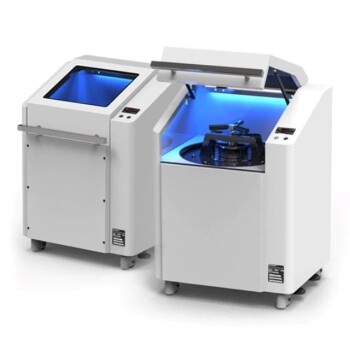
The primary purpose of high-precision grinding equipment in the synthesis of Erbium-doped titanium dioxide nanocomposites is to mechanically transform bulk precursor gels into a fine, uniform powder. By significantly reducing particle size, this equipment increases the material's specific surface area, which is critical for optimizing subsequent heat treatments and maximizing photocatalytic activity.
Core Takeaway The mechanical breakdown of precursor materials is not merely a physical shaping step; it is a fundamental process that exposes the active surface sites required for chemical reactivity and ensures the statistical reliability of material characterization.
The Mechanics of Particle Transformation
From Bulk Gel to Uniform Powder
In synthesis methods involving calcination (such as sol-gel processes), the material often passes through a "bulk gel" phase.
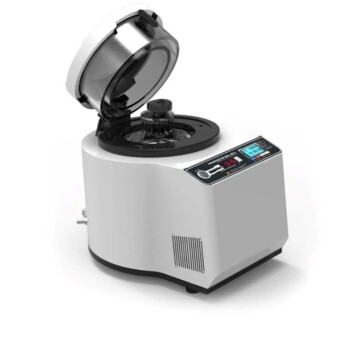
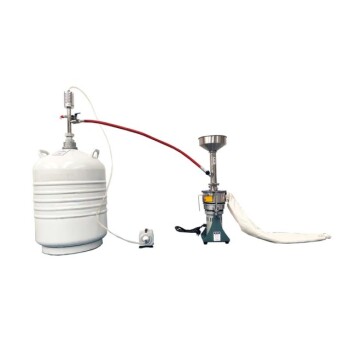
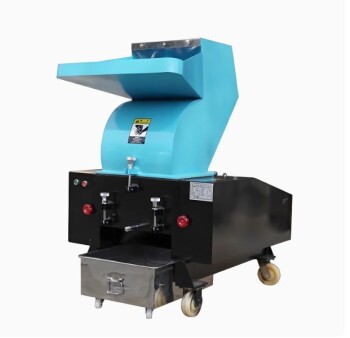
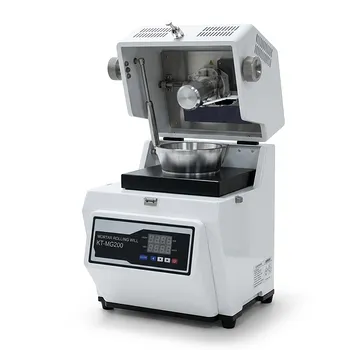
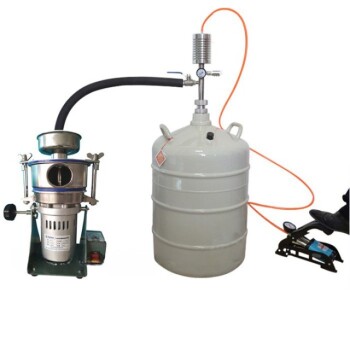
High-precision equipment, such as agate mortars or laboratory pulverizers, is used to break down this agglomerated mass.
The goal is to eliminate clumps and achieve a homogeneous powder consistency before and after high-temperature treatment.
Maximizing Specific Surface Area
The most critical physical change induced by grinding is the reduction of particle size.
As particle size decreases, the specific surface area of the nanocomposite increases exponentially.
This increase is vital because the synthesis and application of Erbium-doped titanium dioxide rely heavily on surface-level interactions.
Impact on Performance and Analysis
Enhancing Reactivity and Active Sites
A larger specific surface area directly translates to a higher number of active sites on the material's surface.
During the calcination phase, these exposed sites facilitate more efficient thermal reactions.
In the final application, such as photocatalysis, these active sites are where the primary chemical reactions occur, making the grinding step directly proportional to the material's final efficiency.
Ensuring Representative Characterization
Beyond performance, grinding serves a critical analytical function.
To accurately measure the properties of a nanocomposite, the sample tested must be truly representative of the whole.
Uniformly ground powders ensure that small samples taken for techniques like X-ray diffraction or spectroscopy yield consistent, reproducible data rather than localized anomalies.
Common Pitfalls to Avoid
Inconsistent Particle Size Distribution
If grinding is uneven, the material will contain a mix of fine dust and larger chunks.
This lack of uniformity leads to uneven heating during calcination, resulting in phase segregation or incomplete doping of the Erbium.
Contamination Risks
While the goal is size reduction, the choice of grinding media is paramount.
Using equipment harder than the sample is necessary, but abrasive wear can introduce impurities into the nanocomposite.
High-precision tools like agate are specifically chosen because they minimize the risk of contaminating the chemically sensitive titanium dioxide matrix.
Making the Right Choice for Your Goal
To maximize the quality of your Erbium-doped titanium dioxide synthesis, align your grinding protocol with your specific objectives:
- If your primary focus is Photocatalytic Efficiency: Prioritize grinding durations that maximize specific surface area to expose the highest number of active sites.
- If your primary focus is Structural Characterization: Ensure the powder is ground to extreme homogeneity to guarantee that your analytical data represents the true bulk properties of the material.
The success of a nanocomposite is often determined not during the chemical reaction, but during the mechanical preparation that allows the chemistry to function.
Summary Table:
| Process Objective | Mechanism | Key Benefit |
|---|---|---|
| Particle Transformation | Breakdown of bulk gels/agglomerates | Achieves homogeneous powder consistency |
| Surface Area Optimization | Significant particle size reduction | Increases active sites for chemical reactions |
| Enhanced Reactivity | Exposure of surface sites | Improves thermal efficiency during calcination |
| Analytical Precision | Mechanical homogenization | Ensures representative and reproducible data |
Elevate Your Material Synthesis with KINTEK Precision
Achieving the perfect nanocomposite requires more than just chemistry—it demands the right mechanical preparation. KINTEK specializes in high-performance laboratory equipment designed to meet the rigorous standards of advanced material research.
Whether you are synthesizing Erbium-doped titanium dioxide or developing next-generation catalysts, our comprehensive range of crushing and milling systems, agate mortars, and sieving equipment ensures your powders reach the ideal particle size and uniformity. We also provide high-temperature muffle and tube furnaces for precise calcination, and a full suite of laboratory tools from hydraulic presses to electrolytic cells.
Ready to maximize your material's photocatalytic activity and characterization accuracy? Contact KINTEK today to discover how our specialized equipment and consumables can streamline your laboratory workflow and deliver superior results.
References
- Rasha A. Elkholy, Abdel Hameed M. El‐Aassar. Preparation and characterization of rare earth element nanoparticles for enhanced photocatalytic degradation. DOI: 10.1007/s11356-023-27090-2
This article is also based on technical information from Kintek Solution Knowledge Base .
Related Products
- Laboratory High Throughput Tissue Grinding Mill Grinder
- High Energy Planetary Ball Mill Milling Machine for Laboratory
- Liquid Nitrogen Cryogenic Grinder Mill Cryomill Airflow Ultrafine Pulverizer
- High Energy Vibratory Laboratory Ball Mill Grinding Mill Single Tank Type
- High Energy Planetary Ball Mill Milling Machine for Laboratory
People Also Ask
- What is the purpose of using a laboratory grinder and standard sieves? Unlock Precise Rice Husk Pretreatment
- What is the purpose of using a laboratory grinder with specific mesh sieves for oat straw? Optimize Pellet Quality
- What is the role of laboratory-grade grinders and sieves in sample prep? Ensure High-Precision Corrosion Analysis
- How do laboratory grinders and standard sieving systems ensure the quality of feedstock for torrefaction?
- What does a grinder do in a laboratory? Achieve Homogeneous Sample Preparation for Accurate Analysis