The primary purpose of the ultra-fine grinding process in coal preparation is to maximize the specific surface area and chemical activity of the particles. By reducing coal to a size below 20 micrometers, the process creates a high-energy state that facilitates subsequent chemical modifications and ensures more efficient thermal reactions.
Ultra-fine grinding serves as a critical pre-treatment step that uses mechanochemical forces to transform raw coal into a highly reactive precursor. This physical size reduction is the essential foundation for efficient chemical oxidation and accurate thermal characterization.
Enhancing Chemical Reactivity through Mechanochemistry
Increasing Specific Surface Area
The transition to a particle size below 20 micrometers exponentially increases the total surface area available for reactions. This physical change ensures that a greater proportion of the coal's mass is exposed to external reagents.
Facilitating Chemical Oxidation
Ultra-fine grinding makes it significantly easier for reaction reagents to interact with the coal structure. This increased accessibility is vital for introducing oxygen-containing functional groups during subsequent chemical oxidation modification processes.
Activating Surface Sites
Beyond simple size reduction, the "mechanochemical" nature of the grinding process induces structural changes that boost surface activity. These active sites serve as the primary locations for chemical bonding and reagent attachment.
Optimizing Thermal and Kinetic Performance
Improving Pyrolysis Characteristics
The increased surface activity directly enhances the primary pyrolysis characteristics of the coal. This leads to more efficient breakdown of the coal's molecular structure when exposed to high temperatures.
Ensuring Uniform Heat Transfer
In experimental and industrial settings, smaller particles allow for faster and more uniform heat transfer. This minimizes internal temperature gradients, ensuring that the entire particle reacts simultaneously rather than from the outside in.
Accuracy of Kinetic Data
By optimizing heat transfer and surface exposure, ultra-fine grinding ensures that measured kinetic data reflects the intrinsic properties of the material. This prevents "mass transfer limitations" from skewing the results of devolatilization experiments.
Understanding the Trade-offs
Energy Intensity and Operational Cost
Achieving a particle size below 20 micrometers requires significant energy input compared to standard pulverization. The diminishing returns of further size reduction must be weighed against the increasing electrical costs of running industrial mills.
Storage and Handling Risks
The very reactivity that makes ultra-fine coal desirable also makes it hazardous. High specific surface area increases the risk of spontaneous combustion and dust explosions, requiring specialized inert storage environments.
Material Agglomeration
Extremely fine powders have a tendency to "clump" or agglomerate due to intermolecular forces. If not managed correctly, this can negate the benefits of the increased surface area by effectively creating larger, less reactive masses.
Applying Ultra-Fine Grinding to Your Goals
How to Apply This to Your Project
- If your primary focus is Chemical Modification: Prioritize reaching the sub-20-micrometer threshold to maximize the introduction of functional groups.
- If your primary focus is Experimental Accuracy: Use ultra-fine grinding to eliminate heat transfer lags and ensure your kinetic data represents the material’s true chemical nature.
- If your primary focus is Combustion Efficiency: Evaluate the trade-off between the increased reactivity of the coal and the higher energy costs of the grinding equipment.
By mastering the transition from raw coal to ultra-fine powder, you unlock the chemical potential necessary for advanced material synthesis and precision thermal analysis.
Summary Table:
| Key Benefit | Technical Impact | Research/Industrial Value |
|---|---|---|
| Increased Surface Area | Particle size reduced to <20μm | Maximizes exposure for chemical reagents |
| Mechanochemical Activation | Boosts surface energy and active sites | Facilitates oxidation and functional bonding |
| Enhanced Heat Transfer | Eliminates internal temperature gradients | Ensures uniform pyrolysis and reaction rates |
| Kinetic Accuracy | Minimizes mass transfer limitations | Provides data reflecting intrinsic properties |
Optimize Your Material Research with KINTEK
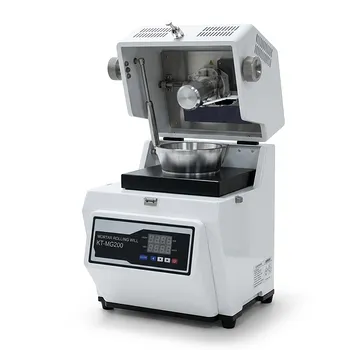
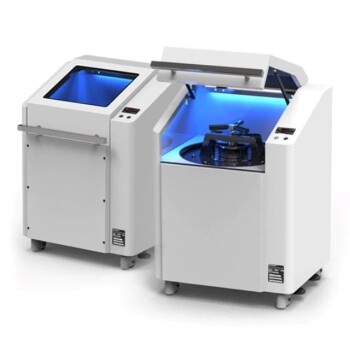
Unlock the full potential of your coal preparation and thermal analysis with KINTEK’s precision laboratory solutions. Our advanced crushing and milling systems are engineered to achieve the sub-20-micrometer thresholds necessary for maximizing chemical reactivity and surface area.
From high-performance mills to high-temperature furnaces (muffle, tube, vacuum) and high-pressure reactors, KINTEK provides the comprehensive toolkit required for accurate material characterization and synthesis. Whether you are a researcher focused on kinetic accuracy or an industrial developer scaling chemical modifications, our equipment ensures reliability and repeatable results.
Ready to enhance your lab's efficiency? Contact our technical experts today to find the perfect equipment and consumables for your specific coal preparation needs.
References
- Yang Ma, Xiumin Jiang. Influences of the Introduced O-Containing Functional Groups on the Gaseous Pyrolysis Product of Superfine Pulverized Coal. DOI: 10.3390/en16114418
This article is also based on technical information from Kintek Solution Knowledge Base .
Related Products
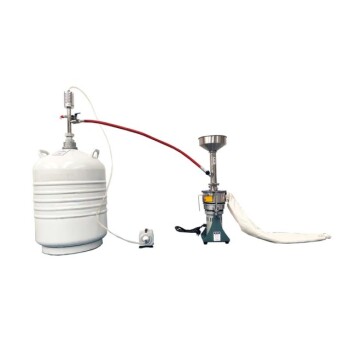
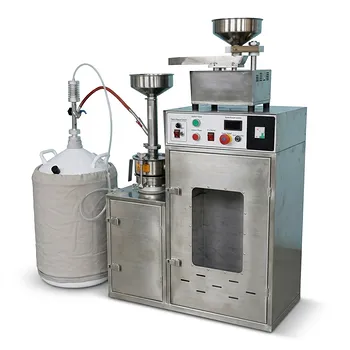
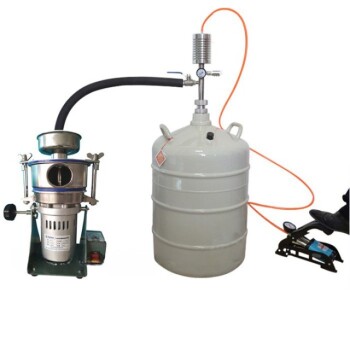
- Liquid Nitrogen Cryogenic Grinder Mill Cryomill Airflow Ultrafine Pulverizer
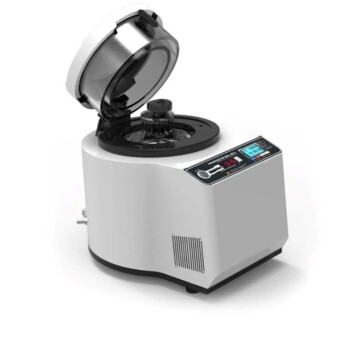
- Laboratory High Throughput Tissue Grinding Mill Grinder
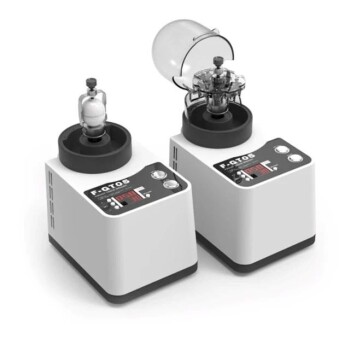
- Laboratory Micro Tissue Grinding Mill Grinder
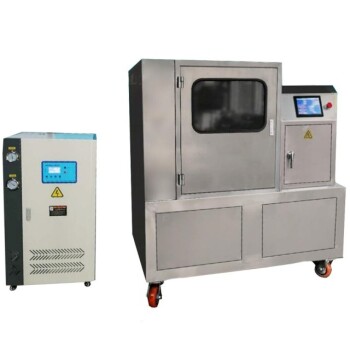
- Low-Temperature Water-Cooled Touchscreen Vibratory Ultrafine Pulverizer
- High Energy Planetary Ball Mill Milling Machine for Laboratory
People Also Ask
- What is cryogenic grinding of crumb rubber? Achieve Fine, High-Quality Rubber Powder
- What are the advantages of using a cryogenic grinder? Achieve Nanoscale Precision for All-Solid-State Battery Cathodes
- What is the role of a cryogenic grinder in PET recycling? Transform Waste into High-Reactive Micron Powders
- Why is a cryogenic grinder required for cured alkyd resin HRMAS NMR? Ensure Structural Integrity & Sample Precision
- What is the temperature of cryogenic grinding? Achieve Superior Particle Size & Preserve Heat-Sensitive Materials