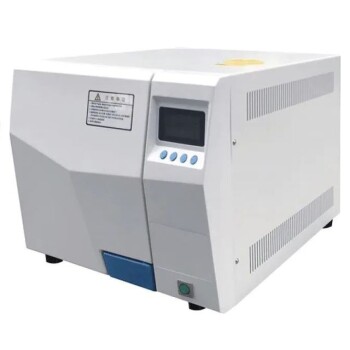
The primary purpose is the elimination of variable moisture to ensure process stability. In the context of alkali-activated slag-ceramic powder geopolymers, an industrial-grade laboratory oven is used during pretreatment to dry raw materials, such as washed ceramic waste and oyster shells, at a constant temperature (typically 105°C). This removes both surface moisture and physically adsorbed water, which is a prerequisite for efficient mechanical processing and accurate chemical formulation.
Precise water control is the cornerstone of successful geopolymer synthesis. By thoroughly drying raw materials to a "zero-moisture" baseline, you prevent uncontrolled moisture from altering the critical water-to-binder ratio during the mixing stage.
The Critical Role of Moisture Removal
Eliminating Adsorbed Water
Raw materials often retain moisture that is not immediately visible to the naked eye. The oven facilitates the removal of physically adsorbed water trapped in the porous structures of ceramic waste or shells.
Maintaining a constant temperature of 105°C ensures the water evaporates completely without chemically altering the material itself. This step continues until the materials reach a constant mass, confirming total dryness.
Optimizing the Comminution Process
Moisture significantly hampers the efficiency of mechanical reduction techniques like ball milling. Wet or damp materials tend to agglomerate, leading to clogging and uneven particle sizes.
By ensuring the feedstock is completely dry, the oven ensures the materials remain free-flowing. This maximizes the efficiency of the milling process, resulting in a finer, more uniform powder.
Ensuring Chemical Precision
Controlling the Water-to-Binder Ratio
The mechanical strength and durability of a geopolymer are heavily dictated by the water-to-binder ratio. If raw materials contain unknown amounts of moisture, the calculated ratio in the final mix will be incorrect.
Pretreatment in the oven establishes a known baseline. This allows researchers to add the exact amount of liquid activator required, ensuring reproducibility across different batches.
Understanding the Trade-offs and Distinctions
Pretreatment vs. Curing Temperatures
It is critical to distinguish the oven's role in pretreatment from its role in curing. While pretreatment requires temperatures around 105°C to drive off water, thermal curing typically occurs at lower temperatures.
As noted in broader geopolymer applications (such as fly ash-based slurries), curing ovens operate between 60°C and 90°C. High temperatures during curing are meant to accelerate cross-linking, not just to dry the material. Confusing these two temperature ranges can lead to compromised structural integrity.
Energy Consumption vs. Process Consistency
The primary trade-off of using industrial ovens for pretreatment is the energy cost and time required to reach constant mass. However, skipping this step introduces variables that make scientific analysis impossible.
While it may be tempting to air-dry materials to save energy, ambient humidity fluctuates. Only a controlled oven environment guarantees that "dry" means the same thing every time.
Making the Right Choice for Your Goal
How to Apply This to Your Project
- If your primary focus is mechanical strength: Ensure your raw materials are dried to a constant weight at 105°C to guarantee the water-to-binder ratio is mathematically accurate.
- If your primary focus is milling efficiency: Prioritize oven drying to prevent agglomeration inside the ball mill, ensuring a finer particle distribution.
- If your primary focus is reaction kinetics: Remember that the 105°C oven setting is for raw materials only; reduce the temperature to 60–90°C if using the oven for the subsequent curing stage.
Consistency in the pretreatment phase is the single most effective way to eliminate experimental error in geopolymer synthesis.
Summary Table:
| Process Stage | Goal | Temperature | Key Benefit |
|---|---|---|---|
| Pretreatment | Moisture Removal | 105°C | Eliminates adsorbed water for a 'zero-moisture' baseline |
| Milling | Size Reduction | N/A | Prevents material agglomeration and clogging in ball mills |
| Mixing | Chemical Precision | Ambient | Ensures an accurate, reproducible water-to-binder ratio |
| Curing | Polymerization | 60°C - 90°C | Accelerates cross-linking and enhances structural integrity |
Precision in pretreatment is the foundation of high-performance geopolymer research. KINTEK provides the specialized industrial-grade laboratory ovens and crushing and milling systems needed to ensure your raw materials are perfectly prepared. From achieving a constant mass to refining particle sizes with our ball mills and hydraulic presses, we empower your lab with consistent results. Contact KINTEK today to discover our full range of high-temperature solutions and consumables tailored for advanced material science.
References
- Gui-Yu Zhang, Xiao-Yong Wang. The Effect of Oyster Shell Powder on the High-Temperature-Properties of Slag-Ceramic Powder-Based Geopolymer. DOI: 10.3390/ma16103706
This article is also based on technical information from Kintek Solution Knowledge Base .
Related Products
- Laboratory Scientific Electric Heating Blast Drying Oven
- 56L Vertical Laboratory Vacuum Drying Oven
- 23L Laboratory Vacuum Drying Oven
- 1200℃ Muffle Furnace Oven for Laboratory
- 1700℃ Muffle Oven Furnace for Laboratory
People Also Ask
- How does a laboratory electric drying oven contribute to the formation of the initial coating? Expert Insights
- What role does a precision laboratory drying oven play in the synthesis of GO-PANI nanocomposites? Protect Material Integrity
- What role does a laboratory drying oven play in the preparation of zinc oxide nanoparticle precursors?
- What is the necessity of using a laboratory drying oven when processing MoO3/GO composite nanopowders? Find out here.
- What is the role of a laboratory drying oven in cellulose citrate production? Ensure Material Stability & Purity