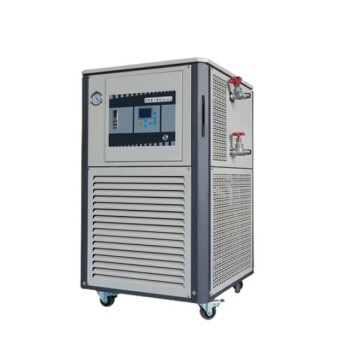
The primary role of an electric heating constant temperature blast drying oven in the production of transparent wood is to serve as a critical pretreatment tool for moisture elimination. By subjecting wood logs to sustained heat—specifically around 102°C—this equipment ensures the complete removal of internal water content. This step is structurally vital to prepare the wood for chemical modification.
Core Takeaway: The drying process is not merely about removing water; it is about void management. By evacuating moisture, the oven creates the necessary empty pore space that allows delignification agents and epoxy resins to fully infiltrate the wood matrix, which is the key to achieving optical transparency.
The Mechanics of Moisture Removal
The transformation of opaque wood into a transparent material relies on replacing the wood's natural components with engineering resins. The drying oven facilitates this exchange through two distinct mechanisms.
Creating Optimal Pore Conditions
Natural wood is porous but filled with moisture. The blast drying oven evaporates this moisture to evacuate the cellular structure.
This evacuation creates open pore conditions. These voids are the physical spaces that will later be occupied by the refractive-index-matching polymers required for transparency.
Facilitating Chemical Infiltration
The drying process is a prerequisite for the subsequent chemical stages.
Specifically, it prepares the wood for the infiltration of chemical delignification agents. Following delignification, the dry, porous structure allows for the high-efficiency filling of epoxy resin, ensuring the resin penetrates deep into the material rather than staying on the surface.
Operational Parameters
Precision is required to ensure the wood is prepared without damaging its structural integrity.
Temperature and Duration
According to standard protocols for materials such as poplar logs, the process requires a specific thermal profile.
The wood is heated at 102°C for a duration of 12 hours. This timeframe is calculated to ensure the heat penetrates to the core of the log, removing deep-seated moisture that ambient drying cannot reach.
The Role of "Blast" Airflow
The term "blast" refers to the forced air circulation within the oven.
This feature ensures uniform temperature distribution across the entire chamber. It prevents localized hot spots or cold pockets, ensuring that every part of the wood log dries at the same rate.
Understanding the Trade-offs
While the drying phase is essential, it introduces specific risks that must be managed to ensure quality.
Moisture vs. Structural Integrity
The goal is complete moisture removal, but the process must be controlled.
If the temperature fluctuates significantly, the wood may warp or crack due to uneven drying stresses. The constant temperature control of the oven mitigates this risk by maintaining a stable thermal environment.
The Risk of Incomplete Drying
Failing to adhere to the 12-hour duration or the 102°C threshold can result in residual moisture.
Any remaining water will repel the hydrophobic epoxy resin during the filling stage. This results in internal defects, such as haze or bubbles, which compromise the final transparency and mechanical strength of the composite.
Optimizing the Pretreatment Phase
To achieve the best results in transparent wood production, you must tailor your drying approach to your specific outcome.
- If your primary focus is Optical Clarity: Prioritize the duration of the drying cycle to guarantee absolute moisture elimination, ensuring maximum resin uptake and minimal haze.
- If your primary focus is Structural Stability: Rely on the precise temperature control and airflow of the blast oven to prevent warping or cracking during the rapid dehydration of the wood.
Thorough drying is the invisible foundation upon which high-quality transparent wood is built.
Summary Table:
| Feature | Specification/Role | Benefit in Transparent Wood Production |
|---|---|---|
| Target Temperature | 102°C | Ensures complete evaporation of deep-seated moisture. |
| Process Duration | 12 Hours (for poplar) | Guarantees heat penetration to the core of the wood log. |
| Forced Air (Blast) | Uniform Circulation | Prevents localized hotspots and ensures even drying. |
| Moisture Removal | Void Management | Creates open pores for delignification and resin uptake. |
| Thermal Stability | Constant Temperature | Mitigates structural risks like warping or cracking. |
Elevate Your Material Science with KINTEK Precision
Achieving perfect optical transparency requires absolute control over your pretreatment environment. KINTEK specializes in high-performance laboratory equipment designed to meet the rigorous demands of advanced material research.
Whether you are preparing transparent wood or developing next-gen composites, our range of electric heating constant temperature blast drying ovens provides the uniform thermal distribution and precision timing necessary for flawless results. Beyond drying, KINTEK offers a comprehensive portfolio including:
- High-Temperature Furnaces & Reactors: Muffle, vacuum, and CVD systems for chemical modification.
- Processing Equipment: Crushing, milling, and hydraulic presses for material forming.
- Support Solutions: Cooling systems, homogenizers, and essential consumables like PTFE and ceramics.
Ready to optimize your lab’s efficiency? Contact our experts today to find the perfect equipment solution for your research goals.
References
- Yan Wu, Feng Yang. Comparison of Multilayer Transparent Wood and Single Layer Transparent Wood With the Same Thickness. DOI: 10.3389/fmats.2021.633345
This article is also based on technical information from Kintek Solution Knowledge Base .
Related Products
- Laboratory Scientific Electric Heating Blast Drying Oven
- 23L Laboratory Vacuum Drying Oven
- High Temperature Muffle Oven Furnace for Laboratory Debinding and Pre Sintering
- 56L Vertical Laboratory Vacuum Drying Oven
- Electric Rotary Kiln Continuous Working Small Rotary Furnace Heating Pyrolysis Plant
People Also Ask
- How does a laboratory electric drying oven contribute to the formation of the initial coating? Expert Insights
- What role does a precision laboratory drying oven play in the synthesis of GO-PANI nanocomposites? Protect Material Integrity
- What role does a laboratory drying oven play in the preparation of zinc oxide nanoparticle precursors?
- What is the necessity of using a laboratory drying oven when processing MoO3/GO composite nanopowders? Find out here.
- What is the role of a laboratory drying oven in cellulose citrate production? Ensure Material Stability & Purity