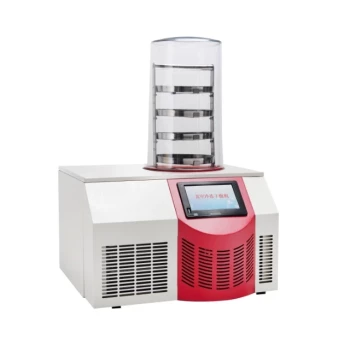
The primary function of these drying ovens is the complete evaporation of residual solvents following the elution and washing phases. After the graphene adsorbent has been washed with methanol and distilled water to remove contaminants like Sulfamethazine (SMZ), the oven provides the thermal energy required to drive these liquids out of the material's internal structure.
Core Takeaway The drying process is not merely about removing surface moisture; it is a reactivation step that clears the internal pore architecture. By evacuating solvents from the mesopores, the oven reopens active sites, restoring the material's adsorption capacity for subsequent reuse cycles.
The Mechanics of Regeneration
Removing Elution Solvents
During the cleaning phase, mesoporous graphene is saturated with solvents such as methanol and distilled water.
These liquids occupy the physical space within the pores. Until they are removed, the adsorbent is functionally "full" and cannot capture new target molecules.
Reopening Microporous Spaces
The drying oven, typically set to around 100 °C, ensures that solvents trapped deep within the micropores are volatilized.
This "deep drying" is critical because surface air-drying is often insufficient to clear the sub-nanometer cavities where high-performance adsorption occurs.
Restoring Active Sites
The chemical interaction between the graphene and the target pollutant relies on specific active sites.
Drying liberates these sites from the wash water, resetting the chemical potential of the surface and allowing the material to interact with pollutants again in the next cycle.
Critical Considerations for Material Integrity
Preserving Structural Stability
While heat is necessary for drying, excessive heat can be detrimental to carbon-based structures.
Using a controlled temperature helps prevent the collapse of the mesoporous framework or the unwanted oxidation of surface functional groups, which would permanently degrade performance.
The Role of Vacuum Environments
While standard ovens work for many applications, vacuum drying ovens reduce the boiling point of solvents.
This allows for deep drying at lower temperatures, which is particularly beneficial for preserving fragile pore structures that might suffer thermal stress at higher standard temperatures.
Understanding the Trade-offs
Temperature vs. Time
Higher temperatures (e.g., above 100 °C) accelerate solvent removal but increase the risk of structural collapse or oxidation.
Lower temperatures (e.g., 70–80 °C) are safer for the material's chemical activity but require significantly longer drying times to ensure all micropores are evacuated.
Vacuum vs. Constant Pressure
Vacuum drying is superior for removing trace solvents from deep pores and protecting heat-sensitive structures, but requires more complex equipment.
Constant temperature drying is simpler and effective for robust materials, but relies solely on thermal diffusion, which may be less efficient for deeply embedded solvents.
Making the Right Choice for Your Goal
To maximize the lifespan and efficiency of your mesoporous graphene adsorbents, align your drying method with your specific stability requirements.
- If your primary focus is rapid cycling: Use a vacuum drying oven to lower the solvent boiling point, accelerating evaporation without requiring dangerous heat levels.
- If your primary focus is process simplicity: Use a constant temperature oven at 100 °C, ensuring the duration is sufficient to reach the innermost pores.
- If your primary focus is material longevity: Lower the temperature to the 70–80 °C range (potentially under vacuum) to minimize thermal stress and prevent pore collapse over many cycles.
Proper drying is the difference between a single-use material and a sustainable, cyclic adsorption solution.
Summary Table:
| Feature | Constant Temperature Drying | Vacuum Drying |
|---|---|---|
| Primary Mechanism | Thermal evaporation via diffusion | Lowered boiling point via reduced pressure |
| Typical Temperature | ~100 °C | 70–80 °C (Variable) |
| Material Safety | Moderate risk of thermal stress | High protection for fragile structures |
| Pore Evacuation | Effective for surface/large pores | Superior for deep micropore clearing |
| Efficiency | Slower for embedded solvents | Rapid solvent removal at lower heat |
Maximize Your Material Lifespan with KINTEK Precision Drying Solutions
Don't let inefficient regeneration compromise your research. KINTEK specializes in high-performance laboratory equipment designed for the most delicate material science applications. Our advanced vacuum drying ovens and constant temperature ovens provide the precise thermal control and atmospheric stability required to reactivate mesoporous graphene and other advanced adsorbents without risking structural collapse.
From high-temperature furnaces and crushing systems to specialized vacuum reactors and autoclaves, KINTEK provides the comprehensive toolset needed for cutting-edge battery research and chemical engineering.
Ready to optimize your regeneration process? Contact our laboratory specialists today to find the perfect drying solution for your specific material requirements.
References
- Kenneth Mensah, Hassan Shokry. Rapid adsorption of sulfamethazine on mesoporous graphene produced from plastic waste: optimization, mechanism, isotherms, kinetics, and thermodynamics. DOI: 10.1007/s13762-022-04646-2
This article is also based on technical information from Kintek Solution Knowledge Base .
Related Products
- 56L Vertical Laboratory Vacuum Drying Oven
- 23L Laboratory Vacuum Drying Oven
- Laboratory Scientific Electric Heating Blast Drying Oven
- Benchtop Laboratory Vacuum Freeze Dryer
- Dental Porcelain Zirconia Sintering Ceramic Vacuum Press Furnace
People Also Ask
- Why is a laboratory vacuum drying oven recommended for rice straw residues? Protect Your Biomass Integrity
- What role does a laboratory vacuum drying oven play in the preparation of modified multi-walled carbon nanotubes?
- What is the importance of using a laboratory vacuum drying oven? Preserving Slow-Release Microcapsule Integrity
- Why is a Laboratory Vacuum Drying Oven recommended for PBAT microspheres? Protect Sensitive Polymer Integrity
- What role does a laboratory vacuum drying oven play in processing nanoparticle powder samples? Protect Sample Integrity