The primary function of a circulating condenser is to act as a vapor-retention mechanism. In a benzoic acid esterification setup, it captures the volatile alcohol vapors generated by heating, cools them back into a liquid state, and drips them back into the reaction vessel. This cycle, known as reflux, allows the reaction to be heated for extended periods without losing the solvent or reactants to evaporation.
The circulating condenser acts as a chemical "ceiling," preventing the escape of volatile ingredients to maintain the precise chemical balance required for a successful reaction.
The Mechanics of Reflux
Managing Volatility Under Heat
Esterification reactions require heat to proceed efficiently. However, reactants like ethanol are highly volatile and boil at relatively low temperatures. Without a control mechanism, heating the mixture would cause these essential components to evaporate away rapidly.
The Condensation Loop
The circulating condenser creates a cool zone directly above the reaction flask using a flowing cooling medium (usually water). As hot vapors rise, they contact the cold surface of the condenser. This thermal exchange forces the vapors to condense back into liquid droplets, which return to the mixture below.
Preserving Reaction Integrity
Maintaining Stoichiometry
For the reaction to reach completion, the ratio of benzoic acid to alcohol must remain stable. Reflux ensures that the amount of alcohol in the system remains constant throughout the heating process. If the alcohol were allowed to boil off, the acid-to-alcohol molar ratio would shift, stalling the reaction and effectively limiting yield.
Enabling Extended Heating
Time is often a critical variable in organic synthesis. The circulating condenser allows the system to remain at the boiling point of the solvent for hours without the volume decreasing. This sustained thermal energy provides the kinetic push necessary to drive the reaction toward the desired product.
Safety and Environmental Control
Containing Flammable Vapors
Beyond chemical efficiency, the condenser is a primary safety device. Alcohol vapors are often flammable and can be hazardous if inhaled. By condensing these vapors inside the glassware, the device prevents dangerous fumes from escaping into the laboratory operating environment.
Preventing Laboratory Contamination
An open system releases chemicals into the air, potentially contaminating other experiments or equipment. The condenser keeps the reaction self-contained. This isolation ensures that the laboratory atmosphere remains safe for personnel.
Common Pitfalls to Avoid
Inadequate Cooling Flow
If the flow of the cooling medium is interrupted or too slow, the condenser allows vapors to "break through." This results in the immediate loss of reactants and the release of fumes, defeating the purpose of the setup.
Thermal Shock
Sudden changes in temperature can stress glass equipment. While the condenser is designed for thermal exchange, ensuring a steady, moderate flow of coolant helps maintain the structural integrity of the apparatus during high-heat reactions.
Making the Right Choice for Your Goal
To ensure your esterification process is successful, consider your primary objective:
- If your primary focus is Reaction Yield: Ensure the condenser is active before heating begins to prevent the loss of even a single mole of alcohol, preserving the critical molar ratio.
- If your primary focus is Laboratory Safety: Double-check that the cooling medium is flowing sufficient to handle the boil rate, ensuring no flammable vapors escape the top of the column.
Ultimately, the circulating condenser transforms a potentially volatile, open-ended process into a stable, closed-loop system that is safe and chemically efficient.
Summary Table:
| Feature | Function in Esterification | Benefit to Process |
|---|---|---|
| Vapor Capture | Cools volatile alcohol vapors back to liquid | Prevents loss of reactants and solvents |
| Reflux Cycle | Returns condensed liquid to the reaction flask | Allows extended heating without volume loss |
| Stoichiometry Control | Maintains the acid-to-alcohol molar ratio | Ensures reaction reaches completion and maximum yield |
| Containment | Traps flammable and hazardous fumes | Enhances laboratory safety and environmental control |
Elevate Your Organic Synthesis with KINTEK Precision
Achieving consistent yields in complex reactions like benzoic acid esterification requires more than just high-quality reagents—it demands reliable thermal and containment systems. KINTEK specializes in professional-grade laboratory equipment designed to optimize your workflow and ensure maximum safety.
From high-performance circulating condensers and glassware to advanced high-temperature furnaces, autoclaves, and cooling solutions like ULT freezers and cold traps, KINTEK provides the tools researchers need for success. Whether you are scaling up production with our high-pressure reactors or refining samples with our crushing and milling systems, our experts are ready to support your lab's unique requirements.
Ready to optimize your reaction setup? Contact KINTEK today to discover how our comprehensive range of laboratory consumables and equipment can enhance your research precision and productivity.
References
- Emine Sert, Ferhan Sami Atalay. Application of Green Catalysts for the Esterification of Benzoic Acid with Different Alcohols. DOI: 10.18466/cbayarfbe.370364
This article is also based on technical information from Kintek Solution Knowledge Base .
Related Products
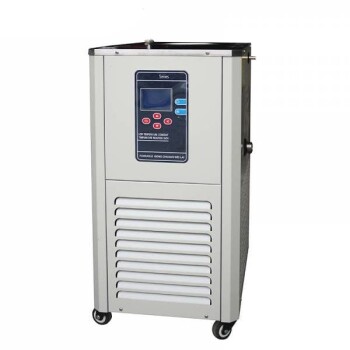
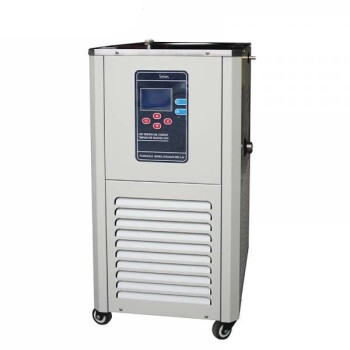
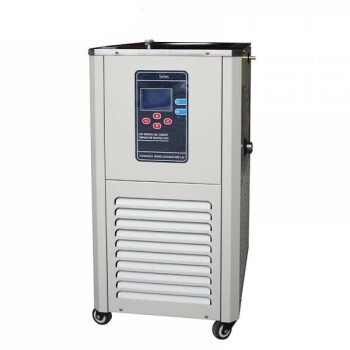
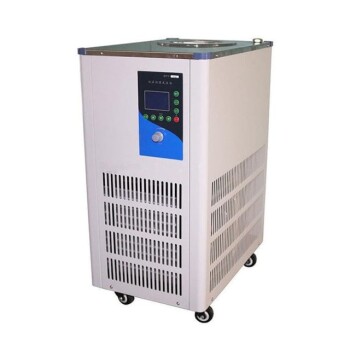
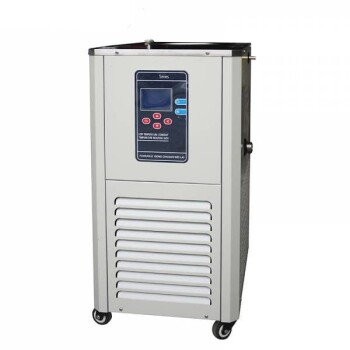
- 40L Chiller Water Bath Cooling Circulator Low Temperature Constant Temperature Reaction Bath
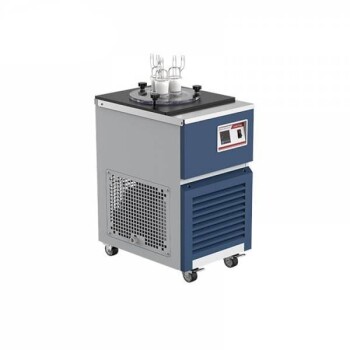
- Vacuum Cold Trap Chiller Indirect Cold Trap Chiller
- 30L Chiller Water Bath Cooling Circulator Low Temperature Constant Temperature Reaction Bath
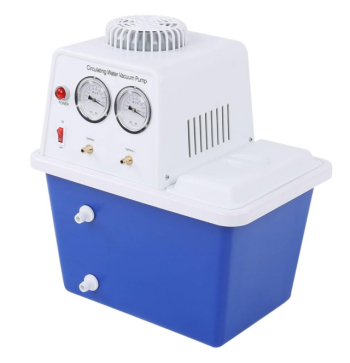
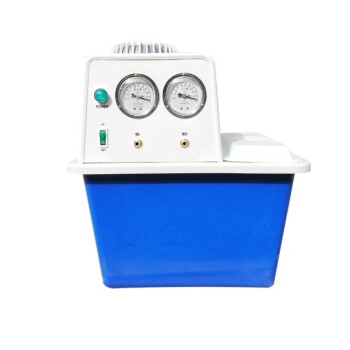
- Circulating Water Vacuum Pump for Laboratory and Industrial Use
- 50L Chiller Water Bath Cooling Circulator Low Temperature Constant Temperature Reaction Bath
People Also Ask
- What function does a circulating cooling chiller perform during the gas adsorption isotherm testing of nanoporous carbon?
- Why is a circulating water chiller required for Prussian Blue nanoparticles? Ensure Stability & Batch Reproducibility
- What is the necessity of a circulating water bath in chlorate production? Optimize Yield & Purity with Precision
- For which types of substances are water baths and chillers considered ideal? Essential Care for Sensitive Samples
- What is the primary function of water baths and chillers? Mastering Precise Thermal Stability for Liquid Samples