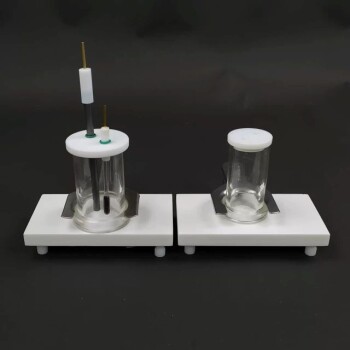
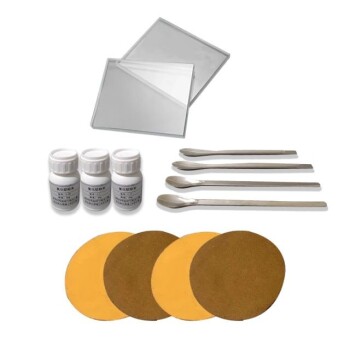
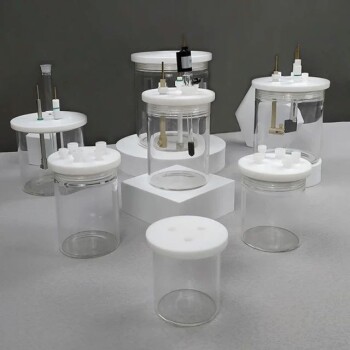
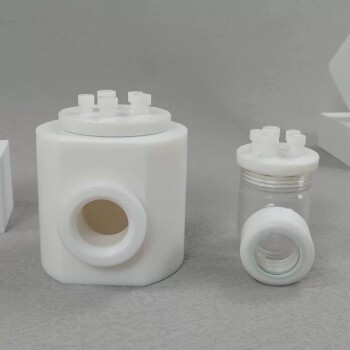
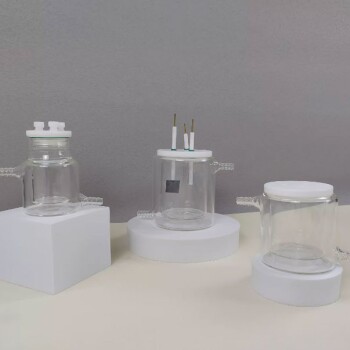
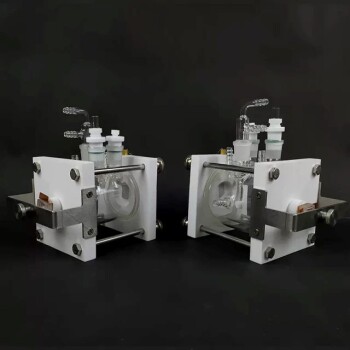
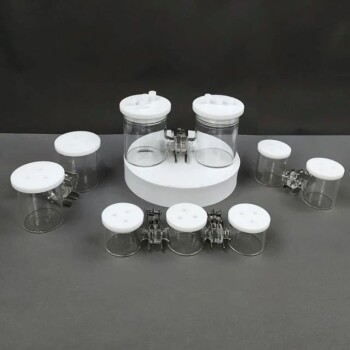
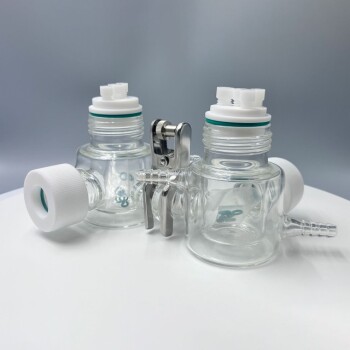
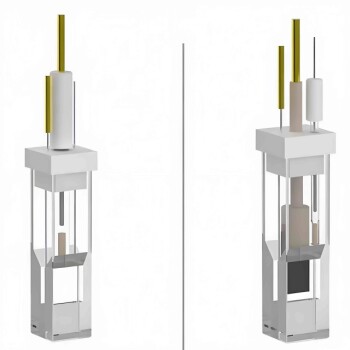
The primary purpose of an electrolytic etching system in this context is to selectively reveal the internal microstructure of 310H stainless steel by chemically attacking specific regions of the material. By applying a constant voltage through a 10% oxalic acid electrolyte, the system preferentially dissolves grain boundaries and phase interfaces. This renders the otherwise invisible austenite grain structure and carbide precipitates clearly visible for analysis under an optical microscope.
Core Insight While mechanical polishing creates a smooth surface, it obliterates microstructural details. Electrolytic etching is the critical "development" step that selectively corrodes high-energy areas—specifically grain boundaries and precipitates—to create the visual contrast necessary for quantitative grain size rating and oxidation analysis.
The Mechanism of Selective Attack
Controlled Anodic Dissolution
The system functions by turning the steel specimen into an anode within an electrical circuit.
When a constant voltage (typically 6 V) is applied, the current forces the metal to dissolve at different rates.
Targeting High-Energy Zones
The etching process does not attack the material uniformly.
Instead, it targets areas with higher chemical potential, specifically the grain boundaries and phase interfaces.
This selective removal of material creates physical topography on the sample surface, which reflects light differently in a microscope to form a visible image.
The Role of Stable Electrodes
To ensure the etching is consistent, stable counter electrodes (often made of platinum) are used.
These electrodes withstand high voltages without corroding or introducing impurities into the electrolyte, ensuring a stable current path for precise control.
Revealing 310H Specific Features
Austenite Polyhedral Grain Structure
310H is an austenitic stainless steel, characterized by a specific crystal structure.
The etching process clearly delineates the polyhedral grain structure, allowing researchers to see the shape and arrangement of the crystals.
Identifying Carbide Precipitation
A critical aspect of analyzing oxidized 310H is observing changes in chemical composition.
The system highlights carbide precipitation along the boundaries, which often occurs during high-temperature oxidation or sensitization.
Measuring Grain Boundary Width
Beyond just seeing the grains, the etching reveals the width of the grain boundaries.
This detail is essential for studying microstructural evolution, as changes in boundary width can indicate diffusion processes or phase transformations triggered by oxidation.
Understanding the Trade-offs
Sensitivity to Voltage and Time
Success depends entirely on precise control of the voltage and etching duration.
If the voltage is too high or applied for too long, the sample may suffer from over-etching, where the grain surfaces are pitted and the boundaries become too wide to measure accurately.
Material Specificity
This method is highly specific to the electrolyte used.
While 10% oxalic acid is excellent for revealing carbides and grain boundaries in austenitic steels like 310H, it may not produce the distinct phase color contrasts seen in other techniques used for duplex steels.
Making the Right Choice for Your Goal
To maximize the utility of electrolytic etching for 310H stainless steel, align your observation method with your specific analytical objective:
- If your primary focus is Grain Size Rating: Ensure the voltage is regulated (e.g., 6 V) to produce sharp, thin boundary lines that allow for accurate geometric measurement of the austenite polyhedral grains.
- If your primary focus is Oxidation Analysis: Adjust the etching time to ensure sufficient contrast is generated at phase interfaces to clearly highlight carbide precipitation and sensitized zones.
By precisely controlling the electrochemical parameters, you transform a polished metal surface into a data-rich map of the material's thermal history.
Summary Table:
| Parameter/Feature | Specification/Benefit |
|---|---|
| Electrolyte Type | 10% Oxalic Acid |
| Typical Voltage | 6 V (Constant) |
| Electrode Material | Platinum (for stability and purity) |
| Key Revealed Features | Austenite grain boundaries, carbide precipitation, phase interfaces |
| Analytical Goal | Grain size rating and oxidation/diffusion analysis |
| Process Risk | Over-etching (pitting) if voltage/time is not controlled |
Optimize Your Material Analysis with KINTEK Precision
Unlock the full potential of your microstructural research with KINTEK’s advanced laboratory solutions. Whether you are performing critical grain size ratings on 310H stainless steel or analyzing high-temperature oxidation, our high-performance electrolytic cells and electrodes provide the stability and control you need for repeatable results.
Beyond etching, KINTEK specializes in a comprehensive range of laboratory equipment including:
- High-Temperature Furnaces (Muffle, Tube, Vacuum, and CVD) for heat treatment and oxidation studies.
- High-Pressure Reactors and Autoclaves for demanding chemical environments.
- Crushing, Milling, and Sieving systems for sample preparation.
- Precision Consumables including ceramics, crucibles, and PTFE products.
Ready to enhance your lab's efficiency and accuracy? Contact our experts today to find the perfect equipment tailored to your research requirements.
References
- Aurelia Elena Tudose, Manuela Fulger. Oxidation Behavior of an Austenitic Steel (Fe, Cr and Ni), the 310 H, in a Deaerated Supercritical Water Static System. DOI: 10.3390/met11040571
This article is also based on technical information from Kintek Solution Knowledge Base .
Related Products
- Electrolytic Electrochemical Cell for Coating Evaluation
- Electrode Polishing Material for Electrochemical Experiments
- Super Sealed Electrolytic Electrochemical Cell
- Electrolytic Electrochemical Cell with Five-Port
- Side Window Optical Electrolytic Electrochemical Cell
People Also Ask
- What is the volume range of the coating evaluation electrolytic cell? A Guide to Choosing the Right Size
- How does the design of an electrochemical electrolytic cell influence the coating uniformity? Optimize Your Catalysts
- What is the correct shutdown and disassembly procedure after an experiment? Ensure Safety and Protect Your Equipment
- How do the electrochemical cell and three-electrode testing system collaborate? Optimize Zinc Anode Deposition Control
- What is the difference between a voltaic cell and an electrochemical cell? Understand the Two Types of Energy Conversion