The primary purpose of installing a high-efficiency cold trap is to remove unreacted water vapor from the gas stream before it enters sensitive analytical equipment. By routing the reactor exhaust through a cooling medium, typically an ice-water bath, the trap physically condenses moisture out of the gas phase. This process is the first line of defense against sensor degradation and data corruption.
A cold trap acts as a critical filtration stage between your reactor and your analyzer. It safeguards the precision of real-time measurements—specifically for CO and CO2—by eliminating water vapor that causes signal interference and physical damage to high-precision sensors.
Protecting Analytical Hardware
Preventing Sensor Damage
High-precision infrared sensors are extremely sensitive to environmental contaminants. Moisture is a primary threat to the longevity of these components.
Without a cold trap, water vapor enters the analyzer, where it can condense on optical windows or corrode delicate sensor elements.
Maintaining System Stability
Accumulated water in the gas lines does more than just corrode parts; it alters the physical flow of the gas.
Significant moisture buildup can cause pressure fluctuations within the system. These fluctuations disrupt the steady state required for accurate analysis, regardless of the instrument type.
Ensuring Measurement Accuracy
Eliminating Signal Interference
In infrared gas analysis, water vapor acts as a significant source of background noise.
Water absorbs infrared radiation in spectrums that often overlap with target gases like CO and CO2. Removing the water ensures that the detector reads only the target gas, not the background moisture.
Improving Chromatographic Separation
While critical for IR, water removal is equally vital if you are using gas chromatography (GC) as a secondary method.
Moisture can degrade the column efficiency in a GC system. By drying the gas stream, you maintain the column's ability to separate components effectively.
Operational Considerations and Trade-offs
The Risk of Component Loss
While the goal is to remove water, an improperly set cold trap can condense other heavy components.
You must ensure the bath temperature is low enough to condense water but not so low that it removes reaction products or reactants you intend to measure.
Maintenance Requirements
A cold trap is not a "set and forget" device; it physically collects liquid that must go somewhere.
If the trap is not drained or monitored, it will eventually fill up. A flooded trap can result in a slug of water entering the analyzer, causing immediate and catastrophic sensor failure.
Optimizing Your Analysis Setup
To ensure valid results and protect your investment, you must align the cold trap operation with your specific analytical goals.
- If your primary focus is Data Accuracy: Ensure the bath temperature is stable to completely eliminate water vapor overlap in CO/CO2 infrared signals.
- If your primary focus is Equipment Longevity: Implement a strict schedule for draining the trap to prevent moisture carryover into sensitive sensor arrays.
Effective water removal is the single most important step in converting raw reaction exhaust into reliable, actionable data.
Summary Table:
| Feature | Impact Without Cold Trap | Benefit of Cold Trap Installation |
|---|---|---|
| Sensor Health | Corrosion and optical window damage | Prolongs lifespan of high-precision IR sensors |
| Data Accuracy | Infrared signal interference (CO/CO2 overlap) | Eliminates background noise for precise readings |
| System Flow | Pressure fluctuations and line blockages | Maintains stable flow and system equilibrium |
| GC Performance | Column degradation and poor separation | Protects chromatographic efficiency and column life |
Maximize Your Analytical Precision with KINTEK
Don’t let moisture compromise your catalytic research or damage expensive sensors. KINTEK specializes in advanced laboratory solutions, including high-performance cooling solutions (cold traps, ULT freezers, and freeze dryers) designed to safeguard your analytical hardware and ensure reproducible data.
From high-temperature reaction systems to precision crushing, milling, and hydraulic presses, our comprehensive range of laboratory equipment supports every stage of your workflow. Whether you are conducting CO/CO2 analysis or complex battery research, our technical experts are ready to help you optimize your setup for maximum efficiency and longevity.
Ready to upgrade your lab's performance? Contact KINTEK today to find the perfect cold trap for your system!
References
- Junjie Shi, Arne Wittstock. A versatile sol–gel coating for mixed oxides on nanoporous gold and their application in the water gas shift reaction. DOI: 10.1039/c5cy02205c
This article is also based on technical information from Kintek Solution Knowledge Base .
Related Products
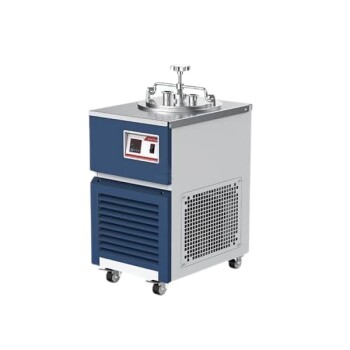
- Vacuum Cold Trap Direct Cold Trap Chiller
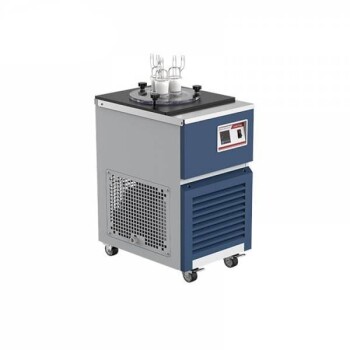
- Vacuum Cold Trap Chiller Indirect Cold Trap Chiller
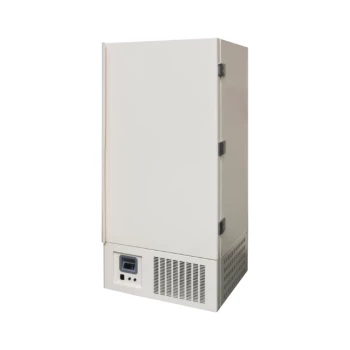
- 608L Essential Laboratory Ultra Low Temperature Freezer For Critical Sample Preservation
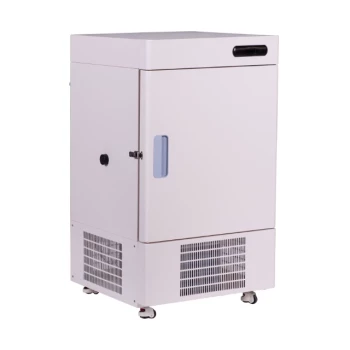
- 108L Vertical Ultra Low Temperature ULT Freezer
- 158L Precision Vertical Ultra Low Freezer for Laboratory Applications
People Also Ask
- What is the role of glass condensation components in arsenic collection? Optimize Niccolite Roasting & Kinetics
- Why is it necessary to configure efficient cold traps in membrane distillation? Ensure Flux Stability & Data Accuracy
- What is the purpose of connecting a cold trap at the reactor outlet? Protect Equipment and Analyze Liquid Products
- What is the primary purpose of a cold trap at a reactor outlet? Protect Analyzers & Ensure Data Integrity
- What is the function of a cold trap in bio-ethanol and methane reforming experiments? Optimize Purity & Protect Systems