The primary purpose of maintaining a constant rotation speed is to deliver continuous mechanical power that sustains a high state of turbulence within the reaction vessel. This turbulence is essential for physically disrupting the stagnant diffusion layers that naturally form around vanadium slag particles.
By sustaining mechanical agitation, the shaker prevents particle settling and breaks down fluid resistance. This creates a homogeneous reaction environment that prepares the material for efficient high-temperature extraction.
The Mechanics of Pre-Leaching
Disrupting the Diffusion Layer
In a static environment, a layer of fluid surrounds solid particles, creating a barrier known as the diffusion layer. This layer can significantly slow down the chemical interaction between the solid and the liquid.
By maintaining a constant rotation speed (e.g., 200 rpm), the shaker generates turbulence that shears this layer away. This exposes the fresh surface of the vanadium slag to the sulfuric acid solution continuously.
Achieving Uniform Contact
Vanadium slag is a solid powder that must react with a liquid acid. Without constant motion, the solids would settle at the bottom of the vessel, limiting their exposure to the acid.
Continuous rotation keeps the particles suspended and distributed evenly throughout the solution. This ensures that every particle has uniform contact with the reactants, preventing localized "dead zones" where the reaction might stall.
Strategic Importance for Extraction
The 24-Hour Foundation
The pre-leaching phase is a lengthy process, often lasting around 24 hours. The stability of the rotation speed during this entire duration is critical.
This phase is not just about immediate reaction; it establishes the foundation for the next step. By ensuring thorough mixing now, the process maximizes the efficiency of the subsequent high-temperature extraction.
Operational Considerations
The Cost of Inconsistency
While the primary reference highlights the benefits of constant speed, it implicitly warns against fluctuation. If mechanical power drops, turbulence decreases immediately.
When turbulence creates a lull, diffusion layers can re-establish themselves quickly. This reduces the reaction rate and can lead to inconsistent results across different batches of slag.
Energy Input vs. Reaction Rate
The system relies on mechanical power to drive chemical efficiency. The shaker acts as an external energy source to overcome physical barriers (diffusion) rather than chemical ones.
Failing to maintain the target RPM essentially wastes the potential of the chemical reagents. The acid cannot do its job effectively if it physically cannot reach the particle surface due to poor hydrodynamics.
Optimizing Your Leaching Protocol
To ensure the highest efficacy during vanadium slag pre-leaching, focus on the consistency of your mechanical inputs.
- If your primary focus is Reaction Kinetics: Maintain a high, constant RPM (such as 200) to aggressively minimize diffusion layer thickness and accelerate surface interactions.
- If your primary focus is Process Reliability: Ensure the shaker operates without interruption for the full 24-hour cycle to guarantee a uniform foundation for the extraction phase.
Consistency in mechanical agitation is the key to unlocking the full chemical potential of your pre-leaching phase.
Summary Table:
| Feature | Impact on Pre-Leaching Phase | Benefit to Process |
|---|---|---|
| Constant Rotation | Sustains high state of turbulence | Disrupts stagnant diffusion layers |
| Mechanical Power | Prevents particle settling | Ensures uniform contact with reactants |
| 24-Hour Stability | Maintains homogeneous environment | Creates foundation for high-temp extraction |
| Turbulence Shearing | Continuous fresh surface exposure | Maximizes reaction kinetics and efficiency |
Maximize Your Extraction Efficiency with KINTEK Precision
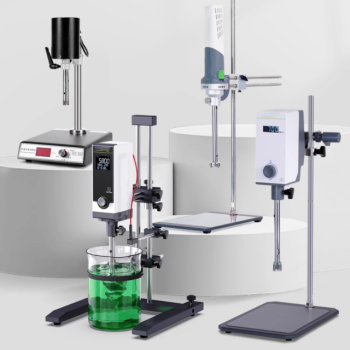
Consistency is the backbone of reliable research. At KINTEK, we specialize in providing high-performance laboratory equipment designed to withstand the rigorous demands of 24-hour processing. Whether you are performing vanadium slag pre-leaching or complex chemical synthesis, our advanced shakers, homogenizers, and high-temperature high-pressure reactors ensure the mechanical and thermal stability your protocol requires.
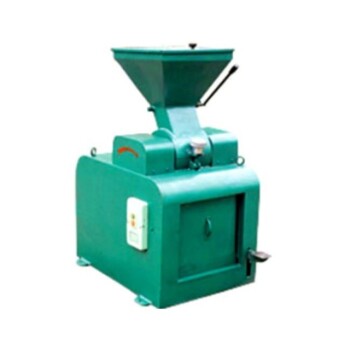
From crushing and milling systems to prepare your slag, to centrifuges and cooling solutions for post-extraction analysis, KINTEK offers a comprehensive range of tools and consumables tailored for material science and battery research.
Ready to upgrade your lab's reliability? Contact us today to find the perfect solution for your application!
References
- Shaochong Liu, K.-C. Chou. An effective process for simultaneous extraction of valuable metals (V, Cr, Ti, Fe, Mn) from vanadium slag using acidic sodium chlorate solution under water bath conditions. DOI: 10.2298/jmmb171126003l
This article is also based on technical information from Kintek Solution Knowledge Base .
Related Products
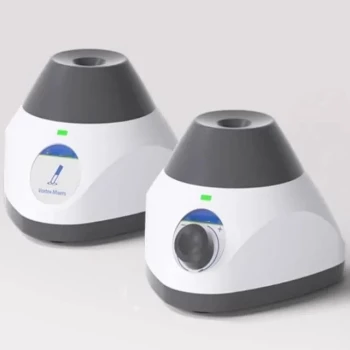
- Laboratory Multifunctional Small Speed-Adjustable Horizontal Mechanical Shaker for Lab
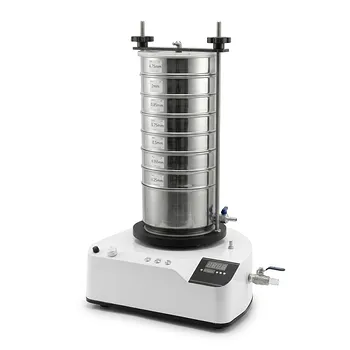
- Laboratory Vibratory Sieve Shaker Machine for Dry and Wet Three-Dimensional Sieving
- Laboratory Oscillating Orbital Shaker
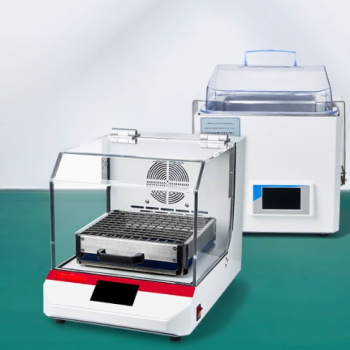
- Shaking Incubators for Diverse Laboratory Applications
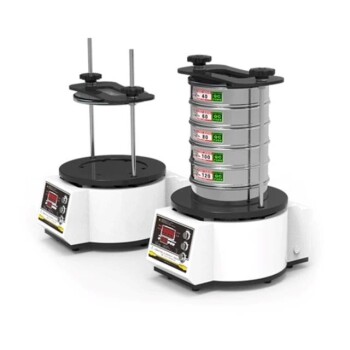
- Laboratory Vibratory Sieve Shaker Machine Slap Vibrating Sieve
People Also Ask
- How do static culture and shaking culture affect the morphology of BC? Optimize Lab Shaker Results
- What is the role of a laboratory shaker in silane sol preparation? Master Uniform Aramid Fabric Coating
- Why is a laboratory shaker required for continuous 24-hour catalyst treatment? Achieve Deep Uniform Impregnation
- What is the function of a laboratory shaker in evaluating Fe-C@C nanoparticles? Optimize Methylene Blue Adsorption
- How do laboratory shakers or stirrers influence the efficiency of hydrogen production during dark fermentation?