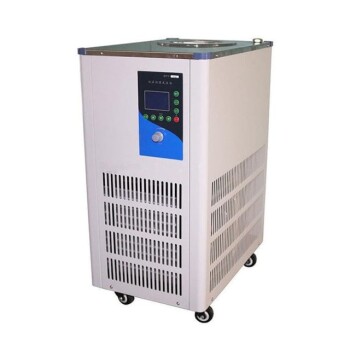
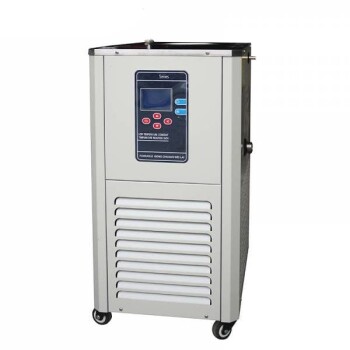
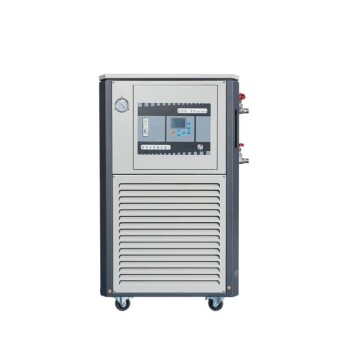
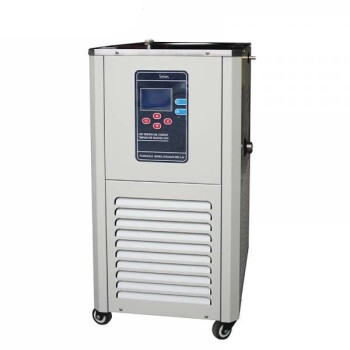
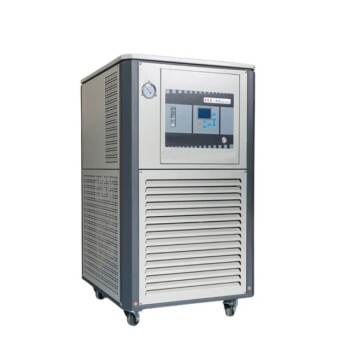
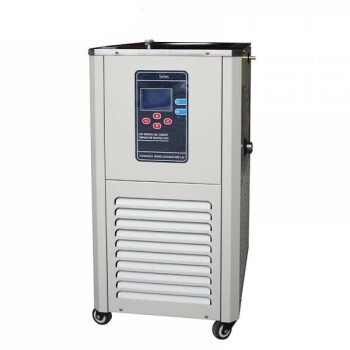
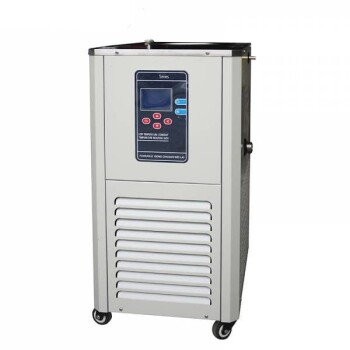
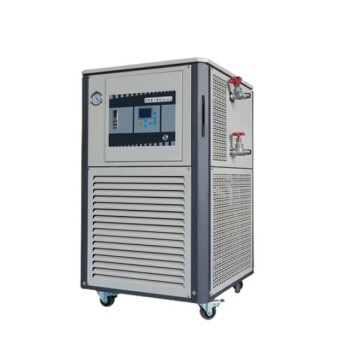
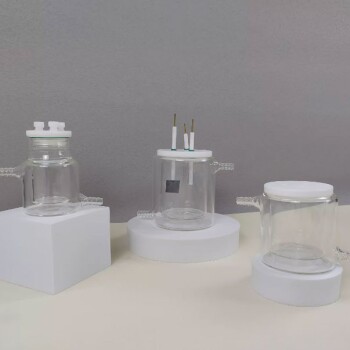
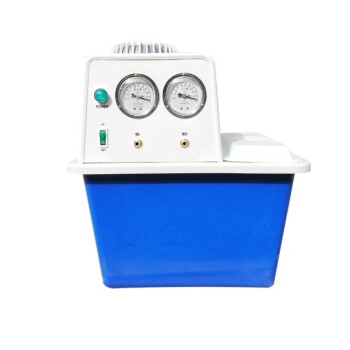
Precise thermal regulation is critical for accurate experimental data. A constant temperature circulating water jacket serves to strictly maintain the reaction mixture at a specific baseline, typically 25°C. This device connects to an external system to neutralize temperature spikes that often occur during the degradation process of Cefoperazone.
Temperature variations significantly impact kinetic constants, potentially creating misleading data. The water jacket acts as a thermal shield, ensuring that any changes in the chemical bonds of Cefoperazone are caused by the light source, not by uncontrolled heat.
The Science Behind Thermal Control
Stabilizing Kinetic Constants
The rate at which Cefoperazone degrades is governed by kinetic constants. These constants are highly sensitive to thermal changes.
Even minor fluctuations in temperature can accelerate or decelerate the reaction unexpectedly. By locking the temperature at a fixed point, you ensure the kinetic data collected is mathematically valid and consistent.
Eliminating Thermal Interference
In degradation studies, particularly those involving light (photocatalysis), the energy source often generates unwanted heat.
Without intervention, this heat would raise the temperature of the mixture, introducing thermal interference. The water jacket actively removes this excess heat, isolating the reaction environment from external thermal variables.
Isolating the Light Source Variable
The goal of these experiments is often to measure how effectively specific light sources cleave chemical bonds.
If the temperature varies, it becomes impossible to determine if the degradation was caused by the photons from the light or the heat it generated. The water jacket ensures the results reflect the influence of the light source alone.
Common Pitfalls in Temperature Management
The Illusion of Ambient Stability
Relying on "room temperature" is a common error in kinetic studies. Room temperature fluctuates throughout the day, which introduces noise into the data.
A water jacket is necessary because it provides active regulation, rather than passive reliance on the environment.
Connection Integrity
The effectiveness of the jacket depends entirely on its connection to the external circulation system.
If the flow rate is inconsistent or the external chiller is underpowered, the jacket cannot maintain the target set point (e.g., 25°C) during high-energy reactions.
Ensuring Experimental Integrity
To derive meaningful conclusions from your Cefoperazone degradation study, you must prioritize variable isolation.
- If your primary focus is determining reaction kinetics: You must use the jacket to keep the temperature constant, as kinetic constants change with temperature.
- If your primary focus is comparing light sources: You must use the jacket to prove that the bond cleavage is due to the specific light spectrum, not the heat the lamp emits.
Control the temperature to ensure your data measures chemistry, not thermodynamics.
Summary Table:
| Feature | Function in Cefoperazone Degradation | Benefit to Researcher |
|---|---|---|
| Kinetic Stability | Maintains a fixed baseline (e.g., 25°C) | Ensures mathematically valid kinetic constants |
| Thermal Shielding | Neutralizes heat spikes from energy sources | Eliminates thermal interference in chemical reactions |
| Variable Isolation | Separates heat effects from light effects | Confirms degradation is due to photons, not heat |
| Active Regulation | Replaces unstable ambient room temperature | Provides consistent, reproducible experimental data |
Elevate Your Chemical Research Precision with KINTEK
Maintaining rigorous thermal control is the difference between accurate data and misleading noise. KINTEK specializes in high-performance laboratory equipment designed for the most demanding research environments. Whether you are conducting photocatalysis experiments or complex degradation studies, our comprehensive range of cooling solutions (ULT freezers, cold traps, and recirculating chillers) and specialized electrolytic cells provide the stability your laboratory requires.
From high-temperature furnaces to precision hydraulic presses and essential consumables like PTFE products, KINTEK supports every stage of your scientific workflow. Don't let thermal fluctuations compromise your kinetic data—contact KINTEK today to discover how our temperature-controlled systems and laboratory consumables can enhance your research integrity.
References
- Andrijana Bilić, Sanja J. Armaković. ADVANCING ENVIRONMENTAL SUSTAINABILITY: ENHANCED PHO- TOCATALYTIC DEGRADATION OF CEFOPERAZONE USING ZnO AND H2O2 UNDER DIFFERENT RADIATION SOURCES. DOI: 10.7251/comen2302116b
This article is also based on technical information from Kintek Solution Knowledge Base .
Related Products
- High Temperature Constant Temperature Heating Circulator Water Bath Chiller Circulator for Reaction Bath
- 50L Chiller Water Bath Cooling Circulator Low Temperature Constant Temperature Reaction Bath
- 40L Chiller Water Bath Cooling Circulator Low Temperature Constant Temperature Reaction Bath
- 100L Chilling Circulator Cooling Water Circulator for Low Temperature Constant Temperature Reaction Bath Water Bath Cooling
- 30L Chiller Water Bath Cooling Circulator Low Temperature Constant Temperature Reaction Bath
People Also Ask
- What is the necessity of a circulating water bath in chlorate production? Optimize Yield & Purity with Precision
- How do constant temperature circulators impact weight-loss immersion tests? Ensure Precision in Corrosion Analysis
- How does a constant temperature circulator support the leaching reaction of gold scrap? Optimize Gold Recovery Results
- Why is a constant temperature water bath used for precursor storage in CVD? Achieve Stable Nanocrystalline SiC Deposition
- Why is a high-precision constant temperature water bath necessary for anaerobic digestion? Ensure Success at 37±0.02°C