The primary purpose of a Platinum-Rhodium (Pt-Rh) thermocouple in magnesium vapor experiments is to accurately map the longitudinal temperature distribution within the vacuum vertical tube furnace. By measuring temperatures at various specific heights, this sensor allows researchers to pinpoint the exact location where conditions are ideal for magnesium vapor to condense and crystallize.
In vacuum furnace experiments, temperature is rarely uniform along the entire tube. The Pt-Rh thermocouple acts as a navigational tool, identifying the precise thermal "sweet spot"—typically around 950 K—required for effective magnesium collection.
Mapping the Thermal Environment
Measuring Longitudinal Distribution
Vertical tube furnaces often exhibit temperature gradients rather than a single, uniform heat zone.
To understand this environment, the Platinum-Rhodium thermocouple is used to probe the furnace at different heights. This creates a data profile showing how temperature changes along the length of the tube.
Identifying the Optimal Zone
The collection of magnesium vapor is not merely about making the furnace hot; it is about finding a specific temperature range.
According to experimental standards, the target temperature for magnesium vapor nucleation and crystallization is approximately 950 K.
The thermocouple data highlights exactly where this temperature exists within the vertical column.
Operational Precision
Positioning the Collector
Once the temperature profile is mapped, the physical setup of the experiment can be finalized.
The condensation collector is not placed randomly; it is positioned based directly on the thermocouple's readings.
By aligning the collector with the 950 K zone, researchers maximize the efficiency of vapor capture and crystal growth.
Ensuring Process Stability
Platinum-Rhodium alloys are selected for these sensors due to their stability and accuracy at high temperatures.
Using a less robust sensor could lead to drift or inaccurate readings, resulting in the collector being placed in a zone that is either too hot (preventing condensation) or too cold (causing premature or poor crystallization).
Understanding the Trade-offs
Point-Source Limitations
It is important to remember that a thermocouple measures temperature only at a single point in space.
To get a full longitudinal profile, the sensor must be moved, or multiple sensors must be employed. Relying on a single stationary reading may fail to capture steep temperature gradients that could affect the experiment.
Cost vs. Accuracy
Platinum-Rhodium thermocouples provide high accuracy and resistance to oxidation, but they are significantly more expensive than standard base-metal thermocouples.
However, for processes requiring precise targeting of a specific window like 950 K, the cost is justified by the necessity of reliable, repeatable data.
Making the Right Choice for Your Goal
To ensure your magnesium condensation experiment is successful, apply the thermocouple data as follows:
- If your primary focus is Thermal Profiling: Move the thermocouple incrementally along the vertical axis to generate a complete temperature-vs-height curve.
- If your primary focus is Maximizing Yield: Use the generated profile to lock the condensation collector exactly at the height corresponding to 950 K.
Precision in measurement leads directly to precision in material recovery.
Summary Table:
| Feature | Specification/Purpose |
|---|---|
| Sensor Type | Platinum-Rhodium (Pt-Rh) Thermocouple |
| Primary Function | Mapping longitudinal temperature distribution |
| Target Temperature | Approximately 950 K (Optimal for crystallization) |
| Key Benefit | Precise positioning of the condensation collector |
| Material Advantage | High-temperature stability and oxidation resistance |
Maximize Your Experimental Precision with KINTEK
Achieving the perfect thermal 'sweet spot' is critical for successful magnesium vapor condensation. KINTEK specializes in providing the high-performance laboratory equipment you need to ensure repeatable results.
From our precision Platinum-Rhodium thermocouples and high-temperature tube furnaces to specialized vacuum systems and condensers, we offer the complete toolkit for advanced material research. Whether you are conducting magnesium recovery or complex thin-film depositions, our team is ready to help you select the ideal furnace configuration and thermal sensors for your specific application.
Ready to upgrade your lab's accuracy? Contact us today to explore our furnace and thermal measurement solutions!
Related Products
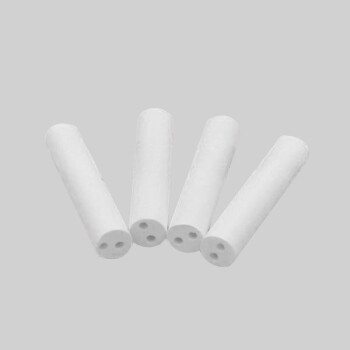
- Hexagonal Boron Nitride HBN Thermocouple Protection Tube
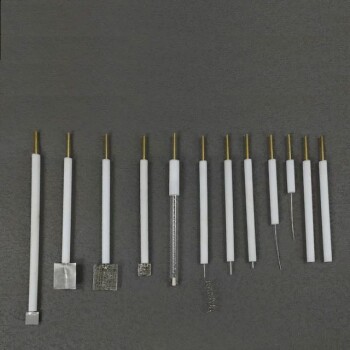
- Platinum Auxiliary Electrode for Laboratory Use
People Also Ask
- Why are Boron Nitride Tubes selected as reaction vessels for Na3SbS4? Ensure Purity in High-Temp Synthesis
- What are the symptoms of a bad thermocouple? Diagnose a Pilot Light That Won't Stay Lit
- What information does a thermocouple at the substrate bottom provide in LCVD? Master Precise Temperature Control
- What are the specific temperature control requirements for high-precision thermocouples? Achieve ±0.3°C Precision
- What is the most common type of temperature sensor? The Unmatched Versatility of Thermocouples