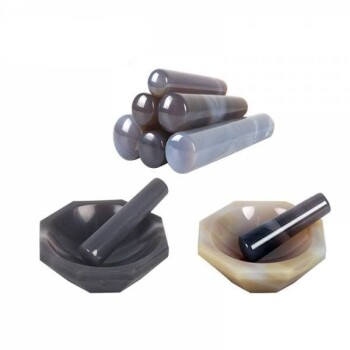
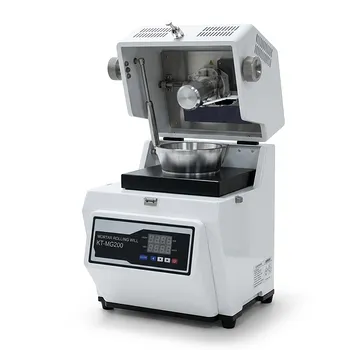
The primary purpose of using an alumina mortar in this synthesis process is to mechanically grind and mix Aluminum (Al) and Silicon (Si) powders to break down powder agglomerates. This step ensures that the two components are distributed uniformly at a molecular scale, creating the necessary conditions for a high-quality reaction.
The mechanical force applied by the mortar eliminates material clumping, enabling the formation of a strictly uniform Aluminum-Silicon (Al-Si) binary melt. This homogeneity is the deciding factor in achieving consistent growth of Aluminum Nitride needle crystals.
The Mechanics of Raw Material Preparation
Breaking Down Agglomerates
Raw metal powders, specifically Aluminum and Silicon in this context, have a natural tendency to clump together. Using an alumina mortar applies direct mechanical force to these materials. This physical grinding effectively crushes these agglomerates, reducing the powders to their fundamental particle sizes.
Achieving Molecular Homogeneity
The goal of this mixing stage is not merely a rough blend, but a distribution of particles that is uniform at the molecular scale. By thoroughly grinding the mixture, you ensure that Aluminum and Silicon atoms are in intimate contact throughout the entire batch. This level of intimacy is impossible to achieve if the powders remain in coarse, agglomerated states.
The Impact on Crystal Growth
Creating a Uniform Binary Melt
The preparation of the solid powder directly dictates the behavior of the liquid phase during heating. A perfectly mixed powder yields a uniform Aluminum-Silicon (Al-Si) binary melt. If the mixing is insufficient, the melt will have localized variations in composition, leading to unpredictable reaction kinetics.
Ensuring Growth Consistency
The ultimate quality of the Aluminum Nitride (AlN) needle crystals depends on the uniformity of the melt they grow from. Consistent heating and melting dynamics are required for the crystals to form regular, needle-like structures. Therefore, the consistency of the final product is effectively determined during the initial mortar grinding stage.
Common Pitfalls to Avoid
The Risk of Inadequate Mixing
One common error is underestimating the time or force required to break all agglomerates. If the grinding process is cut short, the resulting melt will be non-homogeneous. This often leads to inconsistent crystal growth, resulting in a batch of AlN needles with varying sizes or structural defects.
Reliance on Chemical vs. Mechanical Mixing
While other mixing methods exist, this specific synthesis relies on mechanical force to ensure molecular distribution. Failing to apply sufficient mechanical energy means the Al and Si particles may not interact correctly during the heating phase, compromising the entire synthesis.
Ensuring Synthesis Success
To maximize the quality of your Aluminum Nitride needle crystals, focus on the following objectives during the mixing stage:
- If your primary focus is Melt Uniformity: Ensure the grinding process is prolonged enough to completely eliminate visible clumps, guaranteeing a homogeneous Al-Si binary melt.
- If your primary focus is Crystal Consistency: Prioritize the mechanical breakdown of agglomerates, as the uniformity of the raw powder directly correlates to the structural regularity of the final crystals.
The foundation of a high-quality AlN crystal is laid not in the furnace, but in the mortar.
Summary Table:
| Mixing Objective | Role of Alumina Mortar | Impact on Final Product |
|---|---|---|
| Agglomerate Reduction | Applies mechanical force to crush powder clumps | Ensures fundamental particle size distribution |
| Molecular Homogeneity | Facilitates intimate contact between Al and Si atoms | Creates a strictly uniform binary melt phase |
| Structural Control | Maintains consistent reaction kinetics | Produces regular, high-quality needle-like crystals |
| Defect Prevention | Eliminates localized composition variations | Reduces structural defects and batch inconsistency |
Elevate Your Material Synthesis with KINTEK Precision
High-quality Aluminum Nitride crystals start with flawless preparation. At KINTEK, we understand that the foundation of your research lies in the precision of your tools. Whether you are performing critical grinding with our high-purity alumina mortars and ceramics or scaling up with our advanced crushing and milling systems, we provide the reliability your lab demands.
From high-temperature furnaces for consistent crystal growth to isostatic presses and crucibles, KINTEK specializes in laboratory equipment that bridges the gap between raw materials and scientific breakthroughs.
Ready to optimize your synthesis process? Contact our laboratory specialists today to find the perfect equipment and consumables for your specific research needs.
References
- Ryota Kobayashi, Takayuki TAKAGI. Synthesis of AlN needles by nitridation of Al–Si melt. DOI: 10.2109/jcersj2.16137
This article is also based on technical information from Kintek Solution Knowledge Base .
Related Products
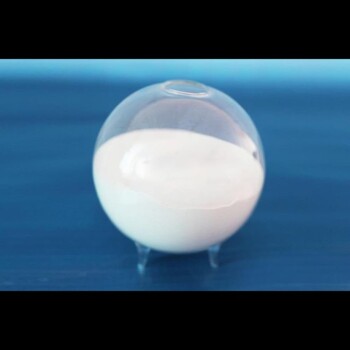
- High Purity Alumina Granulated Powder for Engineering Advanced Fine Ceramics
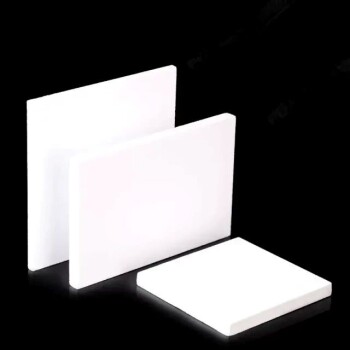
- High Temperature Wear-Resistant Alumina Al2O3 Plate for Engineering Advanced Fine Ceramics
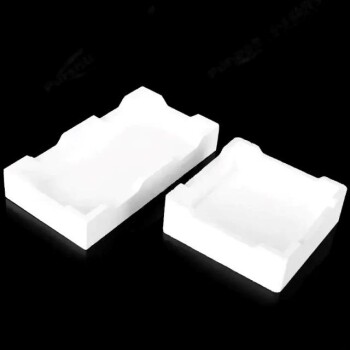
- Advanced Engineering Fine Ceramics Alumina Ceramic Saggar for Fine Corundum
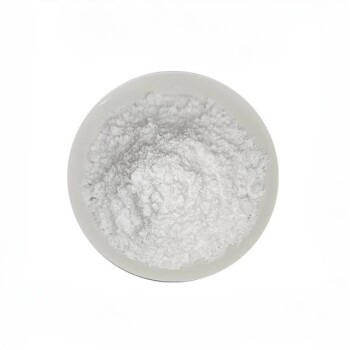
- Advanced Engineering Fine Ceramics Low Temperature Alumina Granulation Powder
- Engineering Advanced Fine Alumina Al2O3 Ceramic Crucible for Laboratory Muffle Furnace
People Also Ask
- What is the function of high-purity alumina powder in pack cementation? Ensure Uniform Aerospace Blade Coatings
- How should alumina powder be selected for polishing a disc electrode, and what is the procedure for removing scratches? Achieve a Perfect Mirror Finish
- What are the properties and handling precautions for alumina powder as a polishing material? Achieve a Flawless Finish with Precision
- Why is it necessary to apply alumina powder to graphite molds for TiC10/Cu-Al2O3? Ensure Smooth Release.
- What measures should be taken to prevent cross-contamination when using different sizes of alumina powder?