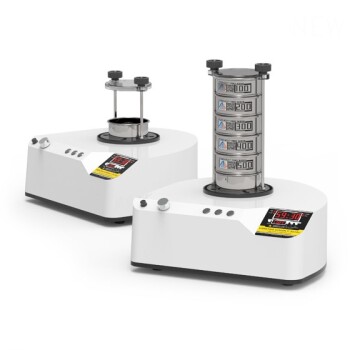
The pretreatment of biomass using grinding mills and sieving equipment is a foundational step for ensuring the structural and chemical integrity of iron-loaded biochar. By reducing raw biomass to a standardized fine powder—typically within the range of 400-800 μm—these tools maximize the surface area available for iron impregnation and ensure uniform heat distribution during the pyrolysis process. This mechanical preparation is essential for creating a stable, high-performance adsorbent with predictable and reproducible characteristics.
Using laboratory grinding and sieving equipment standardizes the raw material’s physical profile to facilitate deep chemical penetration and uniform thermal conversion. This process is critical for achieving stable iron loading and ensuring that the final biochar product delivers consistent performance in adsorption applications.
Enhancing Chemical Impregnation and Iron Stability
Maximizing Specific Surface Area
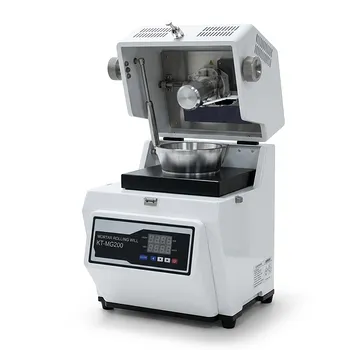
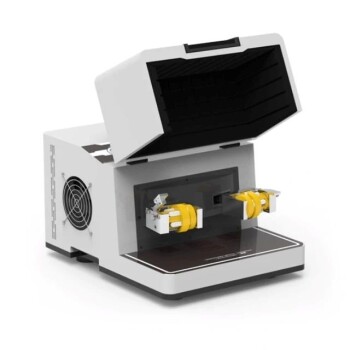
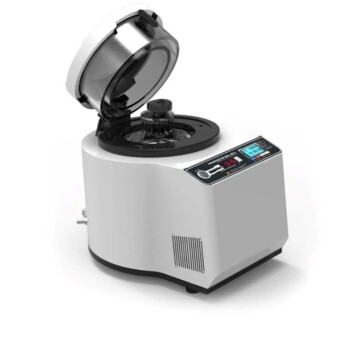
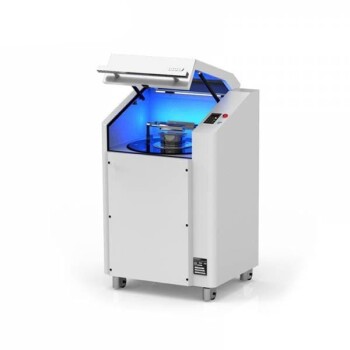
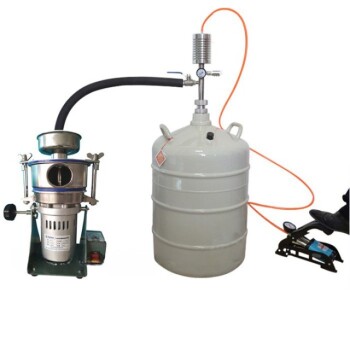
Grinding mills pulverize bulk biomass, such as wheat straw or woody stems, into a fine powder to significantly increase the specific surface area. This physical expansion ensures that chemical reagents, such as ferric chloride solutions, can penetrate the complex lignocellulosic structure more thoroughly.
Optimizing Iron Loading Stability
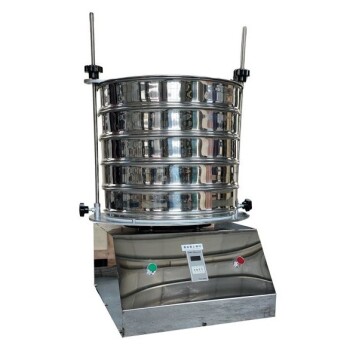
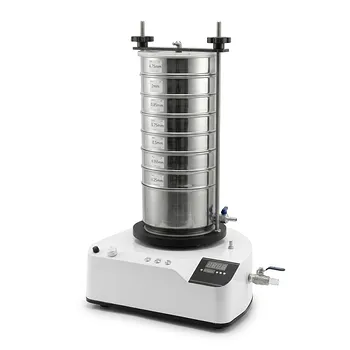
Sieving equipment is used to isolate a specific particle size range, which facilitates optimal contact between the biomass and the iron precursor. This uniformity prevents the formation of "dead zones" where iron might not reach, ultimately enhancing the stability and consistency of the iron loading across the entire batch.
Facilitating Reagent Penetration
Uniformly sized particles allow for more thorough and rapid penetration of chemical modifiers into the core of the biomass. This ensures that the subsequent modification reactions occur evenly, preventing localized variations in the chemical composition of the final biochar.
Ensuring Consistency in Thermal Conversion
Uniform Heat and Mass Transfer
During the pyrolysis stage, standardized particle sizes ensure that heat is transferred rapidly and uniformly to the core of each particle. Without this consistency, larger particles might remain under-processed while smaller ones over-react, leading to a non-homogeneous final product.
Improving Conversion Efficiency
Fine grinding ensures that the thermal energy penetrates the biomass evenly, which improves the overall conversion efficiency from raw material to biochar. This homogeneity is vital for maintaining the quality of the final product and ensuring that the biochar possesses consistent reactivity.
Maintaining Experimental Reproducibility
By eliminating variations in particle size, researchers can ensure that the adsorption surface area remains constant across different experimental runs. This standardization is fundamental for producing reproducible data and valid scientific conclusions in adsorption studies.
The Role of Sieving in Structural Integrity
Preventing Structural Defects
Sieving equipment removes coarse particles (typically those larger than 2 mm) that can cause uneven density distribution in processed materials. This is particularly important if the biomass is to be pelletized, as inconsistent sizes can lead to brittle cracks in the finished pellets.
Ensuring Uniform Die Filling
In processes involving pelletization or compaction, sieving ensures that the raw material possesses uniform physical characteristics. This consistency allows for a more reliable filling of die holes, which is necessary for creating durable and high-density biochar pellets.
Understanding the Trade-offs and Potential Pitfalls
Risk of Over-Processing
While fine grinding increases surface area, excessive milling can potentially damage the intrinsic pore structure of certain biomass types. It is vital to balance the need for a small particle size with the preservation of the material's natural cellular architecture.
Material Loss and Dust Management
The use of high-speed grinding mills often results in the generation of fine dust, which can lead to significant material loss if not managed properly. Furthermore, extremely fine powders may become difficult to handle during the liquid impregnation phase, potentially clogging filters or sieves.
Equipment Wear and Contamination
Processing tough, woody biomass can lead to significant wear on laboratory mills over time. It is important to monitor the equipment to ensure that metallic micro-contaminants from the grinding media do not inadvertently enter the biomass and alter the chemical profile of the iron-loaded biochar.
How to Apply Pretreatment to Your Research Goal
Selecting the Right Approach for Your Objectives
- If your primary focus is maximizing iron loading stability: Utilize sieving to maintain a strict particle range between 400-800 μm to ensure optimal impregnation contact.
- If your primary focus is thermal homogeneity and conversion: Prioritize fine grinding to increase specific surface area, ensuring heat reaches the core of every particle during pyrolysis.
- If your primary focus is experimental reproducibility: Use standard analysis sieves (e.g., 0.5 mm or 2 mm apertures) to eliminate variations in adsorption surface area across different batches.
- If your primary focus is the structural integrity of pellets: Ensure all particles larger than 2 mm are removed via sieving to prevent cracks and density variations in the final product.
By meticulously controlling the physical dimensions of raw biomass through grinding and sieving, you create the necessary conditions for high-quality, chemically stable, and scientifically valid iron-loaded biochar.
Summary Table:
| Pretreatment Step | Core Function | Impact on Biochar Quality |
|---|---|---|
| Grinding | Increases specific surface area | Maximizes chemical penetration & iron loading stability. |
| Sieving | Standardizes particle size (400-800 μm) | Ensures uniform heat transfer and prevents structural cracks. |
| Mechanical Scaling | Eliminates coarse particles | Enhances experimental reproducibility and pellet density. |
Elevate Your Biochar Research with KINTEK Precision
High-performance iron-loaded biochar requires absolute consistency in pretreatment. KINTEK provides the specialized crushing and milling systems and precision sieving equipment needed to achieve the perfect particle profile for optimal impregnation and thermal conversion.
Beyond material preparation, KINTEK offers a complete ecosystem for advanced material science, including:
- High-Temperature Furnaces: Muffle, tube, and vacuum options for precise pyrolysis.
- Hydraulic Presses: Pellet and isostatic presses for durable biochar compaction.
- Advanced Reactors: High-temperature high-pressure reactors and autoclaves for chemical modification.
- Essential Consumables: High-quality ceramics, crucibles, and PTFE products.
Ensure reproducible results and superior adsorbent performance today. Contact our experts to find the right equipment for your lab!
References
- Mingyu He, Zizhang Guo. Releasing and Assessing the Toxicity of Polycyclic Aromatic Hydrocarbons from Biochar Loaded with Iron. DOI: 10.1021/acsomega.3c06950
This article is also based on technical information from Kintek Solution Knowledge Base .
Related Products
- Laboratory Grinding Mill Mortar Grinder for Sample Preparation
- Laboratory Hybrid Tissue Grinding Mill
- Laboratory Test Sieves and Sieving Machines
- Vibrating Disc Mill Small Laboratory Grinding Machine
- Laboratory Jar Mill with Agate Grinding Jar and Balls
People Also Ask
- What laboratory apparatus is used for grinding? Match the Right Mill to Your Sample Material
- What is the function of a laboratory grinding mill? Achieve Precise Sample Preparation for Accurate Results
- What is the purpose of using a laboratory grinder and standard sieves? Unlock Precise Rice Husk Pretreatment
- What is the role of laboratory-grade grinders and sieves in sample prep? Ensure High-Precision Corrosion Analysis
- What is the purpose of using a laboratory grinder with specific mesh sieves for oat straw? Optimize Pellet Quality