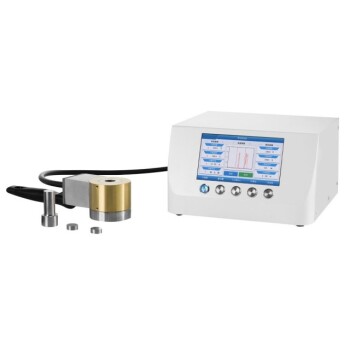
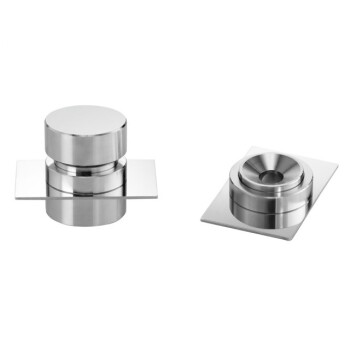
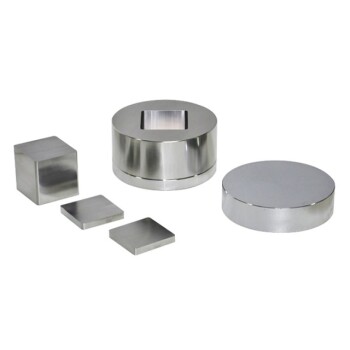
Specialized pressure devices serve as active mechanical stabilizers that are critical for the operation of sulfide solid-state batteries. They provide continuous external force to counteract the significant volume changes active materials undergo during electrochemical cycling, ensuring the physical integrity of the electrode-electrolyte interface.
Core Takeaway The fundamental purpose of these devices is to mitigate "chemo-mechanical" failure. By applying continuous pressure (typically 1.5–10 MPa), you prevent the physical detachment of active particles from the solid electrolyte—a phenomenon driven by lattice contraction and expansion that otherwise leads to rapid capacity decay and increased resistance.
The Core Problem: Chemo-Mechanical Instability
To understand the purpose of the device, you must understand the behavior of the materials inside the cell.
Volume Contraction During Charging
The primary challenge stems from the cathode material, particularly high-nickel variants like NCM-811.
During the delithiation process (charging), lithium ions leave the cathode lattice. This causes the cathode material to undergo significant volume contraction.
The Risk of Particle Detachment
In a liquid battery, the liquid electrolyte flows to fill gaps. In a solid-state battery, the electrolyte is rigid.
When the cathode particles shrink, they physically pull away from the solid electrolyte. Without external pressure to push them back together, this creates interfacial voids and leads to contact loss.
Anisotropic Expansion
The volume changes are not always uniform. High-nickel cathode materials often undergo anisotropic volume expansion and contraction, meaning they change shape unevenly.
This irregular movement creates internal stress that can sever the conductive pathways necessary for electron and ion transport.
How Pressure Devices Solves the Problem
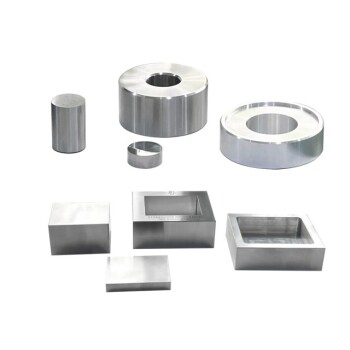
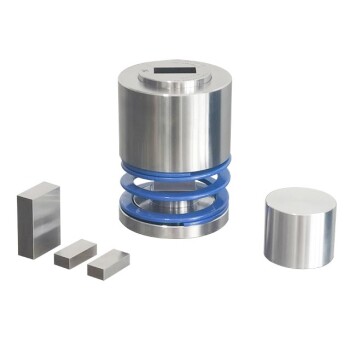
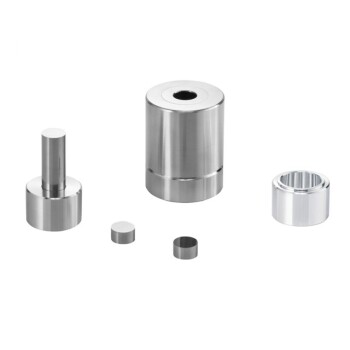
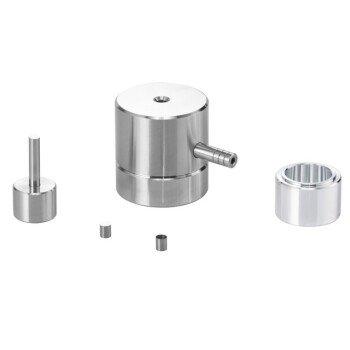
Specialized molds and hydraulic devices are designed to maintain a "stack pressure" that dynamically compensates for these internal movements.
Bridging the Contact Gap
The device applies a constant external pressure, often exceeding 2 MPa and ranging up to 10 MPa.
This force actively compresses the cell components. It ensures that even when the active material contracts, it remains tightly embedded against the solid electrolyte.
Preventing Irreversible Resistance
By maintaining this tight contact, the device suppresses the formation of physical barriers.
This prevents the irreversible increase in interfacial resistance that occurs when ions can no longer jump between the electrode and the electrolyte due to physical gaps.
Compensating for Lithium Activity
While the primary focus is often the cathode, these devices also manage the anode interface.
They compensate for volume changes caused by lithium metal deposition and stripping, ensuring the entire cell stack remains consolidated throughout the cycle.
Understanding the Trade-offs
While pressure is essential, it introduces specific engineering constraints that must be acknowledged.
The Dependency on External Hardware
The reliance on these devices highlights a limitation of current sulfide solid-state technology: the battery cells are not yet self-supporting during operation.
Testing requires heavy, bulky equipment (like hydraulic presses or bolted molds) effectively making the "system" volume much larger than the battery cell itself.
Managing Crack Propagation
The pressure is not just about keeping things touching; it is about containment.
Without this pressure, the stress of volume changes leads to crack propagation within the solid electrolyte or electrode layers. The pressure mold inhibits these cracks from spreading, which determines the long-term survival of the cell.
Making the Right Choice for Your Goal
Selecting the correct pressure parameters and equipment depends on which aspect of battery performance you are optimizing.
- If your primary focus is Cycle Life: Ensure your device can maintain a constant pressure of at least 8 MPa, as this higher range is often required to prevent interface separation in high-nickel cathodes over long durations.
- If your primary focus is Interface Research: Use a hydraulic device that allows for variable pressure control to identify the minimum pressure required (e.g., starting at 1.5 MPa) to maintain conductivity without over-densifying the cell.
Continuous external pressure is not merely a testing condition; it is a structural requirement to bridge the gap between rigid solid components and dynamic chemical changes.
Summary Table:
| Feature | Mechanism | Benefit |
|---|---|---|
| Pressure Range | 1.5–10 MPa Constant Force | Counteracts volume contraction during delithiation |
| Interface Integrity | Active Particle Compression | Bridges gaps between electrode and solid electrolyte |
| Resistance Control | Void Suppression | Prevents irreversible increases in interfacial resistance |
| Structural Support | Containment & Consolidation | Inhibits crack propagation and manages anisotropic expansion |
Maximize Your Battery Performance with KINTEK Precision
Don't let chemo-mechanical instability compromise your research. KINTEK specializes in advanced laboratory solutions, offering the high-precision hydraulic presses, specialized battery molds, and isostatic presses essential for maintaining the critical stack pressure required for sulfide solid-state battery cycling.
Whether you are focusing on high-nickel cathode stability or lithium metal anode interfaces, our comprehensive range of battery research tools, high-temperature furnaces, and crushing systems ensures your lab is equipped for the future of energy storage.
Ready to stabilize your electrochemical interfaces? Contact KINTEK today for expert guidance and equipment solutions!
Related Products
- Anti-Cracking Press Mold for Lab Use
- Ball Press Mold for Lab
- Special Heat Press Mold for Lab Use
- Ring Press Mold for Lab Applications
- Square Bidirectional Pressure Mold for Lab Use
People Also Ask
- What is the press mould method? A Guide to Consistent, Detailed Ceramic Forms
- How to use a press mold? Master the Art of Creating Consistent Ceramic Forms
- What is the function of press molds during the preparation of SiCf/Ti-43Al-9V composites? Achieve Structural Precision
- What is a press mold used for? Achieve Repeatable Precision and Efficiency
- What is the primary function of mold pressing for LAGP powders? Achieve High-Performance Solid Electrolytes