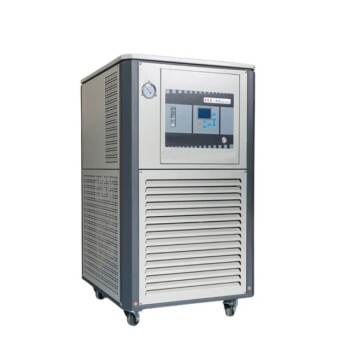
The high-pressure hydrothermal reactor serves as the essential containment vessel for synthesizing CoMo-LDH (Layered Double Hydroxide) precursors. It creates a sealed environment that allows aqueous reactants to reach temperatures significantly higher than their atmospheric boiling point. This specific thermodynamic state is required to drive the thorough hydrolysis and crystallization of cobalt and molybdenum ions into highly ordered structures.
Core Takeaway: The high-pressure hydrothermal reactor is critical because it provides the extreme physical conditions necessary to overcome the energy barriers for metal ion hydrolysis, ensuring the formation of CoMo-LDH precursors with high crystallinity and precise nanosheet morphologies.
Facilitating Thermodynamics Beyond Atmospheric Limits
Exceeding the Boiling Point
In a standard open vessel, aqueous solutions are limited to a maximum temperature of 100°C. A hydrothermal reactor, or autoclave, uses a sealed design to maintain liquid phases at much higher temperatures, often ranging from 150°C to 180°C. This elevated thermal energy is the primary driver for the chemical transformations required in complex LDH synthesis.
Enhancement of Solubility and Reactivity
The high-pressure environment within the reactor significantly increases the solubility of metal salts and reactants. This "solvothermal" effect enhances the reactivity of cobalt and molybdate ions, facilitating the coordination reactions necessary to build the layered structure. Under these conditions, the internal autogenous pressure promotes a more uniform reaction medium than possible at room temperature.
Precision Control of Morphology and Phase
Formation of Nanosheet Structures
The reactor's controlled environment is vital for obtaining specific morphologies, such as nanosheet arrays. By maintaining stable pressure and temperature over long durations (e.g., 16 hours), the reactor allows for uniform nucleation and crystal growth. This results in the characteristic layered structure of CoMo-LDH, which provides a high surface area for downstream applications.
Regulation of Phase Composition
The hydrothermal reactor allows researchers to precisely regulate the phase composition of the precursor. By adjusting variables such as reaction time, temperature, and reactant concentration, the reactor can be tuned to produce specific crystal phases. This level of control ensures that the resulting CoMo-LDH is pure and structurally intact, rather than a mixture of amorphous precipitates.
Understanding the Technical Trade-offs
Equipment Integrity and Safety
Operating at high pressures and temperatures introduces significant safety risks. The reactor must be constructed from high-grade stainless steel and often requires a chemically inert Teflon (PTFE) liner to prevent corrosion and contamination. Failure to monitor the pressure limits or the "filling degree" of the vessel can lead to mechanical failure.
Scalability and Reaction Monitoring
Because the reactor is a sealed, "black box" environment, real-time monitoring of the reaction progress is difficult. Furthermore, hydrothermal synthesis is typically a batch process, which can limit throughput compared to continuous flow methods. Achieving the same morphology at a larger scale requires careful recalibration of heat transfer and pressure gradients.
How to Apply This to Your Synthesis Goals
The choice of reactor settings and duration will dictate the final properties of your CoMo-LDH precursor. Consider the following based on your specific research or production needs:
- If your primary focus is High Crystallinity: Prioritize longer reaction times and higher temperatures within the reactor to allow for the slow, ordered growth of the crystal lattice.
- If your primary focus is Specific Nanosheet Morphology: Carefully control the concentration of reactants and the cooling rate of the reactor to prevent the aggregation of individual sheets.
- If your primary focus is Phase Purity: Ensure the reactor's "filling degree" (the volume of liquid relative to total capacity) is consistent across batches to maintain reproducible autogenous pressure.
Mastering the hydrothermal environment is the definitive step in transforming raw metal salts into high-performance CoMo-LDH precursors.
Summary Table:
| Feature | Role in CoMo-LDH Synthesis | Benefit |
|---|---|---|
| High Temp/Pressure | Exceeds 100°C boiling point | Drives metal ion hydrolysis & crystallization |
| Sealed Environment | Creates autogenous pressure | Increases solubility and reactivity of reactants |
| Time/Temp Control | Stable long-term regulation | Ensures uniform nanosheet morphology |
| PTFE/Teflon Liner | Chemical inertness | Prevents corrosion and ensures high phase purity |
Achieve Precision in Your Materials Research with KINTEK
Synthesizing high-performance CoMo-LDH precursors requires absolute control over thermodynamics and morphology. KINTEK specializes in laboratory-grade high-pressure hydrothermal reactors and autoclaves engineered to withstand extreme conditions while ensuring chemical purity with premium PTFE liners.
From advanced battery research tools to high-temperature furnaces (CVD, vacuum, muffle) and precision crushing systems, KINTEK provides the comprehensive equipment portfolio needed to move your synthesis from experimental to exceptional. Our solutions are designed for researchers who demand high crystallinity and structural integrity.
Ready to optimize your LDH synthesis workflow? Contact our experts at KINTEK today!
References
- Lili Zhang, Guangfeng Wu. Charge Redistribution of Co9S8/MoS2 Heterojunction Microsphere Enhances Electrocatalytic Hydrogen Evolution. DOI: 10.3390/biomimetics8010104
This article is also based on technical information from Kintek Solution Knowledge Base .
Related Products
- Customizable Laboratory High Temperature High Pressure Reactors for Diverse Scientific Applications
- High Pressure Laboratory Autoclave Reactor for Hydrothermal Synthesis
- Customizable High Pressure Reactors for Advanced Scientific and Industrial Applications
- Stainless High Pressure Autoclave Reactor Laboratory Pressure Reactor
- Mini SS High Pressure Autoclave Reactor for Laboratory Use
People Also Ask
- How do high-pressure and high-temperature reactors ensure the effective treatment of lignocellulosic wastewater in WAO?
- What equipment is required for high-pressure high-temperature reactions? Master Extreme Chemistry Safely
- How do you control high pressure in a reactor? A Guide to Safe & Stable Operation
- Why is argon better than nitrogen for inert atmosphere? Ensure Absolute Reactivity & Stability
- How does initial oxygen pressure affect the wet oxidation of pharmaceutical sludge? Master Your Oxidation Depth