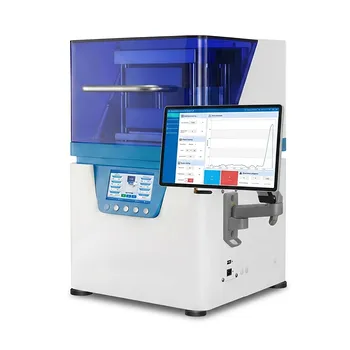
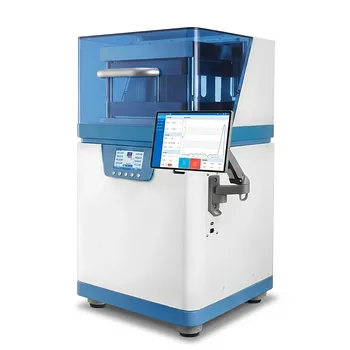
The laboratory hydraulic press is a critical instrument in electrode fabrication, serving as the bridge between a loose coating and a high-performance electrochemical interface. In the preparation of LiFePO4/rGO electrodes, the press applies controlled mechanical force to compress the active material onto the current collector (typically aluminum foil or mesh). This process increases the tap density of the cathode, ensures intimate physical contact between the rGO-enhanced LiFePO4 and the collector, and significantly lowers internal resistance to improve rate capability and cycling stability.
Core Takeaway: The primary role of the laboratory hydraulic press is to transform a porous, loosely adhered active material layer into a dense, electrically conductive electrode structure. By optimizing interfacial contact and material density, it ensures that the resulting electrochemical data reflects the material's intrinsic properties rather than resistance-driven artifacts.
Enhancing the Electrochemical Interface
Reducing Interfacial Contact Resistance
LiFePO4 is known for its relatively low electronic conductivity, which is why it is often composited with reduced graphene oxide (rGO). The hydraulic press forces these active material particles into tight contact with the current collector, minimizing the "contact resistance" that can otherwise impede electron flow.
By applying consistent vertical pressure, the press ensures that the rGO conductive network is effectively pressed against the aluminum foil or stainless steel mesh. This creates a low-impedance pathway that is essential for high-current charge and discharge cycles.
Increasing Volumetric Energy Density
Uncompressed electrode coatings are often too porous, containing excessive void space that limits the amount of active material in a given volume. The hydraulic press compacts the coating layer, significantly increasing the volumetric energy density of the electrode.
This compaction process is vital for creating a uniform thickness across the electrode sheet. A uniform surface ensures that current distribution remains even during testing, preventing localized "hot spots" that could lead to premature cell failure.
Structural Integrity and Mechanical Stability
Securing Active Material Adhesion
During the preparation of the working electrode, a slurry of active materials, conductive agents, and binders is coated onto a current collector. The hydraulic press provides the mechanical interlocking force needed to securely bond this composite layer to the substrate.
This structural stability is critical during the intercalation and de-intercalation of lithium ions. Without proper compaction, the volume changes that occur during cycling could cause the LiFePO4/rGO layer to delaminate from the foil, leading to a rapid loss of capacity.
Optimizing Transport Pathways
High-pressure "cold-press molding" helps establish continuous ion transport interfaces within the electrode structure. By reducing the gaps between powder particles, the press facilitates a more efficient transfer of both ions and electrons.
This is particularly important when using irregular current collectors like steel mesh. The press ensures the active material fills the voids of the mesh, maximizing the surface area available for electrochemical reactions.
Understanding the Trade-offs
The Risk of Over-Compaction
While increasing density is beneficial, excessive pressure can be counterproductive. If the electrode is pressed too hard, the porosity may be reduced to the point where the liquid electrolyte cannot effectively penetrate the electrode.
This lack of "electrolyte wetting" increases ionic resistance, as lithium ions struggle to move through the overly dense material. This creates a trade-off between electronic conductivity (improved by pressure) and ionic mass transport (hindered by excessive pressure).
Current Collector Deformation
Applying several tons of pressure can cause the current collector, especially thin aluminum foil, to stretch or deform. This deformation can lead to micro-cracks in the active material coating or cause the electrode to curl, making battery assembly difficult.
Precise control over the hydraulic press settings is necessary to find the "sweet spot" where contact is optimized without compromising the mechanical integrity of the foil.
How to Apply This to Your Project
When preparing LiFePO4/rGO electrodes, your pressure settings should align with your specific testing objectives. Consistency in this step is the only way to ensure repeatable results across different battery batches.
- If your primary focus is High Rate Performance: Use higher pressure to maximize particle-to-particle contact and minimize electronic resistance, ensuring the rGO network is fully utilized.
- If your primary focus is Long-Term Cycling Stability: Use moderate pressure to maintain sufficient pore volume for electrolyte access, preventing ion-starvation during extended testing.
- If your primary focus is Solid-State Battery Research: Apply high axial pressure (often reaching hundreds of MPa) to ensure a seamless interface between the cathode and the solid electrolyte layer.
Refining your hydraulic pressing protocol is a fundamental step in ensuring your laboratory data accurately translates to real-world battery performance.
Summary Table:
| Key Role | Mechanical Action | Impact on Battery Performance |
|---|---|---|
| Interface Optimization | Minimizes contact resistance between particles and collector | Enhances rate capability and electron flow |
| Density Enhancement | Increases tap density by compacting porous layers | Raises volumetric energy density |
| Structural Stability | Ensures secure adhesion/interlocking of active materials | Improves cycling stability and prevents delamination |
| Uniformity Control | Creates consistent electrode thickness and surface | Ensures even current distribution and prevents hot spots |
Elevate Your Battery Research with KINTEK Precision
Precision is the backbone of reliable electrochemical data. KINTEK specializes in advanced laboratory equipment, offering a specialized range of laboratory hydraulic presses (pellet, hot, and isostatic) and battery research tools engineered to optimize LiFePO4/rGO electrode fabrication.
From achieving the perfect tap density to ensuring robust interfacial contact, our equipment provides the controlled force your research demands. Beyond presses, our portfolio includes high-temperature furnaces, crushing systems, and essential consumables like PTFE and ceramics to support your entire workflow.
Ready to enhance your lab's efficiency and electrode quality? Contact KINTEK today to discuss your specific testing requirements and discover how our high-performance solutions can drive your battery innovation forward.
References
- Qingao Zhang, Yanli Tan. Reduced Graphene Oxide Coating LiFePO4 Composite Cathodes for Advanced Lithium-Ion Battery Applications. DOI: 10.3390/ijms242417549
This article is also based on technical information from Kintek Solution Knowledge Base .
Related Products
- Laboratory Hydraulic Press Lab Pellet Press Machine for Glove Box
- Laboratory Hydraulic Press Split Electric Lab Pellet Press
- Fully Automatic Heated Hydraulic Lab Press for Materials Sintering and Sample Preparation
- Laboratory Hydraulic Press Lab Pellet Press for Button Battery
- Automatic Laboratory Hydraulic Press for XRF & KBR Pellet Press
People Also Ask
- What is the function of a laboratory hydraulic press in W-Cu composites? Control Porosity and Material Ratio
- What is the role of a laboratory hydraulic press in the initial stages of Li6PS5Cl preparation? Key to Green Pellets
- What role does a laboratory hydraulic press play in triboelectric testing? Achieve Precision Alloy Sample Prep
- How can a laboratory hydraulic press be applied to chitosan for wastewater treatment? Optimize Pores & Strength
- How do a precision laboratory hydraulic press and specialized molds contribute to the fabrication of spherical ceramic samples? Achieving High-Density Material Precision