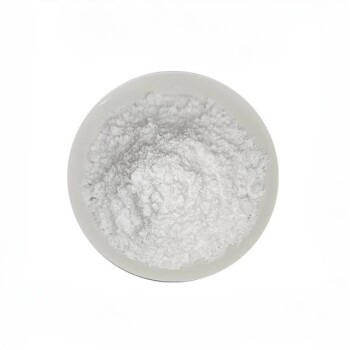
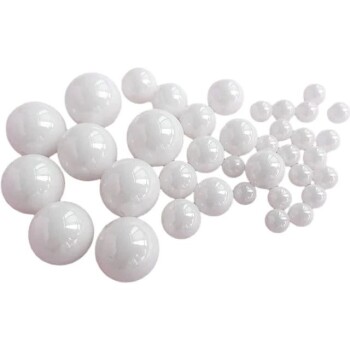
The primary role of alumina (corundum) ball milling jars is to serve as a high-hardness, chemically inert containment vessel. Specifically, when mixing Copper (Cu) and Titanium Silicon Carbide (Ti3SiC2) powders, these jars prevent the introduction of impurities caused by friction between the metal powders and the container walls, ensuring the raw materials remain pure.
Core Takeaway: By resisting wear and chemical interaction, alumina jars preserve the critical purity of Cu and Ti3SiC2 powders. This purity is essential for preventing unwanted reactions and maintaining the structural stability of the Ti3SiC2 phase within the copper matrix during composite fabrication.
The Critical Need for Purity
Preventing Contamination via Hardness
The ball milling process involves intense mechanical friction. If the container material is softer than the powders or the milling media, the container walls will degrade.
Alumina (corundum) provides exceptional hardness. This property effectively resists the abrasive action of the metal powders, preventing container material from wearing off and contaminating the mixture.
Ensuring Chemical Stability
Beyond physical wear, the milling environment must be chemically neutral. Alumina is chemically stable and does not react easily with other elements.
This stability is vital for Cu-Ti3SiC2 composites. It ensures that no foreign chemical elements are introduced that could destabilize the Ti3SiC2 phase or alter the conductivity of the copper matrix.
The Mechanics of the Mixing Process
Breaking Agglomerates
While purity is the primary reason for choosing alumina, the physical process occurring inside the jar is mechanical grinding.
The impact and friction within the jar serve to break up powder agglomerates. This is necessary to reduce the particle size of clusters that naturally form during powder storage or handling.
Achieving Uniform Dispersion
The ultimate goal of the milling process is homogeneity. The alumina jar facilitates the microscopic mixing of the constituent powders.
By subjecting the mixture to extended mechanical action, the process ensures that the Ti3SiC2 reinforcement is evenly distributed throughout the Copper matrix. This uniform dispersion is a prerequisite for achieving consistent mechanical and electrical properties in the final sintered composite.
Understanding the Trade-offs
Brittleness and Handling
While alumina is hard and chemically stable, it is a ceramic, making it inherently brittle. Unlike stainless steel jars, alumina jars can crack or shatter if subjected to significant impact or rapid thermal shock.
Potential for Cross-Contamination
If an alumina jar is not cleaned thoroughly between batches of different material systems, the porous nature of some lower-grade alumina ceramics can trap microscopic particles.
High-purity, dense alumina jars are required to minimize this risk, but rigorous cleaning protocols remain essential to prevent cross-contamination between different alloy projects.
Optimizing Your Powder Metallurgy Process
To ensure the success of your Cu-Ti3SiC2 composite fabrication, consider the following strategic priorities:
- If your primary focus is Phase Stability: Prioritize the use of high-purity alumina jars to eliminate friction-induced impurities that could degrade the Ti3SiC2 structure.
- If your primary focus is Microstructural Homogeneity: Ensure the milling duration is sufficient to break down all agglomerates and achieve a uniform dispersion of reinforcement particles within the matrix.
Selecting the correct milling vessel is not merely a logistical choice; it is the foundational step in guaranteeing the purity and performance of your final composite material.
Summary Table:
| Feature | Benefit for Cu-Ti3SiC2 Mixing |
|---|---|
| High Hardness | Resists abrasion from metal powders to prevent material contamination. |
| Chemical Inertness | Prevents unwanted chemical reactions and preserves Ti3SiC2 phase stability. |
| Wear Resistance | Long-lasting durability during intense mechanical grinding and impact. |
| Mechanical Action | Facilitates breaking agglomerates for a uniform microscopic dispersion. |
Elevate Your Composite Fabrication with KINTEK Precision
To achieve superior mechanical and electrical properties in Cu-Ti3SiC2 composites, the purity of your powder mixture is non-negotiable. KINTEK specializes in high-performance laboratory equipment, providing the high-purity alumina (corundum) ball milling jars and crushing and milling systems essential for contamination-free processing.
Our extensive portfolio supports your entire research workflow, from planetary ball mills and jars to high-temperature vacuum furnaces and hydraulic presses for final sintering. Whether you are optimizing battery research or developing advanced alloys, KINTEK delivers the reliability and precision your lab demands.
Ready to optimize your material purity? Contact our technical experts today to find the perfect milling solutions and consumables for your specific application.
Related Products
- Laboratory Jar Ball Mill with Alumina Zirconia Grinding Jar and Balls
- Laboratory Ball Mill Jar Mill with Metal Alloy Grinding Jar and Balls
- Laboratory Jar Mill with Agate Grinding Jar and Balls
- Laboratory Single Horizontal Jar Mill
- Laboratory Four-Body Horizontal Jar Mill
People Also Ask
- What are the primary functions of using a ball mill for BZCY72 powder? Achieve High Purity and Enhanced Sintering
- In what way does a laboratory ball mill affect material properties when modifying PHBV/pulp fiber composites?
- Why is a laboratory ball mill required for ultra-fine fly ash? Unlock Nano-Scale Adsorption Power
- What is the function of a laboratory ball mill in the preparation of AMMCs? Optimize Dispersion & Grain Refinement
- What is the function of a laboratory ball mill in the pretreatment of waste tire char (WTC)? Optimize Material Reactivity