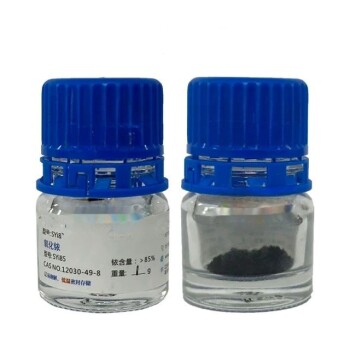
Magnetic stirring and ultrasonic treatment serve as the primary dispersion mechanisms in the preparation of Zn–WO3 composite electrolytes. Together, they physically break down clustered WO3 nanoparticles and suspend them within the plating solution, ensuring the particles do not settle out of the bath before the electrodeposition process begins.
The core objective of these treatments is to translate liquid-phase homogeneity into solid-phase performance. By preventing particle agglomeration in the bath, you guarantee that the final zinc matrix possesses a uniform distribution of reinforcing WO3 particles.
The Physics of Dispersion
Overcoming Nanoparticle Agglomeration
Nanoparticles have a natural tendency to stick together, forming larger clusters known as agglomerates.
If left untreated, these clusters act as heavy distinct masses rather than a fine dispersion. This clumping fundamentally changes how the material behaves within the electrolyte solution.
Reducing Sedimentation Rates
When particles clump together, they become heavier and sink to the bottom of the plating bath.
Prolonged magnetic stirring creates a constant vortex that counteracts gravity. This keeps the particles in motion and prevents them from forming a sludge at the bottom of the tank.
Breaking Apart Clusters
While stirring moves the particles, ultrasonic treatment provides the high-energy force required to shatter existing agglomerates.
The sound waves create microscopic cavitation bubbles that implode, forcing loosely bound particle clusters apart. This ensures the solution contains individual nanoparticles rather than large chunks.
Impact on the Final Composite
Ensuring Uniform Incorporation
The quality of the final composite coating is directly dependent on the state of the plating bath.
If the WO3 is well-dispersed in the liquid, it will be uniformly incorporated into the growing zinc layer during electrodeposition.
Creating a Consistent Matrix
Without these treatments, the resulting composite would likely have patches of high particle concentration and areas with none.
Magnetic stirring and ultrasonic treatment ensure the WO3 nanoparticles are embedded evenly throughout the zinc matrix, leading to consistent material properties across the entire surface.
Understanding the Trade-offs
The Requirement of Continuity
These treatments are active processes, not permanent fixes.
If stirring or ultrasonic treatment stops for an extended period, the physical forces keeping the particles suspended disappear. Sedimentation will eventually resume, compromising the bath quality.
Process Complexity
Implementing both prolonged stirring and ultrasonic treatment adds steps to the preparation workflow.
It requires specific equipment and precise timing to ensure the bath is at its optimal state exactly when the electrodeposition current is applied.
How to Apply This to Your Project
To achieve the best results with Zn–WO3 composites, align your preparation steps with your quality targets:
- If your primary focus is coating uniformity: Prioritize high-energy ultrasonic treatment to shatter all agglomerates before plating begins.
- If your primary focus is process stability: Maintain continuous magnetic stirring during the plating process to prevent varying particle concentrations over time.
The success of your composite relies not just on the ingredients, but on the mechanical energy used to keep them effectively mixed.
Summary Table:
| Mechanism | Primary Function | Key Benefit |
|---|---|---|
| Magnetic Stirring | Creates a constant vortex to counteract gravity | Prevents sedimentation and maintains bath stability |
| Ultrasonic Treatment | High-energy cavitation to shatter agglomerates | Breaks down nanoparticle clusters into fine dispersions |
| Synergy | Physical suspension + high-energy dispersion | Ensures uniform particle incorporation into the zinc matrix |
Elevate Your Material Research with KINTEK
Precision in composite electrolyte preparation requires more than just the right chemicals—it demands high-performance dispersal and laboratory equipment. KINTEK specializes in providing the tools you need to achieve liquid-phase homogeneity, from advanced magnetic stirrers and homogenizers to cutting-edge battery research tools and ultrasonic cooling solutions.
Whether you are developing Zn–WO3 composites or advanced thin-film coatings, our comprehensive range of high-temperature furnaces, electrolytic cells, and high-pressure reactors ensures your lab achieves consistent, repeatable results. Contact KINTEK today to discover how our specialized equipment can optimize your electrodeposition processes and material performance.
References
- C. M. Praveen Kumar, Khaled Giasin. The Effect of Zn and Zn–WO3 Composites Nano-Coatings Deposition on Hardness and Corrosion Resistance in Steel Substrate. DOI: 10.3390/ma14092253
This article is also based on technical information from Kintek Solution Knowledge Base .
Related Products
People Also Ask
- What advantages does supercritical fluid technology provide for Iridium catalysts? Achieve Precision Nano-Synthesis
- What are the different types of catalysts used in pyrolysis? A Guide to Optimizing Biomass Conversion
- How does catalyst work in pyrolysis? A Guide to Efficient and Selective Fuel Production
- Which catalyst is used in pyrolysis process? Choosing the Right Catalyst for Your Feedstock
- What is the best catalyst for pyrolysis? A Strategic Guide to Maximizing Bio-Oil Quality and Yield