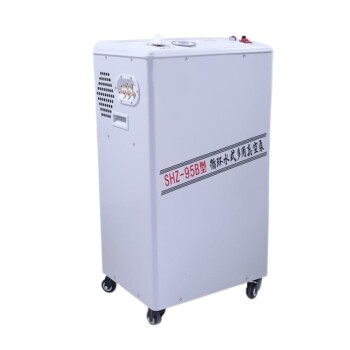
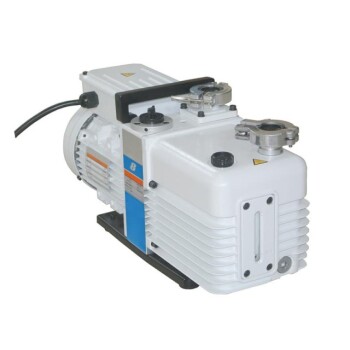
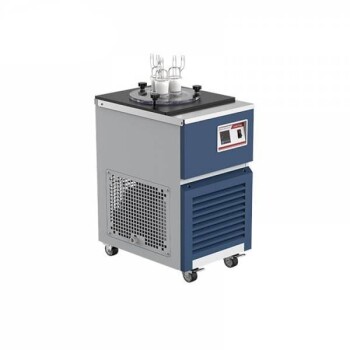
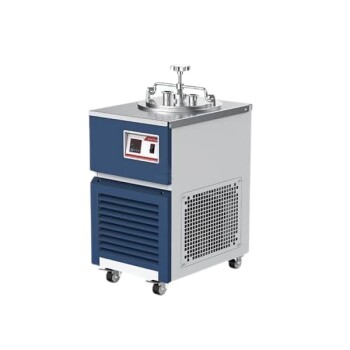
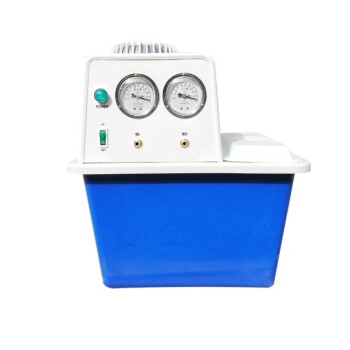
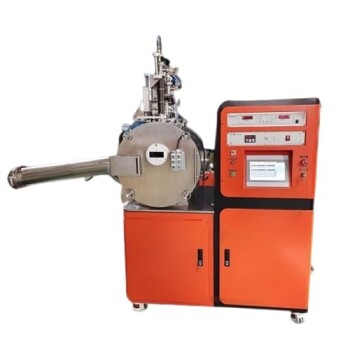
Vacuum degassing serves as the critical quality control step immediately following the mixing of the Polydimethylsiloxane (PDMS) base material and curing agent. Its primary function is to mechanically evacuate air bubbles trapped within the viscous liquid mixture, ensuring the material is completely void-free before solidification begins. This preparation is foundational for creating a dense, high-integrity substrate capable of withstanding advanced surface treatments.
Core Takeaway Vacuum degassing transforms a porous, aerated liquid mixture into a dense, uniform solid. By eliminating trapped air, this process prevents permanent structural defects that would otherwise compromise subsequent plasma treatments and the adhesion of Diamond-Like Carbon (DLC) coatings.
The Mechanics of Defect Prevention
Removing Entrapped Air
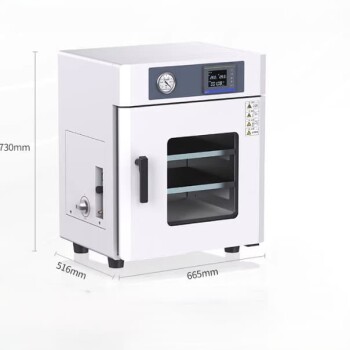
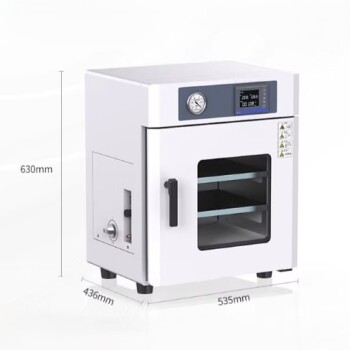
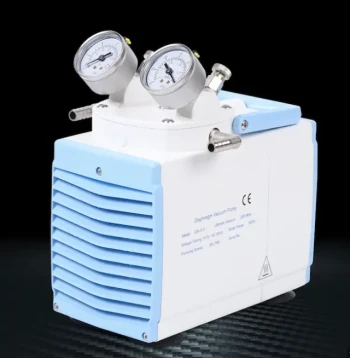
When the PDMS base material is combined with a curing agent, the mixing process inevitably introduces air into the liquid. Vacuum degassing equipment creates a low-pressure environment that forces these trapped bubbles to rise to the surface and escape.
Ensuring Structural Density
The primary goal of this evacuation is to ensure the internal structure of the polymer is perfectly dense. If the air is not removed, the gas remains trapped as the liquid hardens, resulting in a substrate riddled with pore defects.
Solidification Integrity
A successful degassing phase guarantees that the material solidifies as a continuous block rather than a honeycomb of voids. This structural continuity is the baseline requirement for any high-performance application of PDMS.
Impact on Downstream Processing
Enabling Uniform Plasma Treatments
Once the PDMS substrate is cured, it often undergoes plasma treatment to alter its surface properties. The reference material indicates that a bubble-free structure is essential for achieving uniform physical properties during this sensitive chemical modification.
Facilitating Coating Growth
For advanced applications involving Diamond-Like Carbon (DLC) coatings, the substrate surface must be flawless. Any underlying bubbles or pore defects can disrupt the growth mechanism of these coatings, leading to failure in adhesion or consistency.
The Risks of Inadequate Preparation
Permanent Structural Flaws
The most significant risk in this process is the solidification of the polymer before all air is evacuated. Once the PDMS cures, any remaining pore defects become permanent, rendering the substrate unsuitable for precision applications.
Compromised Surface Engineering
Skipping or rushing the degassing phase creates a weak link in the manufacturing chain. Defects that seem minor in the bulk material can catastrophic failures during the growth of DLC coatings, as the surface cannot support the deposition process uniformly.
Making the Right Choice for Your Goal
To ensure your PDMS substrates perform as intended, consider the following regarding your process workflow:
- If your primary focus is Structural Integrity: You must utilize vacuum degassing to eliminate pore defects and ensure a dense, void-free internal structure.
- If your primary focus is Surface Engineering (DLC/Plasma): You must prioritize complete bubble removal to guarantee the uniform physical properties required for successful coating growth and treatment.
A rigorous degassing protocol is the invisible foundation of a high-performance PDMS substrate.
Summary Table:
| Feature | Role in PDMS Preparation | Impact on Quality |
|---|---|---|
| Air Evacuation | Removes bubbles introduced during mixing | Eliminates internal pore defects |
| Structural Density | Ensures a continuous, dense solid block | Prevents permanent structural flaws |
| Surface Preparation | Provides a flawless substrate surface | Enables uniform plasma treatment results |
| Coating Support | Creates a stable base for deposition | Facilitates consistent DLC coating growth |
Elevate Your Materials Research with KINTEK Precision
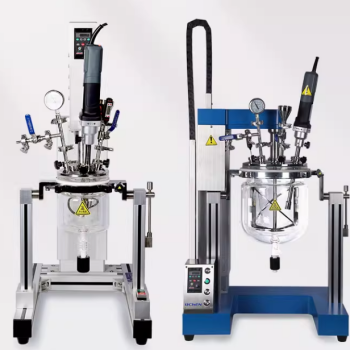
Don't let trapped air bubbles compromise your research or manufacturing quality. KINTEK specializes in high-performance laboratory equipment designed to ensure the structural integrity of your materials. Whether you are preparing PDMS substrates or developing advanced coatings, our comprehensive range of vacuum degassing systems, high-temperature high-pressure reactors, and CVD/PECVD solutions provides the reliability you need.
From crushing and milling to sophisticated thermal processing, our tools empower labs to achieve uniform physical properties and flawless surface engineering. Optimize your workflow today—Contact KINTEK for a tailored solution!
References
- W. Kaczorowski, M. Cłapa. Impact of Plasma Pre-Treatment on the Tribological Properties of DLC Coatings on PDMS Substrates. DOI: 10.3390/ma14020433
This article is also based on technical information from Kintek Solution Knowledge Base .
Related Products
- Vacuum Cold Mounting Machine for Sample Preparation
- 56L Vertical Laboratory Vacuum Drying Oven
- High Performance Lab Homogenizer for Pharma Cosmetics and Food R&D
- 23L Laboratory Vacuum Drying Oven
- Electric Heated Hydraulic Vacuum Heat Press for Lab
People Also Ask
- What is the purpose of sample preparation? Ensure Accurate & Reliable Analytical Results
- What sample preparation methods are used in labs? Master the Critical First Step for Reliable Analysis
- What is a vacuum press machine? Harness Atmospheric Pressure for Perfect Lamination
- What role does vacuum impregnation play with high-viscosity ionic liquids? Enhance Your Battery Performance Today
- What can you do with a vacuum press? Achieve Flawless Lamination and Clamping