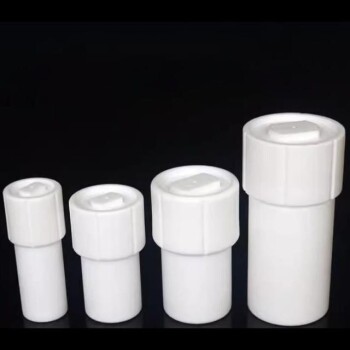
The significance of acid leaching reactors and corrosion-resistant consumables lies in their ability to maintain purity control. In the hydrometallurgical recycling of graphite anodes, these components serve a dual purpose: they enable the aggressive chemical removal of residual metals while preventing the equipment itself from dissolving and re-contaminating the refined material. Without specialized corrosion resistance, achieving battery-grade standards is chemically impossible.
Core Takeaway The success of graphite recycling depends on creating a "chemically invisible" processing environment. Using acid leaching reactors with PTFE or ceramic components is the only way to strip original impurities without introducing new "secondary impurities" caused by equipment corrosion, ensuring the final product is pure enough for battery reuse.
The Function of Acid Leaching Reactors
Targeting Specific Impurities
The primary objective of the leaching phase is to strip residual metal impurities trapped within the spent graphite powder. This process specifically targets metals such as lithium, aluminum, copper, nickel, cobalt, and manganese.
Containing Aggressive Chemistry
To dissolve these metals effectively, the reactor must contain and agitate strong acid solutions. Common agents used in this process include hydrochloric acid, sulfuric acid, and various organic acids, all of which create a highly corrosive environment.
The Criticality of Corrosion Resistance
Preventing Secondary Impurities
The most significant risk during leaching is not the failure to remove old metals, but the introduction of new ones. If the reactor walls or stirring mechanisms corrode, they release material into the solution, creating secondary impurities that ruin the batch.
Ensuring Battery-Grade Standards
Regenerated graphite must meet extremely high chemical purity standards to be viable for battery applications. Any contamination introduced by the processing equipment will degrade the electrochemical performance of the recycled anode material.
Selecting the Right Materials
The Role of PTFE and Ceramics
To mitigate corrosion risks, the industry relies on reactors and magnetic stirrers constructed with specific inert materials. Polytetrafluoroethylene (PTFE) linings and high-purity ceramics are the critical materials of choice.
Material Compatibility
These materials are chemically inert to the strong acids used in leaching. By using PTFE or ceramics, you ensure that the only chemical reaction occurring is between the acid and the waste metals, not the acid and the vessel.
Understanding the Trade-offs
Mechanical Durability vs. Chemical Resistance
While PTFE and ceramic linings offer superior chemical resistance, they generally lack the mechanical robustness of solid metal. Care must be taken to avoid physical damage to linings, which would expose the underlying substrate to acid attack.
Cost Implications
Investing in high-purity ceramic components or specialized PTFE-lined reactors typically involves higher upfront costs than standard stainless steel equipment. However, this cost is unavoidable if the goal is to produce a market-ready battery product.
Making the Right Choice for Your Process
When designing your recycling line, your equipment choices define your ceiling for product quality.
- If your primary focus is Chemical Purity: Prioritize reactors with thick, seamless PTFE linings to ensure zero interaction between the vessel and the acid solution.
- If your primary focus is Process Consistency: Utilize high-purity ceramic magnetic stirrers to prevent gradual wear and contamination during the agitation of abrasive graphite slurries.
To achieve a truly circular economy in battery materials, the cleanliness of your tools matters just as much as the strength of your chemistry.
Summary Table:
| Feature | Acid Leaching Reactor Requirement | Significance in Graphite Recycling |
|---|---|---|
| Material Compatibility | PTFE Lining / High-Purity Ceramics | Prevents secondary contamination from vessel corrosion. |
| Chemical Resistance | High resistance to HCl, H2SO4, and organic acids | Safely contains aggressive leaching agents to dissolve metals. |
| Impurity Targeting | Removal of Li, Al, Cu, Ni, Co, Mn | Achieves the high purity required for battery-grade standards. |
| Agitation Safety | Corrosion-resistant magnetic stirrers | Ensures consistent mixing without introducing wear-related debris. |
Elevate Your Recycling Purity with KINTEK Solutions
To achieve a truly circular economy, your tools must be as clean as your chemistry. KINTEK specializes in high-performance laboratory equipment designed for the most demanding hydrometallurgical processes.
We provide advanced acid leaching reactors with PTFE linings, high-purity ceramics and crucibles, and specialized magnetic stirrers that ensure your refined graphite meets strict battery-grade standards. Whether you are scaling up battery research or optimizing production, our range of corrosion-resistant consumables and high-temperature equipment protects your materials from secondary impurities.
Ready to optimize your graphite anode recovery? Contact our technical experts today to find the perfect equipment for your lab!
References
- Yu Qiao, Yong Lei. Recycling of graphite anode from spent lithium‐ion batteries: Advances and perspectives. DOI: 10.1002/eom2.12321
This article is also based on technical information from Kintek Solution Knowledge Base .
Related Products
- Custom PTFE Teflon Parts Manufacturer for Microwave Digestion Tank
- Customizable Laboratory High Temperature High Pressure Reactors for Diverse Scientific Applications
- Customizable High Pressure Reactors for Advanced Scientific and Industrial Applications
- High Pressure Laboratory Autoclave Reactor for Hydrothermal Synthesis
- Stainless High Pressure Autoclave Reactor Laboratory Pressure Reactor
People Also Ask
- Why are PTFE containers required for PCT leaching tests? Ensure Chemical Inertness and Analytical Precision
- Why use high-quality PTFE containers for CO2 reduction electrolytes? Eliminate silicon contamination and ensure data.
- Why is PTFE Mandatory for Hydrofluoric Acid (HF) Handling? Ensure Safety and Data Integrity in Corrosion Testing
- Why is a PTFE container required for acid leaching of silicon nanosheets? Ensure High Purity and Safety
- Why are polytetrafluoroethylene (PTFE) containers essential for assessing the corrosion resistance of glassified waste?