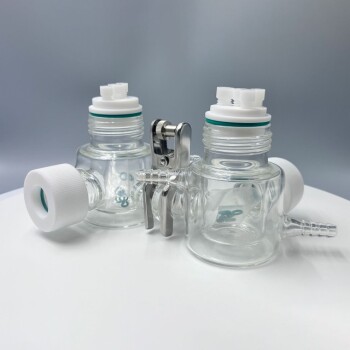
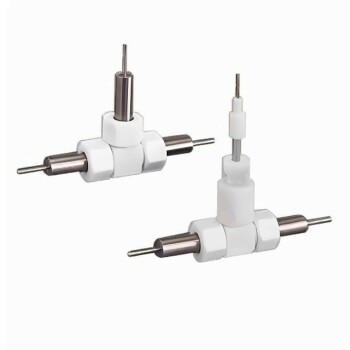
The material integrity of the electrolytic cell is a fundamental determinant of quality in zirconium-based Plasma Electrolytic Oxidation (PEO) ceramic coatings. High-purity, corrosion-resistant cells are strictly required to prevent the degradation of the reaction vessel, which ensures that dissolved impurities do not contaminate the electrolyte or compromise the coating's final performance.
The reaction vessel is not a passive container; it is an active variable in the PEO process. Stability in the cell material is the only way to guarantee that the coating’s wear resistance and dielectric properties are defined by your electrolyte chemistry, not by contaminants leaching from the tank.
The Critical Role of Material Purity
Preventing Elemental Contamination
The PEO process involves long-term exposure to strongly alkaline or acidic electrolytes, such as silicate, phosphate, or aluminate solutions.
If the cell material cannot withstand this chemical environment, it degrades, releasing impurity ions into the solution.
These impurities are incorporated into the growing ceramic layer on the zirconium alloy, fundamentally altering its composition.
Preserving Dielectric Properties
For zirconium-based coatings, electrical insulation is often a key performance metric.
Impurity ions derived from a degrading cell body act as defects within the ceramic lattice.
These defects significantly reduce the dielectric strength of the coating, leading to potential electrical failure in the final application.
Maintaining Wear Resistance
The hardness and durability of the ceramic layer rely on a pure, consistent crystal structure.
When foreign ions from the cell enter the coating, they can disrupt this structure, leading to softer coatings with reduced wear resistance.
Process Uniformity and Design
Enhancing Electrolyte Consistency
High-quality industrial electrolytic cells are designed with optimized flow field structures.
This internal geometry works in tandem with stirring systems to ensure the electrolyte composition remains uniform throughout the tank.
Controlling Thermal Variables
The PEO discharge process generates significant heat at the anode interface.
Advanced cell designs ensure consistent temperature distribution, preventing hot spots that could lead to uneven coating growth or structural defects.
The Risks of Substandard Equipment
Unseen Chemical drift
Using standard or low-purity vessels introduces a variable of chemical drift that is difficult to track.
Operators may observe a degradation in coating quality over time, mistakenly attributing it to electrolyte aging rather than vessel corrosion.
Inconsistent Discharge Dynamics
Without the optimized flow and stirring systems found in high-grade cells, the discharge process becomes unstable.
This lack of uniformity results in patchy coatings with variable thickness and unpredictable mechanical properties across the surface of the zirconium part.
Making the Right Choice for Your Project
To ensure your zirconium PEO coatings meet industrial standards, align your equipment choice with your specific performance requirements.
- If your primary focus is Electrical Insulation: Prioritize high-purity cell materials to eliminate conductive impurity ions that lower dielectric breakdown voltage.
- If your primary focus is Mechanical Durability: Ensure the cell is corrosion-resistant to prevent foreign elements from softening the ceramic layer and reducing wear resistance.
- If your primary focus is Process Scalability: Select industrial-grade cells with integrated stirring and flow optimization to guarantee batch-to-batch uniformity.
Investing in the right reaction vessel transforms the cell from a potential contaminant source into a cornerstone of process stability.
Summary Table:
| Feature | Impact on Zirconium PEO Coating | Benefit of High-Purity/Corrosion-Resistant Cells |
|---|---|---|
| Material Purity | Prevents ion leaching into electrolyte | Maintains high dielectric strength and coating purity |
| Corrosion Resistance | Resists degradation from alkaline/acidic solutions | Prevents chemical drift and ensures coating hardness |
| Flow Field Design | Uniform electrolyte distribution | Ensures consistent coating thickness and uniformity |
| Thermal Control | Manages heat at the anode interface | Eliminates structural defects and prevents hot spots |
Elevate Your Surface Engineering with KINTEK Precision
Don't let equipment degradation compromise your research or production quality. KINTEK specializes in high-performance laboratory solutions, offering premium electrolytic cells and electrodes specifically engineered to withstand the rigorous chemical and thermal demands of Plasma Electrolytic Oxidation (PEO).
Our extensive portfolio supports every stage of your material science workflow, from high-temperature furnaces and reactors to specialized battery research tools and advanced cooling solutions. Whether you are focused on maximizing dielectric strength or ensuring superior wear resistance, KINTEK provides the reliability your project deserves.
Ready to optimize your PEO process and eliminate chemical contamination?
Contact Our Experts Today to Find the Perfect Cell for Your Application
References
- Navid Attarzadeh, C.V. Ramana. Plasma Electrolytic Oxidation Ceramic Coatings on Zirconium (Zr) and ZrAlloys: Part I—Growth Mechanisms, Microstructure, and Chemical Composition. DOI: 10.3390/coatings11060634
This article is also based on technical information from Kintek Solution Knowledge Base .
Related Products
- PTFE Electrolytic Cell Electrochemical Cell Corrosion-Resistant Sealed and Non-Sealed
- Electrolytic Electrochemical Cell for Coating Evaluation
- Flat Corrosion Electrolytic Electrochemical Cell
- Super Sealed Electrolytic Electrochemical Cell
- H Type Electrolytic Cell Triple Electrochemical Cell
People Also Ask
- What is the necessity of selecting a PTFE electrolytic cell? Ensure Precise Graphene Corrosion Testing Accuracy
- What is the proper method for cleaning the surface of an all-PTFE electrolytic cell? Ensure Accurate Results with a Pristine Surface
- How should an all-PTFE electrolytic cell be stored after use? Expert Maintenance Tips for Long-Lasting Performance
- What is the proper cleaning method for an all-PTFE electrolytic cell? Essential Tips for Surface Integrity
- What are the standard opening specifications for all-PTFE electrolytic cells? A Guide to Sealed vs. Non-Sealed Ports