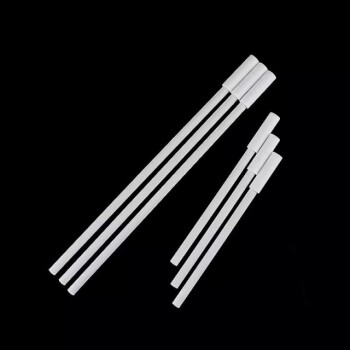
The primary significance of using PTFE gas tubing is its exceptional ability to withstand the highly corrosive nature of hydrogen chloride gas during the final salt formation stage. This tubing acts as a safe, chemically inert conduit that facilitates the precise delivery of in situ generated gas, ensuring the efficient conversion of a free base into its hydrochloride salt form without the drawbacks of liquid reagents.
By combining extreme chemical resistance with precise delivery capabilities, PTFE tubing transforms a potentially hazardous synthesis step into a controlled, measurable, and environmentally friendly process.
Material Suitability and Safety
Exceptional Chemical Resistance
The foremost reason for selecting PTFE (Polytetrafluoroethylene) is its resilience against aggressive chemicals. Hydrogen chloride (HCl) is a highly corrosive gas that degrades many standard tubing materials.
Preventing Contamination
Because PTFE does not react with HCl, it ensures the integrity of the tubing is maintained throughout the process. This prevents degraded tubing material from leaching into the final product, preserving the purity of the hydrochloride salt.
Process Control and Efficiency
Precision in Measurement
Using PTFE tubing to introduce HCl gas offers a distinct advantage over liquid acid reagents: measurement control. The gas flow can be regulated with high precision, allowing for exact stoichiometry during the reaction.
Facilitating In Situ Generation
The tubing serves as the critical link between the gas generation source and the collection vessel. It allows for the safe transport of HCl generated in situ directly to the reaction site.
Efficient Salt Formation
The delivery method enabled by this tubing promotes an efficient reaction between the gas and the liquid or solid base. This ensures a complete conversion of the free base into the desired salt form.
Environmental and Operational Impact
A "Greener" Approach
The reference highlights that this gas-solid or gas-liquid reaction method is more environmentally friendly than traditional alternatives. Replacing liquid acid reagents with a precise gas delivery system reduces chemical waste.
Operational Simplicity
While dealing with gas requires care, the reference notes that this method is "easier to measure." This suggests that, operationally, controlling a gas flow through PTFE is often more straightforward than handling and dosing corrosive liquid acids.
Understanding the Trade-offs
Physical Rigidity
While chemically superior, PTFE is generally stiffer than other tubing materials like silicone or Tygon. This lack of flexibility can make routing the tubing in tight setups more challenging, requiring careful planning of the equipment layout.
System Complexity
Using a gas delivery system is inherently more complex than simply adding a liquid reagent. It requires a generator, pressure controls, and leak-proof connections, whereas liquid addition might only require a pipette or addition funnel.
Optimizing Your Synthesis Setup
To determine if this approach is right for your specific application, consider your project's primary constraints.
- If your primary focus is Chemical Purity: Rely on PTFE tubing to prevent corrosion byproducts from contaminating your final salt form.
- If your primary focus is Environmental Compliance: Utilize this gas delivery method to minimize the waste associated with liquid acid reagents.
- If your primary focus is Process Reproducibility: Leverage the "easier to measure" nature of gas flow to standardize your reaction stoichiometry.
Use PTFE tubing not just as a conduit, but as a tool to upgrade the safety and precision of your final product formation.
Summary Table:
| Feature | Benefit of PTFE Tubing for HCl Delivery | Impact on Final Product |
|---|---|---|
| Chemical Resistance | Withstands highly corrosive HCl gas without degradation | Prevents material leaching and contamination |
| Precision Control | Allows exact gas flow regulation and stoichiometry | Ensures complete and efficient salt conversion |
| Environmental Impact | Reduces chemical waste compared to liquid acid reagents | Promotes a greener, more sustainable process |
| Operational Ease | Facilitates safe transport of in situ generated gas | Simplifies measurement and dosing accuracy |
Upgrade Your Lab's Chemical Integrity with KINTEK
Precise gas delivery is the backbone of high-purity synthesis. KINTEK specializes in premium laboratory equipment and high-performance consumables designed for the most demanding environments. Whether you need chemically inert PTFE products, durable high-temperature furnaces, or specialized crushing and milling systems, we provide the tools that ensure your research is both safe and reproducible.
From high-pressure reactors to essential ceramics and crucibles, KINTEK is your partner in laboratory excellence. Don't compromise on purity—contact our experts today to find the perfect solution for your synthesis setup!
References
- Lorinda T. van Wyk, Darren L. Riley. The synthesis of bupropion hydrochloride under greener and safer conditions utilizing flow technologies. DOI: 10.1039/d3re00443k
This article is also based on technical information from Kintek Solution Knowledge Base .
Related Products
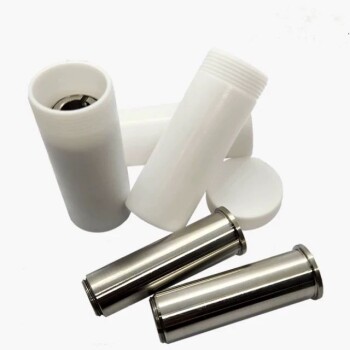
- Custom PTFE Teflon Parts Manufacturer for PTFE Bottle Oil Fume Sampling Tube
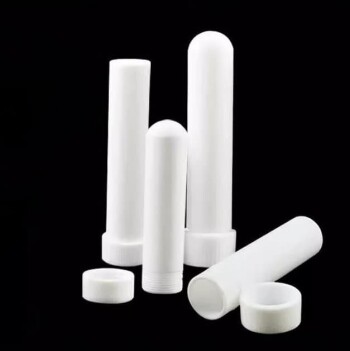
- Custom PTFE Teflon Parts Manufacturer for Centrifuge Tubes
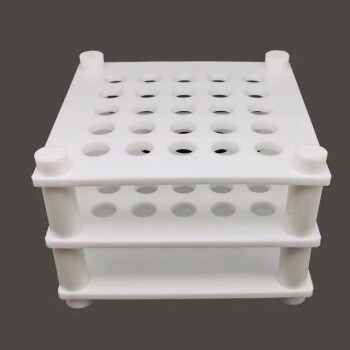
- Custom PTFE Teflon Parts Manufacturer for Centrifuge Tube Racks
- Custom PTFE Teflon Parts Manufacturer for Gaskets and More
- Custom PTFE Teflon Parts Manufacturer for Air Valve Applications
People Also Ask
- Why is slender PTFE tubing necessary for flow control in multi-channel catalyst aging? Ensure Equal Gas Distribution
- Why Use PTFE Sample Bottles for Coal Demineralization? Ensure Chemical Stability and Data Integrity
- What makes PTFE bottles suitable for static leaching? Ensure Zero-Contamination for Glass Testing
- Is PTFE corrosion resistant? Discover the Ultimate Chemical Resistance for Your Lab
- What are the specific applications of PTFE in micro-batch slug flow systems? Enhance Your Microfluidic Reaction Purity