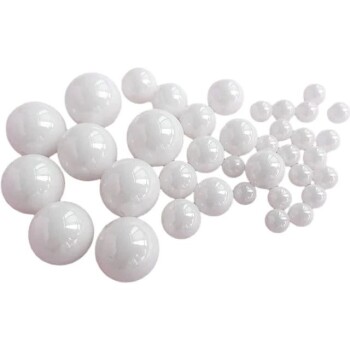
The selection of zirconia milling media is a critical process control strategy designed to ensure both the physical uniformity and chemical purity of your composite mixture. Specifically, zirconia ball milling jars and grinding balls are utilized because their high density generates sufficient impact energy to effectively disperse hard ZrB2 and SiC powders, while their exceptional wear resistance prevents the introduction of impurities that could degrade the final material.
In the processing of Ultra-High Temperature Ceramics (UHTCs), zirconia media bridges the gap between mechanical efficiency and chemical stability. It provides the kinetic force necessary to break down agglomerates without becoming a source of contamination itself.
Achieving Mechanical Uniformity
When dealing with high-hardness ceramic powders like ZrB2 and SiC, the physical mixing process is the foundation of material performance.
Leveraging High Density
Zirconia is significantly denser than many standard milling media materials. In a ball milling context, this mass translates directly into higher kinetic energy during particle collisions.
Ensuring Sufficient Impact Energy
To achieve a uniform dispersion of ZrB2 and SiC, the media must strike with enough force to break apart clusters and agglomerates. The high density of zirconia balls ensures that each impact delivers the necessary energy to homogenize these stubborn, hard powders effectively.
Preserving Material Purity
The secondary, yet equally vital, role of zirconia is maintaining the chemical integrity of the raw materials.
Minimizing Media Wear
The mixing of abrasive ceramic powders creates a harsh environment inside the milling jar. Zirconia possesses excellent wear resistance, meaning it maintains its structural integrity even when subjected to the abrasive action of ZrB2 and SiC.
Preventing Impurity Contamination
If softer milling media were used, the abrasive powders would grind the media down, introducing foreign particles into the mix. By using zirconia, you minimize this risk, ensuring the high purity required for ultra-high temperature applications.
Chemical Inertness
Beyond physical hardness, zirconia is chemically inert. This property ensures that the milling environment does not trigger unwanted chemical reactions, further safeguarding the composition of the ceramic raw materials.
The Consequence of Compromise
While zirconia is the preferred choice, it is important to understand the risks associated with inadequate milling media.
The Cost of Contamination
If media with lower wear resistance is employed, the resulting "wear debris" becomes an impurity in your powder mixture. In high-performance ceramics, even trace impurities can act as defect sites, compromising the thermal and mechanical properties of the final sintered product.
Making the Right Choice for Your Goal
Selecting the correct milling media is not just about mixing; it is about setting the stage for successful sintering.
- If your primary focus is Dispersion Quality: Rely on zirconia's high density to provide the impact energy needed to break down hard ceramic agglomerates.
- If your primary focus is Material Purity: Utilize zirconia's wear resistance and inertness to prevent foreign contaminants from entering your UHTC precursor mix.
By matching the hardness and density of your media to the demands of your powder, you ensure the integrity of the final composite.
Summary Table:
| Feature | Zirconia Media Benefit | Impact on ZrB2-SiC Composites |
|---|---|---|
| High Density | Increases kinetic impact energy | Effectively breaks down hard SiC/ZrB2 agglomerates |
| Wear Resistance | Minimizes media erosion | Maintains chemical purity of the ceramic powders |
| Chemical Inertness | Prevents unwanted reactions | Safeguards material composition during mixing |
| Physical Hardness | Resists abrasive wear | Ensures long-term durability and process consistency |
Elevate Your Material Purity with KINTEK Solutions
At KINTEK, we understand that high-performance ceramics demand uncompromising quality. Our premium zirconia ball milling jars and grinding balls are specifically engineered to handle the rigorous processing of Ultra-High Temperature Ceramics (UHTCs) like ZrB2-SiC.
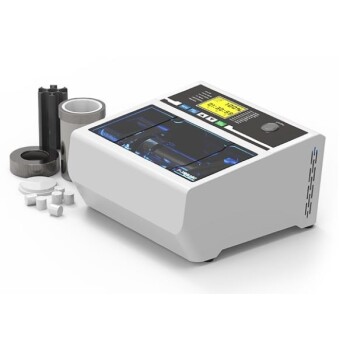
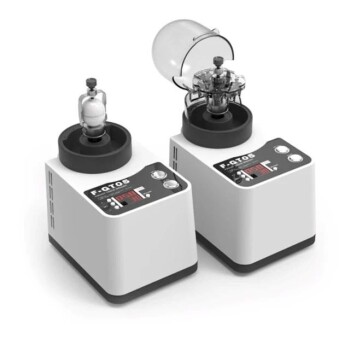
Beyond milling media, KINTEK offers a comprehensive range of laboratory equipment including high-temperature furnaces, crushing and milling systems, and hydraulic presses to support your entire R&D workflow. Whether you are focused on battery research, sample preparation, or advanced sintering, our expertise in high-temperature and high-pressure solutions ensures your lab achieves superior results.
Ready to optimize your powder mixing phase? Contact KINTEK today to discover how our high-density milling solutions and specialized laboratory consumables can enhance your material performance.
Related Products
- Laboratory Jar Ball Mill with Alumina Zirconia Grinding Jar and Balls
- Laboratory Ball Mill Jar Mill with Metal Alloy Grinding Jar and Balls
- Laboratory Single Horizontal Jar Mill
- Precision Machined Zirconia Ceramic Ball for Engineering Advanced Fine Ceramics
- Laboratory Jar Mill with Agate Grinding Jar and Balls
People Also Ask
- What are the primary functions of using a ball mill for BZCY72 powder? Achieve High Purity and Enhanced Sintering
- In what way does a laboratory ball mill affect material properties when modifying PHBV/pulp fiber composites?
- Why is a laboratory ball mill required for ultra-fine fly ash? Unlock Nano-Scale Adsorption Power
- What is the function of a laboratory ball mill in the preparation of AMMCs? Optimize Dispersion & Grain Refinement
- What is the function of a laboratory ball mill in the pretreatment of waste tire char (WTC)? Optimize Material Reactivity