Knowledge laboratory mill What is the use of grinding in laboratory? Unlock Accurate & Homogeneous Sample Analysis
Author avatar

Tech Team · Kintek Solution

Updated 2 months ago

What is the use of grinding in laboratory? Unlock Accurate & Homogeneous Sample Analysis


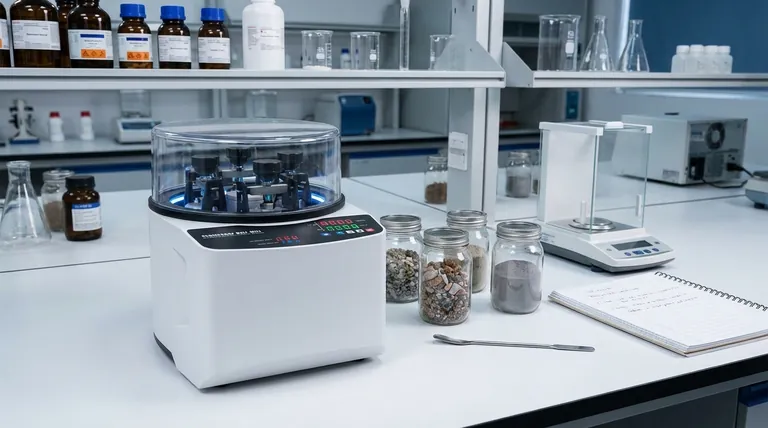
In a laboratory setting, grinding is the fundamental process of breaking down a solid material into smaller, more uniform pieces. This is achieved using a grinding mill that applies mechanical force to overcome the material's internal bonds, altering its particle size, shape, and distribution. It is used on an exceptionally wide range of materials, from hard minerals and pharmaceuticals to soft plant tissues and fibrous foods.

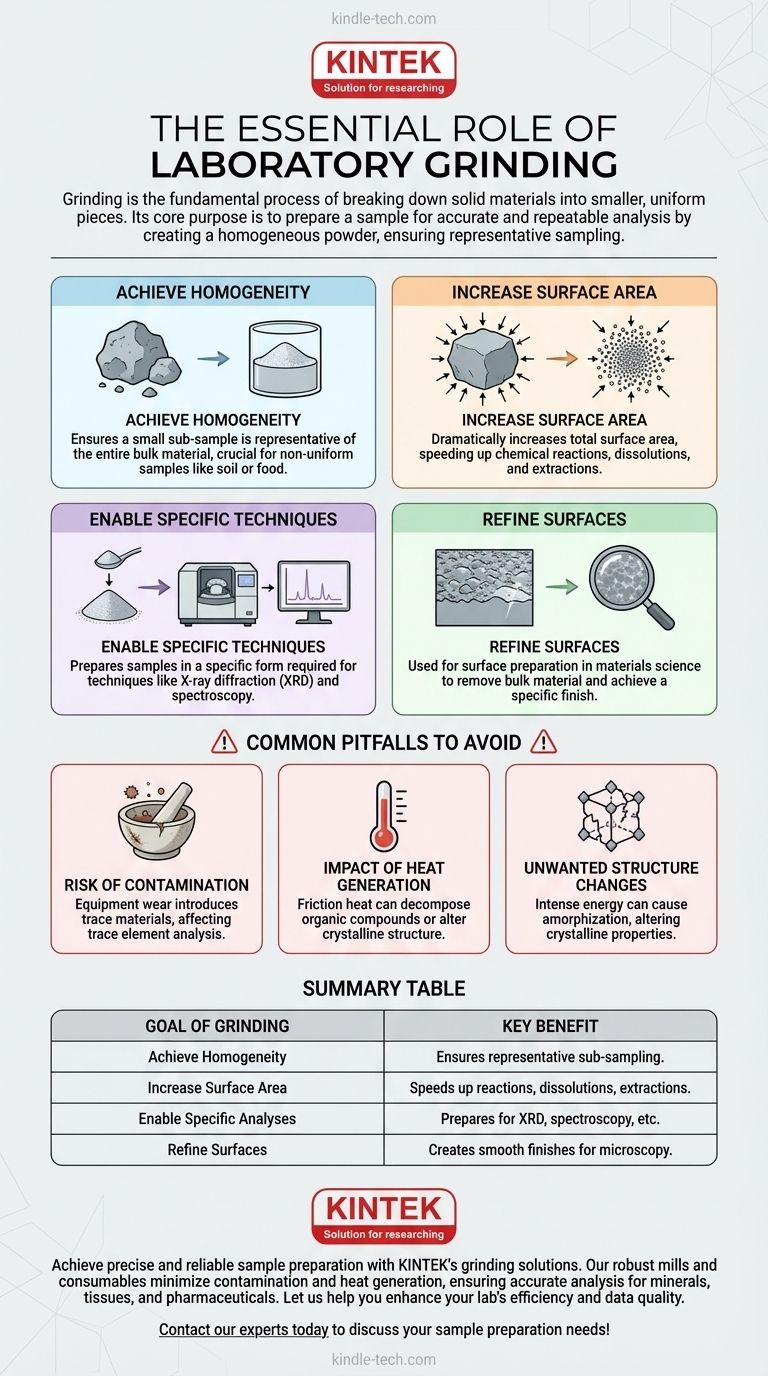
The core purpose of grinding is not just to make things smaller; it is to prepare a sample for accurate and repeatable analysis. By creating a fine, homogeneous powder, you ensure that any small portion taken for measurement is truly representative of the entire original sample.
What is the use of grinding in laboratory? Unlock Accurate & Homogeneous Sample Analysis

The Primary Goals of Laboratory Grinding

Grinding is a critical preparatory step that directly enables or enhances the quality of subsequent analysis. The specific goal depends on the material and the intended experiment.

Achieving Sample Homogeneity

Many samples, from soil to food products, are inherently non-uniform. Grabbing a small piece for testing would not accurately reflect the whole.

Grinding and mixing the entire bulk sample into a fine powder creates a homogeneous mixture. This ensures that any sub-sample taken for analysis has the same composition as the original, which is essential for reliable and reproducible results.

Increasing Reaction Surface Area

Chemical reactions, dissolution, and extractions occur at the surface of a material. A large, solid chunk has a relatively small surface area for its mass.

By grinding that same chunk into a fine powder, you dramatically increase the total surface area. This allows solvents and reactants to access more of the material simultaneously, leading to faster and more complete reactions or extractions.

Enabling Specific Analytical Techniques

Many modern analytical instruments require samples to be in a specific physical form to function correctly.

Techniques like X-ray diffraction (XRD) and certain types of spectroscopy require a fine, uniform powder to produce a clear signal. Improper sample preparation can lead to inaccurate or uninterpretable data.

Refining Surfaces for Examination

In fields like materials science and metallurgy, grinding is used for a different purpose: surface preparation.

It is used to remove bulk material, smooth a surface, and achieve a specific finish. This is a critical step before examining a material's microstructure under a microscope.

Common Pitfalls to Avoid

While essential, the grinding process itself can introduce errors if not managed carefully. Understanding these trade-offs is key to generating trustworthy data.

The Risk of Contamination

The grinding equipment (bowls, balls, or blades) can wear down during operation. This can introduce trace amounts of the equipment's material (e.g., steel, tungsten carbide, agate) into your sample.

This cross-contamination is a major concern, especially when performing trace element analysis where even tiny impurities can skew results.

The Impact of Heat Generation

The friction involved in milling generates significant heat. This can be problematic for heat-sensitive samples.

Excessive heat can cause organic compounds to decompose, volatile components to evaporate, or a material's crystalline structure to change. This alters the sample from its original state, leading to incorrect analytical conclusions.

Unwanted Changes to Material Structure

The intense mechanical energy of grinding can do more than just reduce particle size.

For some crystalline materials, the process can damage the crystal lattice, a phenomenon known as amorphization. If your goal is to study the material's crystalline structure, this is an undesirable artifact that must be controlled.

Making the Right Choice for Your Goal

The "correct" way to grind a sample depends entirely on your ultimate objective.

  • If your primary focus is accurate chemical analysis: Your goal is to create a perfectly homogeneous powder so that any sub-sample you take is identical to the bulk material.
  • If your primary focus is accelerating a reaction or extraction: Your goal is to maximize surface area by grinding the material as finely and uniformly as possible.
  • If your primary focus is studying a material's crystal structure: Your goal is to reduce particle size with the minimum possible energy to avoid altering the crystalline properties.

Ultimately, mastering laboratory grinding is about precisely controlling a sample's physical properties to unlock accurate and meaningful data.

Summary Table:

Goal of Grinding Key Benefit
Achieve Homogeneity Ensures a small sub-sample is representative of the entire bulk material.
Increase Surface Area Speeds up chemical reactions, dissolutions, and extractions.
Enable Specific Analyses Prepares samples for techniques like XRD and spectroscopy.
Refine Surfaces Creates smooth finishes for microscopic examination in materials science.

Achieve precise and reliable sample preparation with KINTEK's grinding solutions.

As a specialist in laboratory equipment, KINTEK provides robust mills and consumables designed to minimize contamination and heat generation, ensuring your samples are prepared accurately for analysis. Whether you're processing hard minerals, soft tissues, or pharmaceuticals, our products help you achieve the homogeneity and particle size required for your specific application.

Let us help you enhance your lab's efficiency and data quality. Contact our experts today to discuss your sample preparation needs!

Visual Guide
What is the use of grinding in laboratory? Unlock Accurate & Homogeneous Sample Analysis Visual Guide

Related Products

People Also Ask

Related Products

Laboratory Grinding Mill Mortar Grinder for Sample Preparation

Laboratory Grinding Mill Mortar Grinder for Sample Preparation

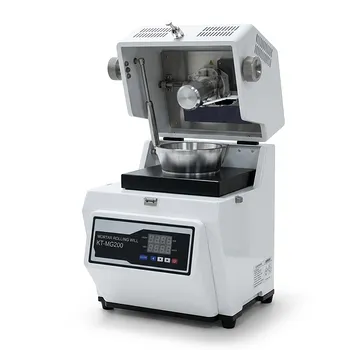
KT-MG200 mortar grinder can be used for mixing and homogenizing powder, suspension, paste and even viscous samples. It can help users realize the ideal operation of sample preparation with more regularization and higher repeatability.

Laboratory Hybrid Tissue Grinding Mill

Laboratory Hybrid Tissue Grinding Mill

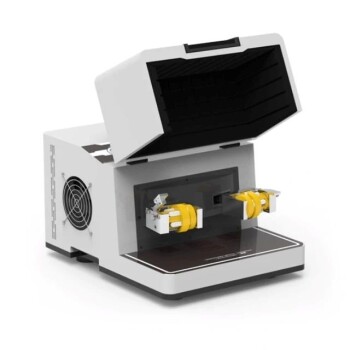
KT-MT20 is a versatile laboratory device used for rapid grinding or mixing of small samples, whether dry, wet, or frozen. It comes with two 50ml ball mill jars and various cell wall breaking adapters for biological applications such as DNA/RNA and protein extraction.

Vibrating Disc Mill Small Laboratory Grinding Machine

Vibrating Disc Mill Small Laboratory Grinding Machine

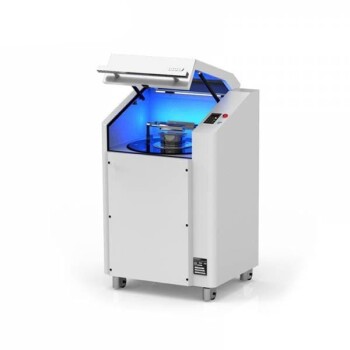
Discover the versatile Vibrating Disc Mill for efficient laboratory grinding. Ideal for geology, metallurgy, biology, and more. Explore now!

Small Cryogenic Grinder Cryomill Cryogrinder with Liquid Nitrogen for Laboratory Use

Small Cryogenic Grinder Cryomill Cryogrinder with Liquid Nitrogen for Laboratory Use

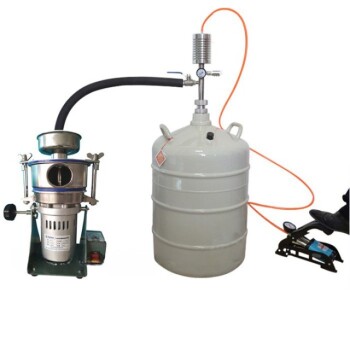
Our KINTEK Cryomilling is perfect for small runs and R&D trials. With a versatile cryogenic system, it can handle a variety of materials, including plastics, rubber, pharmaceuticals, and food grades. Plus, our specialized hydraulic laboratory crushers ensure accurate results through multiple passes, making it suitable for XRF analysis. Get finely-powdered samples with ease!

Laboratory Jar Mill with Agate Grinding Jar and Balls

Laboratory Jar Mill with Agate Grinding Jar and Balls

Grind your materials with ease using Agate Grinding Jars with Balls. Sizes from 50ml to 3000ml, perfect for planetary and vibration mills.

Laboratory Ball Mill Jar Mill with Metal Alloy Grinding Jar and Balls

Laboratory Ball Mill Jar Mill with Metal Alloy Grinding Jar and Balls

Grind and mill with ease using metal alloy grinding jars with balls. Choose from 304/316L stainless steel or tungsten carbide and optional liner materials. Compatible with various mills and features optional functions.

Lab Vibration Mill

Lab Vibration Mill

Vibration Mill for Efficient Sample Preparation, Suitable for Crushing and Grinding a Variety of Materials with Analytical Precision. Supports Dry / Wet / Cryogenic Grinding and Vacuum/Inert Gas Protection.

Laboratory Jar Ball Mill with Alumina Zirconia Grinding Jar and Balls

Laboratory Jar Ball Mill with Alumina Zirconia Grinding Jar and Balls

Grind to perfection with alumina/zirconia grinding jars and balls. Available in volume sizes from 50ml to 2500ml, compatible with various mills.

High Energy Planetary Ball Mill Milling Machine for Laboratory

High Energy Planetary Ball Mill Milling Machine for Laboratory

The biggest feature is that the high energy planetary ball mill can not only perform fast and effective grinding, but also has good crushing ability

Mini Planetary Ball Mill Machine for Laboratory Milling

Mini Planetary Ball Mill Machine for Laboratory Milling

Discover the KT-P400 desktop planetary ball mill, ideal for grinding and mixing small samples in the lab. Enjoy stable performance, long service life, and practicality. Functions include timing and overload protection.

High Energy Planetary Ball Mill Milling Machine for Laboratory

High Energy Planetary Ball Mill Milling Machine for Laboratory

Experience fast and effective sample processing with the F-P2000 high-energy planetary ball mill. This versatile equipment offers precise control and excellent grinding capabilities. Perfect for laboratories, it features multiple grinding bowls for simultaneous testing and high output. Achieve optimal results with its ergonomic design, compact structure, and advanced features. Ideal for a wide range of materials, it ensures consistent particle size reduction and low maintenance.

Laboratory Disc Cup Vibratory Mill for Sample Grinding

Laboratory Disc Cup Vibratory Mill for Sample Grinding

The vibrating disc mill is suitable for non-destructive crushing and fine grinding of samples with large particle sizes, and can quickly prepare samples with analytical fineness and purity.

High-Energy Omnidirectional Planetary Ball Mill Milling Machine for Laboratory

High-Energy Omnidirectional Planetary Ball Mill Milling Machine for Laboratory

The KT-P4000E is a new product derived from the vertical high-energy planetary ball mill with a 360° swivel function. Experience faster, uniform, and smaller sample output results with 4 ≤1000ml ball mill jars.

High Energy Vibratory Laboratory Ball Mill Grinding Mill Single Tank Type

High Energy Vibratory Laboratory Ball Mill Grinding Mill Single Tank Type

High-energy vibration ball mill is a small desktop laboratory grinding instrument.It can be ball-milled or mixed with different particle sizes and materials by dry and wet methods.

Laboratory Jaw Crusher

Laboratory Jaw Crusher

Discover the small jaw crusher for efficient, flexible, and affordable crushing in labs and small mines. Ideal for coal, ores, and rocks. Learn more now!

Laboratory Horizontal Planetary Ball Mill Milling Machine

Laboratory Horizontal Planetary Ball Mill Milling Machine

Improve sample uniformity with our Horizontal Planetary Ball Mills. KT-P400H reduces sample deposition and KT-P400E has multi-directional capabilities. Safe, convenient and efficient with overload protection.

Laboratory Planetary Ball Mill Rotating Ball Milling Machine

Laboratory Planetary Ball Mill Rotating Ball Milling Machine

KT-P400E is a desktop multi-directional planetary ball mill with unique grinding and mixing capabilities. It offers continuous and intermittent operation, timing, and overload protection, making it ideal for various applications.

Stainless Steel Laboratory Ball Mill for Dry Powder and Liquid with Ceramic Polyurethane Lining

Stainless Steel Laboratory Ball Mill for Dry Powder and Liquid with Ceramic Polyurethane Lining

Discover the versatile stainless steel dry powder/liquid horizontal ball mill with ceramic/polyurethane lining. Ideal for ceramic, chemical, metallurgical, and building materials industries. High grinding efficiency and uniform particle size.

Laboratory Planetary Ball Mill Cabinet Planetary Ball Milling Machine

Laboratory Planetary Ball Mill Cabinet Planetary Ball Milling Machine

The vertical cabinet structure combined with ergonomic design enables users to obtain the best comfortable experience in standing operation. The maximum processing capacity is 2000ml, and the speed is 1200 revolutions per minute.

High-Energy Omnidirectional Planetary Ball Mill Machine for Laboratory

High-Energy Omnidirectional Planetary Ball Mill Machine for Laboratory

The KT-P2000E is a new product derived from the vertical high-energy planetary ball mill with a 360°rotation function. The product not only has the characteristics of the vertical high-energy ball mill, but also has a unique 360°rotation function for the planetary body.


Leave Your Message