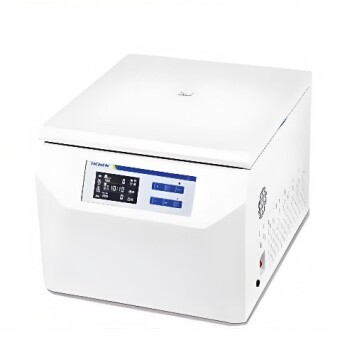
High-pressure reactors establish a sealed, aqueous environment characterized by elevated temperatures and pressures. This specific setup ensures that precipitation reactions occur under equilibrium conditions within a closed system. By maintaining these rigorous parameters, the reactor allows for precise control over the material's synthesis, directly influencing the quality of the final catalyst.
Core Takeaway The primary value of a high-pressure reactor is its ability to create a stable, reproducible environment where temperature and time can be manipulated to fine-tune the catalyst's physical properties. This precise control optimizes pore structure, dispersibility, and specific surface area, which are critical for effective heterogeneous catalysis.
Creating the Optimal Reaction Environment
The Closed System Advantage
The reactor functions as a closed system, effectively sealing the reaction mixture from the outside environment. This containment is essential for maintaining the integrity of the hydrothermal process.
Achieving Equilibrium
Within this sealed vessel, precipitation reactions proceed under thermodynamic equilibrium. This stability ensures that the chemical transformation of precursors is consistent and uniform throughout the batch.
Reaching Subcritical States
The combination of high temperature and pressure often brings the aqueous solution into a subcritical state. This significantly enhances the solubility of precursors and accelerates reaction kinetics, allowing raw materials to fully react.
Controlling Material Properties
Tuning Pore Structure and Surface Area
The conditions provided by the reactor allow for the precise manipulation of pore structure. By adjusting the reaction temperature and exposure time, you can dictate the mesoporous nature of the hydroxyapatite and maximize its specific surface area.
Regulating Dispersibility
The high-pressure environment enables control over powder dispersibility. This ensures that the resulting catalyst particles do not aggregate excessively, maintaining their effectiveness in subsequent chemical reactions.
Ensuring Phase Reproducibility
A major benefit of these conditions is high reproducibility. The controlled environment guarantees that the hydroxyapatite phase is consistent across different production runs, which is vital for standardized catalytic performance.
The Role of Molybdate Ions
Effective Anion Introduction
The stability of the high-pressure hydrothermal reactor facilitates the effective introduction of molybdate anions. This environment allows these ions to be incorporated reliably during the synthesis process.
Enhancing Catalytic Performance
The presence of molybdate ions, introduced under these specific conditions, helps regulate the pore structure. This modification directly contributes to superior heterogeneous catalytic performance, specifically improving efficiency in chemical oxidation reactions.
Critical Process Variables
Precision is Mandatory
While high-pressure reactors offer control, they require strict adherence to temperature and time parameters. The resulting morphology and phase composition are highly sensitive to these variables.
The Impact of Deviation
Failure to maintain the specific high-temperature and high-pressure settings can lead to inconsistent crystallization. This results in poor dispersibility or a reduction in the specific surface area required for effective catalysis.
Making the Right Choice for Your Goal
To maximize the effectiveness of your mesoporous hydroxyapatite catalyst, focus on the following synthesis goals:
- If your primary focus is Surface Area: Prioritize the precise adjustment of reaction temperature and time to guide the self-assembly of the mesoporous structure.
- If your primary focus is Reproducibility: Rely on the closed system's ability to maintain equilibrium, ensuring the phase composition remains constant across batches.
- If your primary focus is Catalytic Activity: Ensure the reactor stability is sufficient to effectively introduce molybdate anions, as their presence regulates the pore structure essential for reaction efficiency.
By leveraging the equilibrium conditions of a high-pressure reactor, you transform raw precursors into a highly dispersed, structurally optimized heterogeneous catalyst.
Summary Table:
| Key Parameter | Condition Provided | Impact on Catalyst Synthesis |
|---|---|---|
| Environment | Closed, Sealed System | Maintains integrity and prevents external contamination |
| Thermodynamics | Equilibrium State | Ensures uniform chemical transformation and consistency |
| Aqueous State | Subcritical Conditions | Enhances precursor solubility and accelerates reaction kinetics |
| Variables | Precise Temp/Time Control | Regulates pore structure, surface area, and dispersibility |
| Ion Integration | Stable Hydrothermal Phase | Facilitates effective introduction of molybdate anions |
Elevate Your Catalytic Research with KINTEK
Precision is non-negotiable when synthesizing high-performance catalysts like mesoporous hydroxyapatite. KINTEK specializes in advanced laboratory solutions designed to handle the rigorous demands of hydrothermal synthesis.
Our industry-leading range of high-temperature high-pressure reactors and autoclaves provides the stable, subcritical environments necessary to fine-tune pore structures and ensure phase reproducibility. Beyond reactors, we offer a comprehensive suite of laboratory equipment, including crushing and milling systems, hydraulic presses, and specialized ceramics to support every stage of your material development.
Ready to achieve superior catalytic activity? Contact us today to discover how KINTEK’s precision-engineered equipment can optimize your laboratory’s efficiency and research outcomes.
References
- Ivana Savić, Zorica Svirčev. Optimization of acid treatment of brown seaweed biomass (Laminaria digitate) during alginate isolation. DOI: 10.21175/rad.abstr.book.2023.19.7
This article is also based on technical information from Kintek Solution Knowledge Base .
Related Products
- Customizable Laboratory High Temperature High Pressure Reactors for Diverse Scientific Applications
- Customizable High Pressure Reactors for Advanced Scientific and Industrial Applications
- Stainless High Pressure Autoclave Reactor Laboratory Pressure Reactor
- Mini SS High Pressure Autoclave Reactor for Laboratory Use
- High Pressure Laboratory Autoclave Reactor for Hydrothermal Synthesis
People Also Ask
- How do high-pressure and high-temperature reactors ensure the effective treatment of lignocellulosic wastewater in WAO?
- What equipment is required for high-pressure high-temperature reactions? Master Extreme Chemistry Safely
- How do you control high pressure in a reactor? A Guide to Safe & Stable Operation
- Why is argon better than nitrogen for inert atmosphere? Ensure Absolute Reactivity & Stability
- How does initial oxygen pressure affect the wet oxidation of pharmaceutical sludge? Master Your Oxidation Depth