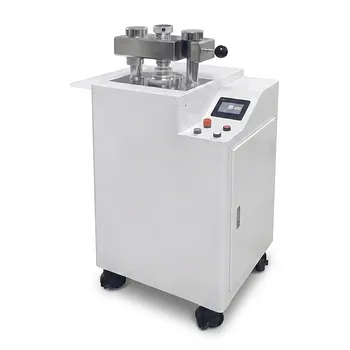
High-pressure flow reactors for CO2 hydrogenation to dimethyl ether (DME) must exhibit exceptional structural integrity, chemical inertness, and thermal precision. These reactors are typically required to maintain operating pressures of at least 25 bar and temperatures between 200°C and 280°C. Because the reaction is exothermic and corrosive, the system must utilize high-grade materials and integrated control systems to ensure both safety and high product yield.
To successfully convert CO2 into DME, a reactor must balance the mechanical strength required for high-pressure containment with the thermal sensitivity needed to manage an exothermic equilibrium reaction. The core insight is that structural reliability and precise temperature regulation are the primary drivers of experimental success.
Structural Integrity and Material Composition
Resistance to Internal Mechanical Stress
The reactor vessel must be engineered to withstand significant internal stresses, specifically longitudinal and hoop stresses exerted by high-pressure environments. In CO2 hydrogenation, maintaining a consistent pressure (often around 25 bar) is essential for shifting the equilibrium toward DME synthesis.
Material Compatibility and Corrosion Resistance
High-grade stainless steel is the preferred construction material due to its ability to withstand the corrosive chemical atmospheres involved in the process. The inner surfaces must remain chemically inert to prevent contamination of the catalyst or the final product stream.
Airtightness and System Sealing
Absolute airtightness is non-negotiable to prevent reactant loss and ensure safety when handling pressurized gases. High-performance seals and interfaces are required to maintain a closed system, particularly during long-duration flow experiments.
Thermal Management and Reaction Control
Precision Temperature Regulation
The synthesis of DME from CO2 is highly sensitive to temperature, requiring a stable operating window between 200°C and 280°C. Advanced precision temperature control systems are necessary to prevent fluctuations that could lead to byproduct formation or catalyst deactivation.
Managing the Exothermic Reaction Path
Because CO2 hydrogenation is an exothermic process, the reactor must be capable of efficient heat dissipation. If heat is not managed, the reaction can drift out of the targeted equilibrium, significantly reducing the selectivity for dimethyl ether.
Integration of Heating and Analysis
Compact reaction cells often feature programmed heating integrated with specialized gas interfaces. This allows for online catalyst reduction and the immediate transition to reaction conditions without exposing the catalyst to air.
Advanced Monitoring and Analytical Integration
In-situ Monitoring via Specialized Windows
Modern reactors may incorporate infrared (IR) windows for real-time light transmission and monitoring. This capability allows researchers to observe reaction intermediates and catalyst surface changes under actual operating pressures and temperatures.
Downstream Integration
The flow reactor must provide seamless connectivity to downstream analysis equipment, such as gas chromatographs or mass spectrometers. Specialized gas interfaces ensure that the pressurized effluent is sampled accurately for real-time performance evaluation.
Understanding the Trade-offs
Analytical Access vs. Pressure Limits
One of the primary trade-offs involves the inclusion of optical windows (like IR windows) for in-situ analysis. While these provide invaluable data, they can introduce structural vulnerabilities compared to a solid stainless steel vessel, often requiring a balance between analytical visibility and maximum pressure ratings.
Thermal Mass vs. Response Time
Larger, heavy-walled reactors provide excellent pressure safety margins and thermal stability but may have a slow response time to temperature adjustments. Conversely, smaller micro-reactors offer rapid thermal response but may struggle with heat gradients if the exothermic energy is not distributed evenly across the catalyst bed.
How to Apply This to Your Project
When selecting or designing a reactor for CO2-to-DME experiments, your choice should align with your specific research or production milestones.
- If your primary focus is catalyst screening and mechanism study: Prioritize a reactor with in-situ analytical windows and precise programmed heating to monitor reaction intermediates.
- If your primary focus is process optimization and yield: Focus on a system with high pressure resistance (up to 50 bar) and robust heat exchange capabilities to manage the exothermic nature of the reaction at scale.
- If your primary focus is long-term stability and durability: Invest in high-grade stainless steel construction with inert coatings to minimize corrosion and metal dusting over hundreds of hours of operation.
Ultimately, the success of CO2 hydrogenation hinges on a reactor's ability to maintain a stable, high-pressure environment while providing the thermal agility to control a sensitive exothermic equilibrium.
Summary Table:
| Characteristic | Requirement / Value | Importance for DME Synthesis |
|---|---|---|
| Operating Pressure | ≥ 25 bar | Shifts equilibrium to favor DME production. |
| Temperature Range | 200°C – 280°C | Prevents catalyst deactivation and byproducts. |
| Material | High-grade Stainless Steel | Ensures corrosion resistance and structural safety. |
| Thermal Management | High-Precision Control | Manages exothermic heat to maintain selectivity. |
| Analytical Access | In-situ IR Windows | Enables real-time monitoring of intermediates. |
Elevate Your Carbon Utilization Research with KINTEK
At KINTEK, we understand that precision and safety are paramount in CO2 hydrogenation. Our high-performance high-temperature high-pressure reactors and autoclaves are specifically engineered to withstand the demanding pressures and temperatures required for successful DME synthesis.
Our comprehensive laboratory portfolio includes:
- Reaction Systems: High-pressure reactors, CVD/PECVD systems, and electrolytic cells.
- Thermal Processing: Muffle, tube, rotary, and vacuum furnaces.
- Sample Preparation: Crushing/milling systems, sieving equipment, and hydraulic presses.
- Lab Essentials: Cooling solutions (ULT freezers), PTFE products, ceramics, and crucibles.
Whether you are focusing on catalyst screening or process optimization, KINTEK provides the reliability and technical support you need to achieve high product yields.
Ready to upgrade your lab? Contact our experts today to find the perfect reactor for your research!
References
- Hai-Ying Chen, Sreshtha Sinha Majumdar. Layer structured bifunctional monolith catalysts for energy-efficient conversion of CO2 to dimethyl ether. DOI: 10.1016/j.apcata.2023.119140
This article is also based on technical information from Kintek Solution Knowledge Base .
Related Products
- Customizable High Pressure Reactors for Advanced Scientific and Industrial Applications
- Stainless High Pressure Autoclave Reactor Laboratory Pressure Reactor
- Customizable Laboratory High Temperature High Pressure Reactors for Diverse Scientific Applications
- Mini SS High Pressure Autoclave Reactor for Laboratory Use
- High Pressure Laboratory Autoclave Reactor for Hydrothermal Synthesis
People Also Ask
- What is the function of high-pressure reactors in the synthesis of MFI-type zeolites? Master Dry Gel Conversion.
- Graphene Fiber Synthesis: Key High-Pressure Reactor Processing Conditions Explained
- What is the primary function of a high-pressure reactor in NiMoO4 preparation? Optimize Hydrothermal Catalyst Synthesis
- What reactor is used for high pressure reactions? Select the Right Autoclave for Your Lab
- What are the hazards of high pressure reactors? A Guide to Managing Explosive Risks