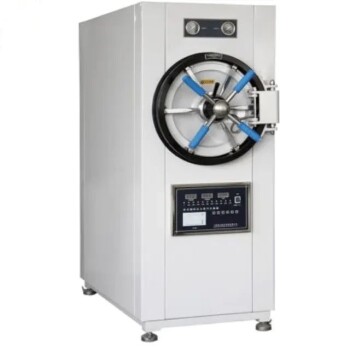
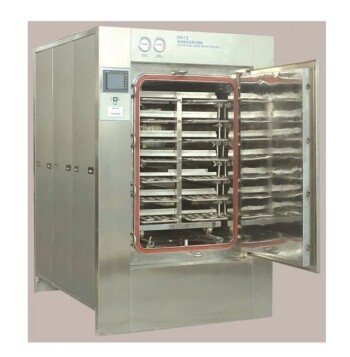
The high-pressure stainless steel autoclave acts as the critical vessel for controlling crystal morphology. It provides a sealed, solvothermal environment where elevated temperature and pressure significantly enhance the diffusion activity of solvent molecules. This unique physical condition forces the titanium source to grow into specific "flower-like" hierarchical micro-nano structures, rather than random aggregates.
The autoclave is not merely a heating container; it is a structural tool. It generates the precise high-pressure conditions required to grow high-purity microsphere clusters, which creates the necessary surface roughness to trap air pockets and achieve super-amphiphobic properties.
The Mechanics of Solvothermal Synthesis
Creating a Closed Reaction System
The primary function of the autoclave is to maintain a hermetically sealed environment. As the temperature rises, the internal pressure increases significantly beyond atmospheric levels.
Enhancing Solvent Diffusion
In this high-pressure state, the physical behavior of the solvent changes. The increased pressure forces solvent molecules to diffuse more actively and penetrate reactants more effectively.
Guiding Structural Growth
This enhanced diffusion is not random; it acts as a guide for the titanium source. It directs the self-assembly of the material into organized, flower-like hierarchical structures.
Linking Structure to Performance
Achieving Micro-Nano Hierarchies
The goal of using this equipment is to produce highly dispersible microsphere clusters. These clusters possess a complex surface texture defined by micro- and nano-scale roughness.
The Role of Air Pockets
This specific "flower-like" morphology is essential for super-amphiphobicity (repelling both water and oil). The structural roughness allows the final coating to trap air pockets effectively.
Ensuring Coating Functionality
Without the autoclave's pressure-driven growth process, the material would lack the specific geometry needed to suspend liquids. The resulting coating would fail to exhibit the target super-amphiphobic performance.
Understanding the Trade-offs
Managing Chemical Compatibility
While the stainless steel body is excellent for withstanding pressure, it is reactive to certain chemicals. Stainless steel alone may corrode if exposed to strong alkalis or specific precursors used in synthesis.
The Necessity of Liners
To mitigate corrosion and ensure high purity, a Teflon (PTFE) liner is often required inside the steel body. This liner provides chemical resistance against aggressive solutions (such as high-concentration NaOH) while the steel shell handles the mechanical stress of high pressure.
Making the Right Choice for Your Goal
To maximize the quality of your FOTS-TiO2 synthesis, consider the following operational priorities:
- If your primary focus is Structural Integrity: Ensure the autoclave seal is perfect to maintain the consistent high pressure required for "flower-like" crystal growth.
- If your primary focus is Chemical Purity: Utilize a Teflon liner to prevent iron contamination from the stainless steel body during the reaction.
The autoclave provides the indispensable physical force that transforms raw chemical precursors into functional, high-performance surface materials.
Summary Table:
| Key Feature | Role in Synthesis | Performance Benefit |
|---|---|---|
| High-Pressure Seal | Maintains elevated solvothermal environment | Increases solvent diffusion & reactant penetration |
| Structural Guidance | Directs self-assembly of TiO2 | Creates "flower-like" hierarchical micro-nano structures |
| Teflon (PTFE) Liner | Provides chemical resistance & purity | Prevents corrosion and iron contamination from steel |
| Thermal Control | Regulates consistent heating | Ensures uniform growth of highly dispersible microspheres |
Elevate Your Material Research with KINTEK Precision
Ready to achieve superior structural integrity and purity in your chemical synthesis? KINTEK specializes in high-performance laboratory equipment designed for the most demanding research environments.
Whether you are synthesizing FOTS-TiO2 super-amphiphobic powders or developing advanced energy materials, our high-temperature high-pressure reactors and autoclaves provide the precise control you need. Our extensive portfolio also includes:
- Advanced Thermal Solutions: Muffle, tube, and vacuum furnaces.
- Sample Processing: Crushing, milling, and hydraulic presses (pellet, isostatic).
- Lab Essentials: Electrolytic cells, PTFE products, ceramics, and crucibles.
Don't compromise on your results. Partner with KINTEK for durable, reliable, and high-precision tools tailored to your laboratory's needs. Contact us today to find the perfect solution for your synthesis process!
References
- Hui Liu, Yuekun Lai. Bioinspired Surfaces with Superamphiphobic Properties: Concepts, Synthesis, and Applications. DOI: 10.1002/adfm.201707415
This article is also based on technical information from Kintek Solution Knowledge Base .
Related Products
- Stainless High Pressure Autoclave Reactor Laboratory Pressure Reactor
- Mini SS High Pressure Autoclave Reactor for Laboratory Use
- Desktop Fast High Pressure Laboratory Autoclave Sterilizer 16L 24L for Lab Use
- Laboratory High Pressure Horizontal Autoclave Steam Sterilizer for Lab Use
- Portable High Pressure Laboratory Autoclave Steam Sterilizer for Lab Use
People Also Ask
- Why is a laboratory high-pressure reactor used in the hydrothermal synthesis of hydroxyapatite catalysts?
- What role does a laboratory high-pressure reactor play in the leaching process of spent cathode materials? Optimize Recovery
- Why is a laboratory high-pressure reactor necessary for synthesizing fly ash-based zeolite? Achieve Pure Crystallization
- What conditions do laboratory high-pressure reactors provide for HTC? Optimize Your Biochar Production Processes
- What is the function of a high-pressure reactor autoclave? Enhancing Cu/N Co-Doped Carbon Catalyst Synthesis