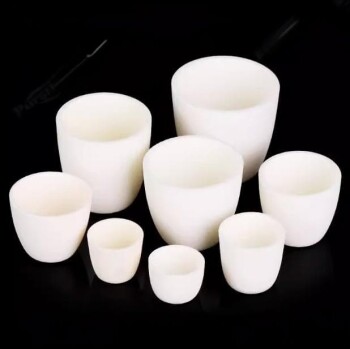
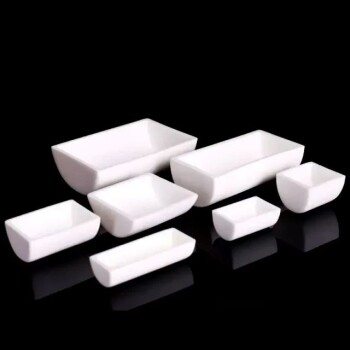
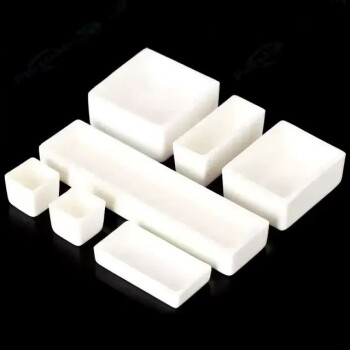
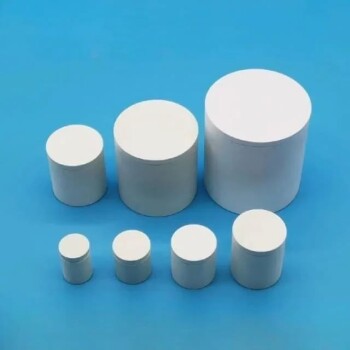
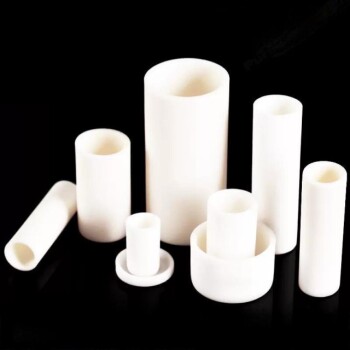
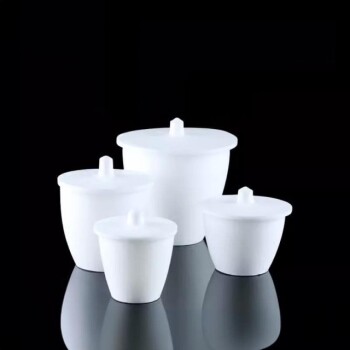
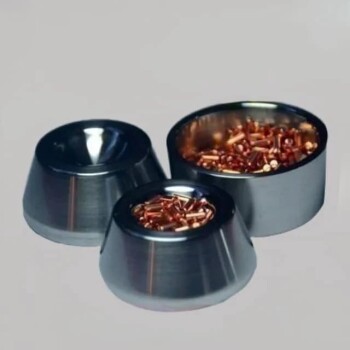
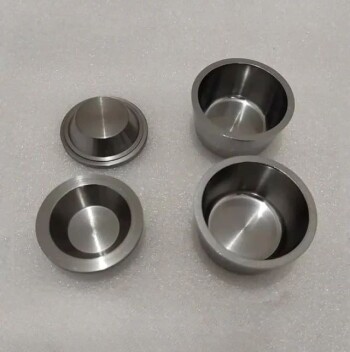
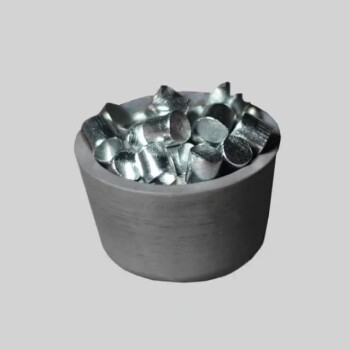
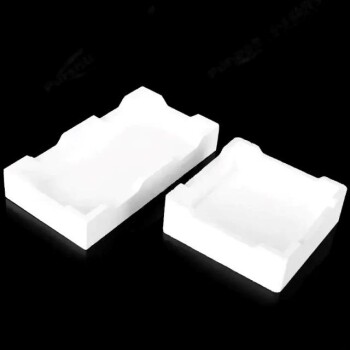
In the powder embedding sintering process, the ceramic crucible serves as the physical vessel for high-temperature containment, while active carbon particles act as a chemical agent to generate a reducing atmosphere. Together, they protect the WC/Cu (Tungsten Carbide/Copper) materials by structurally supporting the specimen and chemically stripping oxygen to prevent oxidation.
The success of this process relies on the distinct division of labor between the container and the embedding medium. While the ceramic crucible withstands the thermal load, the active carbon actively purifies the material by reducing surface oxides and protecting grain boundaries.
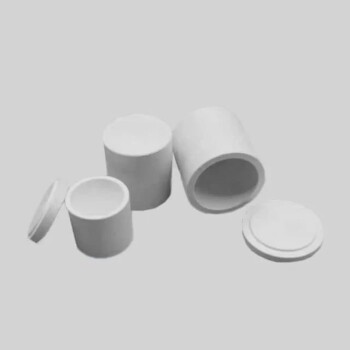
The Physical Role: Ceramic Crucibles
High-Temperature Containment
The primary function of the ceramic crucible is to provide a stable structural environment.
Because sintering occurs at intense heat, the crucible must serve as a "high-temperature resistant container." It maintains the physical shape and volume of the specimen throughout the thermal cycle.
Isolation from the Furnace Element
By holding the specimens, the crucible acts as the first layer of segregation.
It defines the zone where the embedding process takes place, separating the delicate powder compacts from the direct environment of the furnace heating elements.
The Chemical Role: Active Carbon Particles
Creating a Reducing Atmosphere
Active carbon particles are packed around the specimens and inside a larger outer crucible to manipulate the chemical environment.
Their primary role is to create a reducing atmosphere. This shifts the chemical balance of the environment from one that promotes oxidation to one that actively reverses it.
Oxygen Consumption
At high temperatures, active carbon acts as an oxygen scavenger.
It consumes the oxygen present in the immediate environment. By reacting with the oxygen first, the carbon prevents it from reacting with the WC/Cu materials.
Reduction of Surface Oxides
Beyond simple protection, the carbon actively cleans the starting materials.
It reduces specific oxides found on the metal surfaces, such as CuO (Copper Oxide) on the copper powder. This chemical reaction converts the oxides back into pure metal, ensuring better material integrity.
Purification of Grain Boundaries
The reduction process generates gases that carry impurities away from the material.
As these gases are discharged, the process effectively purifies the grain boundaries of the WC/Cu material. This results in a cleaner interface between the tungsten carbide and the copper matrix.
Understanding the Process Dynamics
Gas Generation and Discharge
The chemical protection provided by carbon is not static; it is a dynamic reaction.
The text notes that the reduction of oxides "generating gases that are then discharged." This flow of gas is critical for flushing impurities out of the sintering zone.
The Necessity of Proximity
The effectiveness of this protection relies on the physical placement of the carbon.
The active carbon must be "filled around the specimens." If the carbon is not adequately packed or distributed, the local reducing atmosphere may be insufficient to fully reduce the CuO.
Optimizing the Sintering Strategy
To ensure high-quality WC/Cu materials, you must balance the physical stability of the crucible with the chemical activity of the carbon.
- If your primary focus is Material Purity: Ensure the active carbon fully surrounds the specimen to maximize the reduction of CuO and the purification of grain boundaries.
- If your primary focus is Structural Integrity: Select ceramic crucibles rated for temperatures well above your sintering point to prevent deformation during the process.
By utilizing the ceramic crucible for containment and the active carbon for deoxidation, you achieve a composite with clean, high-performance grain boundaries.
Summary Table:
| Component | Primary Role | Key Function |
|---|---|---|
| Ceramic Crucible | Physical Containment | Provides structural support and isolates specimens from furnace elements. |
| Active Carbon | Chemical Protection | Creates a reducing atmosphere and scavenges oxygen to prevent oxidation. |
| Synergy | Material Integrity | Reduces surface oxides (CuO) and purifies grain boundaries for better performance. |
Enhance Your Material Science Precision with KINTEK
Achieving the perfect sintering environment for WC/Cu materials requires high-quality tools that withstand extreme conditions. KINTEK specializes in premium laboratory equipment, offering a comprehensive range of ceramic crucibles, high-temperature muffle and vacuum furnaces, and essential consumables designed for rigorous powder metallurgy processes.
Whether you are refining grain boundaries or scaling up production, our expert solutions—from crushing and milling systems to high-pressure reactors—ensure your research and manufacturing meet the highest standards of purity and structural integrity.
Ready to elevate your lab's performance? Contact us today to discover how KINTEK can support your material innovations!
Related Products
- Arc-Shaped Alumina Ceramic Crucible High Temperature Resistant for Engineering Advanced Fine Ceramics
- Alumina Al2O3 Ceramic Crucible Semicircle Boat with Lid for Engineering Advanced Fine Ceramics
- Engineering Advanced Fine Alumina Al2O3 Ceramic Crucible for Laboratory Muffle Furnace
- Boron Nitride (BN) Crucible for Phosphorous Powder Sintered
- Engineering Advanced Fine Ceramics Alumina Al2O3 Crucible With Lid Cylindrical Laboratory Crucible
People Also Ask
- Why Use Alumina Crucibles & Powder Burial for NaSICON? Ensure Phase Purity and Prevent Elemental Volatilization
- What is the primary purpose of using alumina crucibles for LLTO ceramics? Optimize Your High-Temperature Sintering
- Why are alumina crucibles and mother powder essential for LATP sintering? Optimize Your Solid Electrolyte Performance
- Why are high-purity alumina crucibles used for liquid lead corrosion experiments? Ensure Data Accuracy at 550°C
- Primary considerations for choosing alumina crucibles and quartz tubes in indium intercalation: Ensure Material Purity