Knowledge What role do crushing and sieving systems play in biomass pretreatment? Master Particle Size for Superior Fuel Kinetics
Author avatar

Tech Team · Kintek Solution

Updated 1 day ago

What role do crushing and sieving systems play in biomass pretreatment? Master Particle Size for Superior Fuel Kinetics


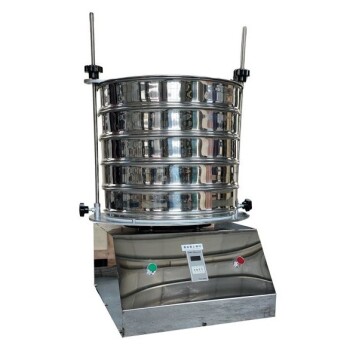
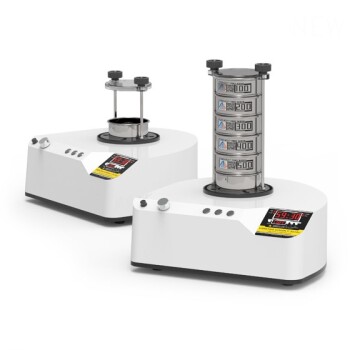
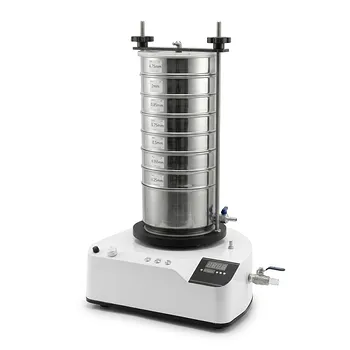
The primary role of crushing and sieving systems is to standardize the physical geometry of raw materials to ensure predictable chemical behavior. In the pretreatment of biomass fuels and additives, these systems process irregular feedstock into precise particle size ranges, such as 90-300 μm or finer. This mechanical standardization is the critical step that guarantees a consistent specific surface area, which is necessary for obtaining stable combustion kinetic data and accurately simulating the reaction characteristics of industrial-scale equipment.

The strategic value of crushing and sieving is not just volume reduction; it is the control of specific surface area. By normalizing particle size, you eliminate physical variables, ensuring that heat transfer and chemical reactions occur at a uniform rate throughout the fuel mass.

The Impact on Reaction Kinetics

Maximizing Surface Area for Combustion

The efficiency of a combustion reaction is directly proportional to the material's specific surface area. Crushing systems reduce agricultural residues and additives to micron-level sizes (e.g., <90 μm).

This exposes more of the fuel's carbon structure to oxygen simultaneously. By maintaining this high surface area, the system ensures that combustion kinetic data remains stable and reproducible during testing.

Replicating Industrial Conditions

Laboratory data is only valuable if it predicts real-world performance. Industrial coal mills and biomass processors rely on specific particle size distributions to maintain flame stability.

By strictly controlling particle ranges in the pretreatment phase, researchers can accurately simulate the fuel reaction characteristics of these large-scale mills. This validation prevents costly scaling errors when moving from the lab to the plant.

Enhancing Heat and Mass Transfer

Uniform Heat Penetration

In thermal processes like torrefaction or pyrolysis, consistent particle size is vital for heat transfer. If particles are too large or irregular, they suffer from thermal gradients—burning on the outside while remaining cool on the inside.

Sieving systems ensure particles fall within a specific diameter (e.g., <3mm or <10mm). This uniformity allows heat to penetrate the biomass rapidly and evenly, ensuring the completeness of the reaction and reducing overall energy consumption.

Facilitating Chemical Reagent Ingress

For biochemical applications, the goal of crushing is to "open up" the material's structure. Reducing biomass to ranges like 0.43–1.02 mm exposes the internal lignocellulosic matrix.

This allows chemical reagents to penetrate thoroughly rather than just reacting with the surface. Deep penetration is essential for consistent hydrolysis and ensuring that subsequent chemical conversions are efficient.

Understanding the Trade-offs

The Cost of Ultra-Fine Grinding

While maximizing surface area generally improves reaction rates, there is a point of diminishing returns. Grinding biomass to extremely fine powders requires exponentially more mechanical energy.

You must balance the reactivity gains against the operational cost of the crushing equipment. A slightly coarser particle size may offer 90% of the reaction efficiency for 50% of the grinding energy.

Flowability Issues with Fines

Sieving to very fine sizes (e.g., -200 mesh) increases uniformity but can introduce handling problems. Fine biomass powders often have poor flow characteristics and can bridge or clump in hoppers.

If the material cannot be fed smoothly into the reactor, the stability gained by the precise particle size is lost due to inconsistent feeding rates.

Making the Right Choice for Your Goal

To select the appropriate crushing and sieving parameters, you must define the limiting factor of your downstream process.

  • If your primary focus is Kinetic Data Accuracy: Target finer particle sizes (e.g., <90 μm) to maximize surface area and eliminate diffusion limitations.
  • If your primary focus is Thermal Processing (Torrefaction/Pyrolysis): Prioritize a narrow size distribution (e.g., <3mm) to ensure uniform heat transfer without expending excess energy on pulverization.
  • If your primary focus is Chemical Pretreatment: Aim for a size range (e.g., 0.5–1.0 mm) that balances structural accessibility for reagents with good filtration and handling properties.

Precision in the physical pretreatment phase is the foundation for reliability in the chemical reaction phase.

Summary Table:

Feature Targeted Size Range Primary Benefit in Pretreatment
Combustion Kinetics <90 μm - 300 μm Maximizes specific surface area for stable, reproducible reaction data.
Thermal Processing <3 mm - 10 mm Ensures uniform heat penetration and prevents internal thermal gradients.
Chemical Conversion 0.43 mm - 1.02 mm Increases structural accessibility for deep reagent penetration.
Industrial Simulation Varied (Mill Specific) Accurately replicates large-scale plant flame stability and behavior.

Optimize Your Biomass Research with KINTEK Precision

Precision in physical pretreatment is the foundation of reliable chemical analysis. KINTEK specializes in high-performance crushing and milling systems, sieving equipment, and high-temperature furnaces designed to help researchers achieve perfect particle uniformity and stable kinetic data. From advanced pellet presses to specialized reactors and autoclaves, we provide the comprehensive tools you need to bridge the gap between lab-scale testing and industrial-scale success.

Ready to enhance your material processing efficiency?
Contact KINTEK experts today to find the perfect equipment for your lab!

References

  1. W. Kordylewski, Karol Witkowski. Lab-Scale Investigations During Combustion of Agricultural Residues and Selected Polish Coals. DOI: 10.2478/cpe-2014-0019

This article is also based on technical information from Kintek Solution Knowledge Base .

Related Products

People Also Ask

Related Products

Laboratory Single Horizontal Jar Mill

Laboratory Single Horizontal Jar Mill

KT-JM3000 is a mixing and grinding instrument for placing a ball milling tank with a volume of 3000ml or less. It adopts frequency conversion control to realize timing, constant speed, direction change, overload protection and other functions.

High Energy Planetary Ball Mill for Laboratory Horizontal Tank Type Milling Machine

High Energy Planetary Ball Mill for Laboratory Horizontal Tank Type Milling Machine

KT-P4000H uses the unique Y-axis planetary motion trajectory, and utilizes the collision, friction and gravity between the sample and the grinding ball to have a certain anti-sinking ability, which can obtain better grinding or mixing effects and further improve the sample output.

Laboratory Jar Mill with Agate Grinding Jar and Balls

Laboratory Jar Mill with Agate Grinding Jar and Balls

Grind your materials with ease using Agate Grinding Jars with Balls. Sizes from 50ml to 3000ml, perfect for planetary and vibration mills.

High Energy Planetary Ball Mill Milling Machine for Laboratory

High Energy Planetary Ball Mill Milling Machine for Laboratory

The biggest feature is that the high energy planetary ball mill can not only perform fast and effective grinding, but also has good crushing ability

High Energy Planetary Ball Mill Milling Machine for Laboratory

High Energy Planetary Ball Mill Milling Machine for Laboratory

Experience fast and effective sample processing with the F-P2000 high-energy planetary ball mill. This versatile equipment offers precise control and excellent grinding capabilities. Perfect for laboratories, it features multiple grinding bowls for simultaneous testing and high output. Achieve optimal results with its ergonomic design, compact structure, and advanced features. Ideal for a wide range of materials, it ensures consistent particle size reduction and low maintenance.

Laboratory Planetary Ball Mill Rotating Ball Milling Machine

Laboratory Planetary Ball Mill Rotating Ball Milling Machine

KT-P400E is a desktop multi-directional planetary ball mill with unique grinding and mixing capabilities. It offers continuous and intermittent operation, timing, and overload protection, making it ideal for various applications.

High Energy Planetary Ball Mill Machine for Laboratory Horizontal Tank Type

High Energy Planetary Ball Mill Machine for Laboratory Horizontal Tank Type

The KT-P2000H uses a unique Y-axis planetary trajectory, and utilizes the collision, friction and gravity between the sample and the grinding ball.

Electric Split Lab Cold Isostatic Press CIP Machine for Cold Isostatic Pressing

Electric Split Lab Cold Isostatic Press CIP Machine for Cold Isostatic Pressing

Split cold isostatic presses are capable of providing higher pressures, making them suitable for testing applications that require high pressure levels.

Laboratory Disc Rotary Mixer for Efficient Sample Mixing and Homogenization

Laboratory Disc Rotary Mixer for Efficient Sample Mixing and Homogenization

Efficient Laboratory Disc Rotary Mixer for Precise Sample Mixing, Versatile for Various Applications, DC Motor and Microcomputer Control, Adjustable Speed and Angle.

Automatic Heated Hydraulic Press Machine with Heated Plates for Laboratory Hot Press 25T 30T 50T

Automatic Heated Hydraulic Press Machine with Heated Plates for Laboratory Hot Press 25T 30T 50T

Efficiently prepare your samples with our Automatic Heated Lab Press. With a pressure range up to 50T and precise control, it's perfect for various industries.

Electric button battery sealing machine

Electric button battery sealing machine

The electric button battery sealing machine is a high-performance packaging equipment designed for mass production of button batteries (such as CR series, LR series, SR series, etc.), suitable for electronic manufacturing, new energy research and development, and industrial automation production lines.

Small Injection Molding Machine for Lab Use

Small Injection Molding Machine for Lab Use

The small injection molding machinehas fast and stable movements; good controllability and repeatability, super energy saving; the product can be automatically dropped and formed; the machine body is low, convenient for feeding, easy to maintain, and no height restrictions on the installation site.

Lab Blown Film Extrusion Three Layer Co-Extrusion Film Blowing Machine

Lab Blown Film Extrusion Three Layer Co-Extrusion Film Blowing Machine

Lab blown film extrusion is mainly used to detect the feasibility of film blowing of polymer materials and the colloid condition in the materials, as well as the dispersion of colored dispersions, controlled mixtures, and extrudates;

VHP Sterilization Equipment Hydrogen Peroxide H2O2 Space Sterilizer

VHP Sterilization Equipment Hydrogen Peroxide H2O2 Space Sterilizer

A hydrogen peroxide space sterilizer is a device that uses vaporized hydrogen peroxide to decontaminate enclosed spaces. It kills microorganisms by damaging their cellular components and genetic material.

Benchtop Laboratory Freeze Dryer for Lab Use

Benchtop Laboratory Freeze Dryer for Lab Use

Premium benchtop laboratory freeze dryer for lyophilization, preserving samples with ≤ -60°C cooling. Ideal for pharmaceuticals & research.

High Pressure Laboratory Vacuum Tube Furnace Quartz Tubular Furnace

High Pressure Laboratory Vacuum Tube Furnace Quartz Tubular Furnace

KT-PTF High Pressure Tube Furnace: Compact split tube furnace with strong positive pressure resistance. Working temp up to 1100°C and pressure up to 15Mpa. Also works under controller atmosphere or high vacuum.

Small Vacuum Heat Treat and Tungsten Wire Sintering Furnace

Small Vacuum Heat Treat and Tungsten Wire Sintering Furnace

The small vacuum tungsten wire sintering furnace is a compact experimental vacuum furnace specially designed for universities and scientific research institutes. The furnace features a CNC welded shell and vacuum piping to ensure leak-free operation. Quick-connect electrical connections facilitate relocation and debugging, and the standard electrical control cabinet is safe and convenient to operate.

Vacuum Hot Press Furnace Machine for Lamination and Heating

Vacuum Hot Press Furnace Machine for Lamination and Heating

Experience clean and precise lamination with Vacuum Lamination Press. Perfect for wafer bonding, thin-film transformations, and LCP lamination. Order now!

Graphite Vacuum Furnace IGBT Experimental Graphitization Furnace

Graphite Vacuum Furnace IGBT Experimental Graphitization Furnace

IGBT experimental graphitization furnace, a tailored solution for universities and research institutions, with high heating efficiency, user-friendliness, and precise temperature control.

Laboratory Rapid Thermal Processing (RTP) Quartz Tube Furnace

Laboratory Rapid Thermal Processing (RTP) Quartz Tube Furnace

Get lightning-fast heating with our RTP Rapid Heating Tube Furnace. Designed for precise, high-speed heating and cooling with convenient sliding rail and TFT touch screen controller. Order now for ideal thermal processing!


Leave Your Message