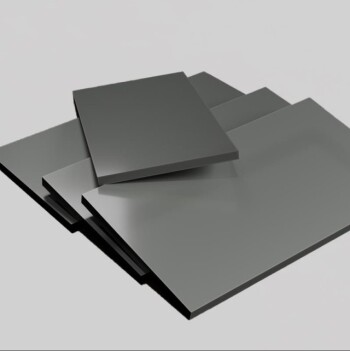
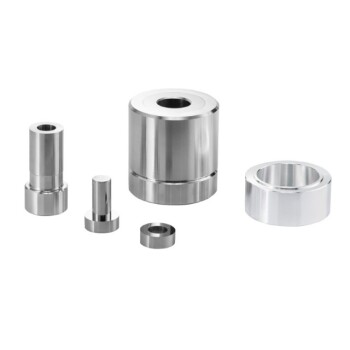
Graphite dies act as the fundamental multifunctional interface in the Spark Plasma Sintering (SPS) process, serving simultaneously as a container, a heating element, and a pressure transmission tool. By converting pulsed electrical current into thermal energy and applying significant mechanical force, these dies drive the rapid densification of ceramic powders.
The graphite die is an active participant in the sintering process, bridging the gap between electrical energy, thermal dynamics, and mechanical force to facilitate the plastic flow of materials.
The Thermal Mechanism
Converting Current to Heat
In standard sintering, heat is applied externally. In SPS, the graphite die acts as a conductor and heating element.
Rapid Temperature Elevation
The die converts pulsed electrical current directly into thermal energy. This allows the sample to be heated much more rapidly than in conventional furnaces.
Mechanical Compression and Densification
Transmitting Uniaxial Pressure
The die is not just a mold; it is a mechanical tool. It is designed to transmit uniaxial pressures to the ceramic powder held within.
Facilitating Plastic Flow
This combination of high pressure and thermal energy causes the ceramic powder to undergo plastic flow. This flow is critical for eliminating voids and achieving high-density materials.
Structural Integrity and Shaping
Defining the Component Geometry
The most fundamental role of the die is serving as the container. It holds the loose ceramic powder and defines the final shape of the sintered component.
Understanding the Limitations
The Pressure Threshold
While graphite is robust, it has mechanical limits. The primary reference notes that these dies are designed to withstand pressures up to 50 MPa.
Preventing Die Failure
Exceeding this 50 MPa limit risks fracturing the die. This creates a specific operational constraint: you must balance the need for high pressure against the structural strength of the graphite material.
Making the Right Choice for Your Goal
When designing an SPS experiment, understanding the role of the graphite die helps you optimize process parameters.
- If your primary focus is Rapid Densification: Leverage the die's ability to act as a heating element by utilizing pulsed current to achieve high heating rates.
- If your primary focus is Structural Integrity: Monitor your applied load carefully to ensure the uniaxial pressure facilitates flow without exceeding the 50 MPa limit of the graphite.
By treating the graphite die as an active component rather than passive tooling, you gain precise control over the sintering environment.
Summary Table:
| Function | Description | Key Benefit |
|---|---|---|
| Thermal Interface | Converts pulsed current into thermal energy | Rapid heating and precise temperature control |
| Mechanical Tool | Transmits uniaxial pressure to the powder | Facilitates plastic flow and eliminates voids |
| Containment | Defines the geometry of the component | Ensures structural integrity and final shape |
| Pressure Limit | Maximum threshold of 50 MPa | Prevents die fracture and operational failure |
Elevate Your Material Research with KINTEK Precision Solutions
Unlock the full potential of your Spark Plasma Sintering (SPS) processes with high-quality graphite dies and specialized laboratory equipment from KINTEK. Whether you are working on advanced ceramics or complex powder metallurgy, our team provides the essential tools to optimize densification and structural integrity.
From high-performance crushing and milling systems to high-temperature furnaces (vacuum, CVD, and muffle) and isostatic hydraulic presses, KINTEK specializes in laboratory consumables and equipment tailored for excellence.
Ready to achieve superior material properties? Contact us today to discover how our high-precision solutions and expertise can accelerate your lab's productivity!
Related Products
- Graphite Vacuum Furnace Bottom Discharge Graphitization Furnace for Carbon Materials
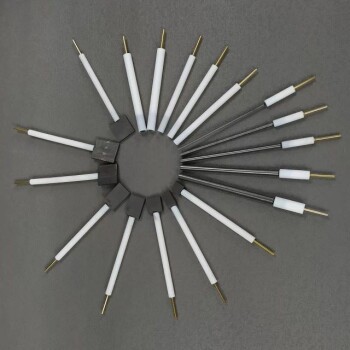
- Graphite Disc Rod and Sheet Electrode Electrochemical Graphite Electrode
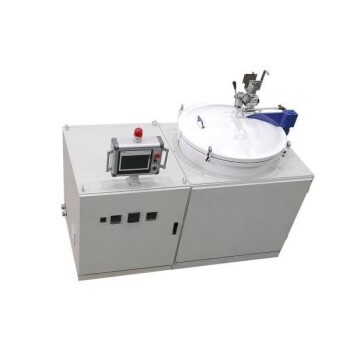
- Graphite Vacuum Furnace High Thermal Conductivity Film Graphitization Furnace
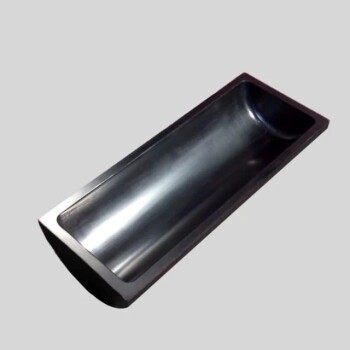
- High Purity Pure Graphite Crucible for Evaporation
- Ultra-High Temperature Graphite Vacuum Graphitization Furnace
People Also Ask
- What is the use of graphite furnace? Achieve Extreme-Temperature Processing for Advanced Materials
- What is the disadvantage of graphite furnace? Managing Reactivity and Contamination Risks
- What gas is used in graphite furnace? Maximize Accuracy with the Right Inert Gas
- What is the graphite furnace method? Achieve Ultra-High Temperatures with Purity & Speed
- What are the advantages of graphite furnace over flame? Achieve Superior Trace Analysis Sensitivity