Integrated heating units and temperature controllers act as the guardians of experimental validity. Their primary function is to work in tandem to create and maintain a precise isothermal environment, such as a constant 30 °C, within the reaction vessel. By eliminating thermal fluctuations, these systems ensure that the resulting data isolates the chemical performance of the solvent rather than measuring environmental noise.
The reaction between amine solvents and Carbon Dioxide (CO2) is chemically sensitive to even minor thermal changes. Therefore, rigorous temperature control is the only way to ensure experimental data accurately reflects the true capture efficiency and reaction kinetics of the solvent.
The Critical Importance of Isothermal Environments
Eliminating Thermal Interference
The interaction between CO2 and amine solvents is not a static process; it is a dynamic chemical reaction.
Integrated heating units provide the necessary energy to reach the target temperature, while temperature controllers strictly regulate that energy.
This combination removes thermal interference, ensuring the reaction vessel remains stable throughout the testing duration.
Standardization Across Solvent Types
To accurately compare different amine structures—such as MDEA, DETA, TEA, or MEA—conditions must be identical.
Without precise thermal regulation, it becomes impossible to determine if a performance difference is due to the chemical structure or a variance in heat.
Controllers enforce a standardized baseline, allowing for legitimate side-by-side comparisons of capture efficiency.
How Temperature Impacts Chemical Data
Controlling Reaction Kinetics
Reaction kinetics refer to the speed at which the amine absorbs CO2.
Because kinetics are highly sensitive to temperature, a fluctuation of even a few degrees can artificially accelerate or decelerate the absorption rate.
Stable temperature control ensures that the measured speed is a property of the chemistry, not a byproduct of heating spikes.
Stabilizing Equilibrium Constants
The equilibrium constant defines the point where the absorption process balances out.
This value is temperature-dependent; shifting the heat shifts the equilibrium.
By maintaining a fixed temperature, researchers ensure that the equilibrium constants derived from the test are accurate and reproducible.
Understanding the Trade-offs
Equipment Complexity vs. Data Fidelity
While integrated systems provide high precision, they introduce complexity to the experimental setup.
Requires rigorous calibration; a temperature controller that is precise but inaccurately calibrated will yield consistent, yet incorrect, data.
The Risk of Over-Reliance
Automated control systems can sometimes mask issues within the reaction vessel itself.
Operators must ensure that the "isothermal" reading on the controller represents the actual fluid temperature, not just the heating element's surface.
Making the Right Choice for Your Goal
To maximize the value of your absorption testing, align your thermal strategy with your specific objectives.
- If your primary focus is comparative screening: Ensure your system maintains identical setpoints (e.g., 30 °C) to objectively rank solvents like MDEA against MEA.
- If your primary focus is kinetic modeling: Prioritize controllers with rapid response loops to prevent thermal lag from distorting reaction rate calculations.
Precision in temperature control is the prerequisite for precision in chemical analysis.
Summary Table:
| Feature | Role in Amine Solvent Testing | Impact on Data Quality |
|---|---|---|
| Integrated Heating | Reaches and maintains target reaction temperatures | Eliminates thermal interference during CO2 absorption |
| Temperature Controllers | Regulates energy input to prevent fluctuations | Ensures accurate reaction kinetics and equilibrium constants |
| Isothermal Stability | Creates a standardized environment (e.g., 30 °C) | Allows objective comparison of MDEA, DETA, TEA, and MEA |
| Precision Loops | Minimizes thermal lag during chemical reactions | Prevents artificial acceleration/deceleration of absorption rates |
Maximize Your Chemical Analysis Precision with KINTEK
Don't let thermal fluctuations compromise your CO2 capture research. KINTEK specializes in high-performance laboratory equipment, providing the precision heating and control systems necessary for rigorous amine solvent testing. Our comprehensive range includes high-temperature furnaces, high-pressure reactors, autoclaves, and specialized cooling solutions designed to meet the exacting standards of modern research labs.
Whether you are screening new solvent structures or developing complex kinetic models, KINTEK offers the reliable tools and high-quality consumables—from PTFE products to ceramic crucibles—to ensure your data is accurate and reproducible.
Ready to elevate your lab's efficiency? Contact us today to find the perfect thermal control solution for your application!
References
- Verónica Calva, Marvin Ricaurte. CO2 Capture Using Amine-Based Solvents: Identification of Additives to Improve the Kinetics and Thermodynamics of CO2 Sorption at High-Pressure Conditions. DOI: 10.3390/gases5010004
This article is also based on technical information from Kintek Solution Knowledge Base .
Related Products
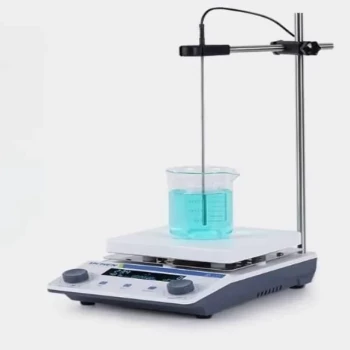
- Laboratory Small Constant Temperature Heated Magnetic Stirrer Heater and Stirrer
- Heated Hydraulic Press Machine with Integrated Manual Heated Plates for Lab Use
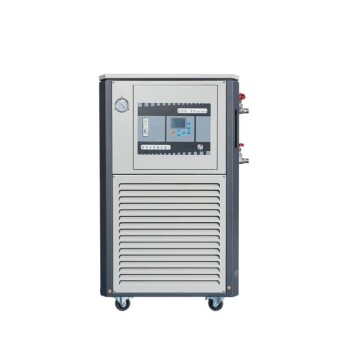
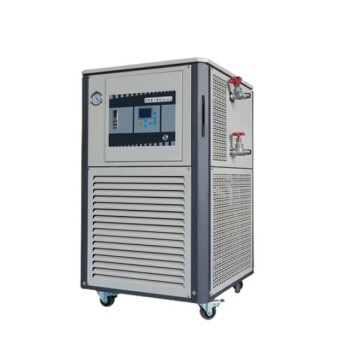
- 10L Heating Chilling Circulator Cooling Water Bath Circulator for High and Low Temperature Constant Temperature Reaction
- 5L Heating Chilling Circulator Cooling Water Bath Circulator for High and Low Temperature Constant Temperature Reaction
- 100L Heating Chilling Circulator Cooling Water Bath Circulator for High and Low Temperature Constant Temperature Reaction
People Also Ask
- What role does a magnetic stirrer with heating play in ZnO nanoparticle synthesis? Precision Control for Quality Results
- What role does a constant temperature heating magnetic stirrer play in MFC-HAp synthesis? Achieve Material Homogeneity
- What is the function of a laboratory magnetic stirrer in Ni–Cr–P electrodeposition? Optimize Ion Transport & Coating
- Why is a laboratory magnetic stirrer required for benzoic acid esters? Boost Reaction Speed & Yield with High RPM
- What role does a laboratory magnetic stirrer play in TiO2 and TiO2-Ag sol preparation? Master Chemical Kinetics