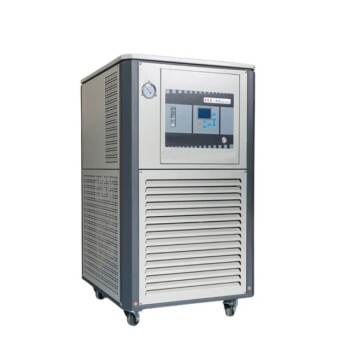
The high-pressure autoclave serves as the essential reaction vessel for the "one-pot" hydrothermal synthesis of Ni-NGQDs. By maintaining a sealed environment at elevated temperatures, the reactor facilitates the simultaneous hydrothermal polymerization of carbon sources and the atomic coordination of nickel ions. This specialized environment is critical for creating the specific nitrogen-doped graphene structure required for high photocatalytic activity.
The hydrothermal reactor provides a high-temperature, high-pressure subcritical water environment that accelerates reaction kinetics and enables the atomic dispersion of nickel within a nitrogen-doped carbon framework. This process transforms simple precursors into complex quantum dots with precise chemical and structural properties.
The Mechanics of the Hydrothermal Environment
Creating Subcritical Water Conditions
The reactor maintains water in a subcritical state, where it remains liquid well above its normal boiling point. This environment significantly increases the solubility and reactivity of precursors like tannic acid and nickel chloride.
Accelerating Reaction Kinetics
The closed, high-pressure system prevents the loss of volatile components and increases the reaction rate compared to open-air methods. This ensures that the coordination of nickel and the doping of nitrogen occur rapidly and uniformly throughout the solution.
Facilitating Solvent Penetration
High pressure forces the aqueous solvent to penetrate the forming carbon clusters more effectively. This deep penetration allows nitrogen and oxygen species to be embedded directly into the carbon framework, adjusting the material's surface polarity and internal defects.
Structural Evolution and Atomic Coordination
Inducing Nitrogen-Doped Graphene Structures
The reactor provides the thermal energy necessary for ethylenediamine and tannic acid to undergo polymerization. This results in the formation of a nitrogen-doped graphene lattice that serves as the host for the nickel ions.
Ensuring Atomic Dispersion of Nickel
Within the pressurized vessel, nickel ions from the precursor are atomically dispersed rather than forming bulk metallic clusters. This specific coordination is vital for maximizing the number of active sites available for photocatalytic reactions.
Controlling Morphology and Crystallinity
The stable, high-pressure environment promotes uniform nucleation and crystal growth. This results in quantum dots with high crystallinity and a consistent size distribution, which are necessary for stable performance in electronic and catalytic applications.
Understanding the Trade-offs
The Limitation of Reactor Liners
Most hydrothermal reactors utilize PTFE (Teflon) liners to provide corrosion resistance against metal salts. However, these liners have strict temperature limits (typically below 220°C-250°C), which can restrict the range of synthesis conditions available to researchers.
Safety and Monitoring Challenges
Working with high-pressure autoclaves involves significant safety risks due to the potential for over-pressurization. Because the reaction occurs inside a sealed steel vessel, it is difficult to monitor the real-time progress of the synthesis without specialized, expensive equipment.
Scalability Constraints
Hydrothermal synthesis is often limited to batch processing in relatively small volumes. Scaling this process for industrial production requires significantly larger, more complex pressure vessels, which increases capital costs and safety requirements.
How to Apply This to Your Synthesis Goals
Success in preparing Ni-NGQDs depends on balancing the pressure, temperature, and duration of the hydrothermal cycle to achieve the desired material properties.
- If your primary focus is Maximum Catalytic Activity: Prioritize higher temperatures within the reactor's safe limits to ensure the most thorough atomic dispersion of nickel ions.
- If your primary focus is Uniform Particle Size: Utilize a longer reaction time at a lower, constant temperature to facilitate slow, uniform nucleation and growth of the quantum dots.
- If your primary focus is Surface Functionalization: Adjust the concentration of nitrogen precursors (like urea or ethylenediamine) to exploit the subcritical penetration effects of the high-pressure environment.
By leveraging the unique physics of a pressurized hydrothermal environment, you can precisely engineer the atomic structure and performance of nickel-coordinated quantum dots.
Summary Table:
| Mechanism | Role in Ni-NGQD Synthesis | Key Material Benefit |
|---|---|---|
| Subcritical Water | Increases solubility of carbon & metal precursors | Enhanced precursor reactivity |
| Closed Environment | Prevents volatile loss & accelerates kinetics | Uniform nitrogen-doped lattice |
| High Pressure | Forces solvent penetration into carbon clusters | Atomic dispersion of nickel ions |
| Thermal Control | Drives polymerization of precursors | High crystallinity & uniform size |
Elevate Your Material Synthesis with KINTEK Precision
Achieving the precise atomic coordination required for high-performance Ni-NGQDs demands reliable and robust equipment. KINTEK specializes in advanced laboratory solutions, offering a premium range of high-temperature high-pressure reactors and autoclaves engineered to maintain the stable subcritical environments essential for hydrothermal polymerization and atomic dispersion.
From PTFE-lined hydrothermal vessels for corrosion resistance to comprehensive high-temperature furnaces and crushing systems, we provide the tools researchers need to push the boundaries of photocatalysis and battery research.
Ready to optimize your synthesis workflow? Contact KINTEK today to discuss your specific application requirements and discover how our high-pressure solutions can ensure the scalability and performance of your quantum dot research.
References
- Yuri Choi, Jungki Ryu. Solar Biomass Reforming and Hydrogen Production with Earth‐Abundant Si‐Based Photocatalysts. DOI: 10.1002/adma.202301576
This article is also based on technical information from Kintek Solution Knowledge Base .
Related Products
- Customizable Laboratory High Temperature High Pressure Reactors for Diverse Scientific Applications
- High Pressure Laboratory Autoclave Reactor for Hydrothermal Synthesis
- Customizable High Pressure Reactors for Advanced Scientific and Industrial Applications
- Stainless High Pressure Autoclave Reactor Laboratory Pressure Reactor
- Mini SS High Pressure Autoclave Reactor for Laboratory Use
People Also Ask
- How do high-pressure and high-temperature reactors ensure the effective treatment of lignocellulosic wastewater in WAO?
- What equipment is required for high-pressure high-temperature reactions? Master Extreme Chemistry Safely
- How do you control high pressure in a reactor? A Guide to Safe & Stable Operation
- Why is argon better than nitrogen for inert atmosphere? Ensure Absolute Reactivity & Stability
- How does initial oxygen pressure affect the wet oxidation of pharmaceutical sludge? Master Your Oxidation Depth