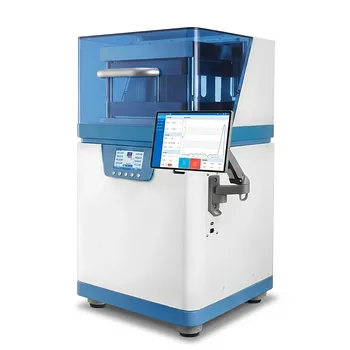
The high-pressure reactor is the foundational component of hydrothermal carbonization (HTC), acting as a sealed vessel that maintains water in a subcritical liquid state at temperatures far exceeding its normal boiling point. By facilitating a pressurized environment (typically between 1.38 and 4.83 MPa), the reactor enables the chemical decomposition of sawdust through dehydration and decarboxylation. This process effectively converts raw, low-energy biomass into a carbon-dense, coal-like material known as hydrochar.
The reactor’s primary function is to transform water from a simple solvent into a reactive chemical agent. This allows for the efficient carbonization of high-moisture sawdust without the massive energy expenditure required for traditional thermal drying.
Maintaining the Subcritical Water Environment
Sustaining Water in a Liquid State
In traditional heating, water evaporates at 100°C, but the HTC process requires temperatures between 180°C and 260°C. The high-pressure reactor prevents this phase change by maintaining high internal pressure, keeping the water in a subcritical state.
Enhancing Solvation Capacity
Under the high-pressure conditions generated within the reactor, the dielectric constant of water decreases significantly. This change allows water to behave like a non-polar solvent, which is essential for dissolving the complex organic structures found in sawdust.
Increasing the Ion Product
Pressure and temperature increases within the vessel lead to a higher ion product for water. This allows the water to act as an acid-base catalyst, triggering chemical reactions like hydrolysis without the need for added chemicals.
Catalyzing the Chemical Transformation of Sawdust
Initiating Hydrolysis and Decarboxylation
The reactor provides the controlled environment necessary for hydrolysis, where water breaks down the polysaccharides in sawdust into monosaccharides. Simultaneously, decarboxylation removes oxygen and carbon dioxide, which is critical for increasing the fuel's energy density.
Driving Carbonization and Polymerization
Once the initial breakdown occurs, the pressure promotes the condensation and polymerization of molecules. This leads to the formation of spherical, porous carbon structures that define the physical characteristics of high-quality hydrochar.
Removing Inorganic Impurities
The pressurized liquid environment allows for the "washing" of the biomass at a molecular level. This facilitates the removal of alkali metal impurities, which are often problematic in combustion, resulting in a cleaner-burning solid fuel.
Understanding the Trade-offs
Equipment Costs and Complexity
Operating at high pressures requires specialized, thick-walled alloys capable of withstanding autogenous pressure and corrosive environments. The initial capital expenditure for these reactors is significantly higher than that of atmospheric pressure drying systems.
Safety and Maintenance Requirements
High-pressure systems demand rigorous safety protocols and frequent inspections of seals and valves. Any failure in pressure containment can lead to hazardous energy releases, making operational expertise a necessity.
Energy Density vs. Mass Yield
While higher pressures and temperatures within the reactor produce a hydrochar with a higher heating value, they also lead to lower overall mass yields. Finding the optimal pressure point is a constant balancing act between product quality and total output.
Applying This to Your Project
Making the Right Choice for Your Goal
- If your primary focus is producing high-energy solid fuel: Use the reactor to maintain temperatures near 240°C to maximize decarboxylation and carbon density.
- If your primary focus is processing very wet sawdust: Leverage the reactor's ability to handle high-moisture feedstocks directly, bypassing the need for expensive pre-drying stages.
- If your primary focus is creating materials for heavy metal adsorption: Focus on moderate pressure settings (around 2 MPa) to preserve the oxygen-rich functional groups and porous structures on the hydrochar surface.
By mastering the pressurized environment within the reactor, you can precisely control the chemical evolution of sawdust into a high-value carbon resource.
Summary Table:
| Key Role | Mechanism | Benefit for Sawdust Conversion |
|---|---|---|
| Maintain Subcritical State | High pressure (1.38–4.83 MPa) | Keeps water liquid at 180°C–260°C for reaction. |
| Catalytic Transformation | Increased ion product | Triggers hydrolysis/decarboxylation without extra chemicals. |
| Energy Densification | Thermal decomposition | Removes oxygen and CO2 to create coal-like hydrochar. |
| Impurity Removal | Molecular "washing" | Flushes out alkali metals for cleaner-burning fuel. |
| Structural Control | Polymerization | Promotes the formation of porous, high-quality carbon. |
Elevate Your Bioenergy Research with KINTEK
Maximize the efficiency of your hydrothermal carbonization projects with KINTEK’s precision engineering. Whether you are converting sawdust into high-energy hydrochar or developing advanced adsorbents, our high-temperature high-pressure reactors and autoclaves provide the safety, durability, and precise control required for subcritical water environments.
From crushing and milling systems for biomass preparation to high-performance hydrothermal vessels and PTFE-lined crucibles, KINTEK offers a comprehensive range of laboratory equipment tailored for renewable energy innovation.
Ready to optimize your carbonization process? Contact our experts today to find the ideal reactor solution!
References
- Shengshu Yang, Zhengang Liu. Catalytic Pyrolysis of Hydrochar by Calcined Eggshells for Bioenergy Production: Improved Thermo-Kinetic Studies and Reduced Pollutant Emissions. DOI: 10.3390/catal13091297
This article is also based on technical information from Kintek Solution Knowledge Base .
Related Products
- Customizable Laboratory High Temperature High Pressure Reactors for Diverse Scientific Applications
- Customizable High Pressure Reactors for Advanced Scientific and Industrial Applications
- Stainless High Pressure Autoclave Reactor Laboratory Pressure Reactor
- Visual High-Pressure Reactor for In-Situ Observation
- Mini SS High Pressure Autoclave Reactor for Laboratory Use
People Also Ask
- How do high-pressure and high-temperature reactors ensure the effective treatment of lignocellulosic wastewater in WAO?
- What equipment is required for high-pressure high-temperature reactions? Master Extreme Chemistry Safely
- How do you control high pressure in a reactor? A Guide to Safe & Stable Operation
- How does initial oxygen pressure affect the wet oxidation of pharmaceutical sludge? Master Your Oxidation Depth
- Why is argon better than nitrogen for inert atmosphere? Ensure Absolute Reactivity & Stability