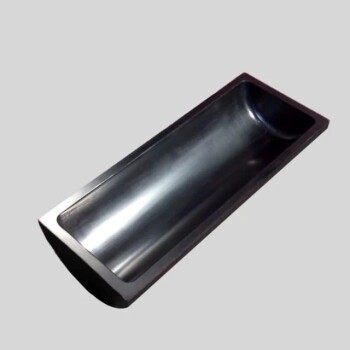
High-purity quartz tube reactors serve as the primary containment vessel for chlorination roasting, providing a stable environment capable of withstanding temperatures exceeding 1000°C. They are specifically chosen for this process because they maintain chemical inertness in the presence of highly corrosive chlorine-containing gases, ensuring that the reactor itself does not interfere with the chemical transformation of industrial dust.
The high-purity quartz tube acts as an essential, non-reactive barrier that facilitates high-temperature chemical extraction while protecting sample integrity from metallic contamination and corrosive degradation.
The Structural Role of Quartz in Harsh Environments
Providing High-Temperature Thermal Stability
Chlorination roasting typically requires temperatures that can reach or exceed 1000°C to effectively volatilize metal chlorides. High-purity quartz possesses excellent thermal stability and thermal shock resistance, allowing it to maintain structural integrity during rapid heating and cooling cycles.
Ensuring Chemical Inertness Against Corrosives
The chlorination process involves the introduction of aggressive reagents like chlorine gas or hydrogen chloride. Quartz is uniquely suited for this because it is chemically inert to most acids and halogens, preventing the vessel from reacting with the corrosive atmosphere and contaminating the dust sample.
Acting as a Controlled Atmosphere Seal
To successfully recover metals from industrial dust, the internal environment must be strictly controlled to exclude oxygen or moisture. The quartz tube provides a sealed reaction space that allows researchers to maintain a precise chemical atmosphere, ensuring that volatile components are discharged or collected without outside interference.
Enhancing Process Observation and Heat Transfer
Real-time Visualization of Reactions
Industrial dust undergoes physical changes during roasting, such as color shifts or changes in fluidization state. The high transparency of the quartz tube allows researchers to monitor these transitions in real-time, providing immediate feedback on the progress of the chlorination reaction.
Facilitating Uniform Heat Exchange
The quartz tube acts as a thermal exchange interface between the external heating elements and the industrial dust inside. This ensures that heat is transferred uniformly to the sample, which is critical for achieving consistent reaction kinetics throughout the entire volume of the dust.
Prevention of Metallic Impurities
Industrial dust analysis often focuses on the recovery of trace valuable metals. Because the tube is made of high-purity silica rather than metal alloys, it eliminates the risk of metallic impurity migration from the reactor walls into the sample, which would otherwise skew the experimental data.
Understanding the Trade-offs
Mechanical Fragility and Handling
While quartz is thermally robust, it is mechanically brittle compared to metallic reactors. Users must exercise extreme caution during assembly and disassembly to avoid cracking or fracturing the tube, which can lead to hazardous gas leaks.
Temperature Limitations and Softening
Although quartz can operate at high temperatures, it has a clear softening point (typically around 1100°C-1200°C). Exceeding these limits for prolonged periods can lead to deformation or "sagging" of the tube, potentially compromising the seal of the reactor system.
Devitrification and Surface Contamination
Over time, exposure to certain alkaline components in industrial dust can cause devitrification, where the quartz transitions from a glassy state to a crystalline state. This process makes the tube cloudy and brittle, eventually necessitating replacement to ensure safety and transparency.
Applying Quartz Reactors to Your Research Goals
Choosing the right reactor configuration depends on whether your priority is the purity of the yield or the ability to monitor the reaction kinetics in real-time.
- If your primary focus is High-Purity Metal Recovery: Utilize high-purity quartz to eliminate the risk of cross-contamination from the vessel walls, ensuring the recovered chlorides are free of external metallic elements.
- If your primary focus is Kinetic Observation: Leverage the transparency of the quartz tube to document color changes and sample morphology transitions during the roasting stages.
- If your primary focus is Atmospheric Precision: Ensure the quartz tube is paired with high-quality ground-glass or vacuum-flange fittings to maintain the integrity of the chlorine-rich environment.
By integrating a high-purity quartz tube into your chlorination roasting setup, you ensure a clean, controlled, and observable environment for the complex task of extracting value from industrial dust.
Summary Table:
| Feature | Benefit in Chlorination Roasting | Impact on Research |
|---|---|---|
| Chemical Inertness | Resists aggressive Cl₂ and HCl gases | Prevents vessel corrosion and sample contamination |
| Thermal Stability | Withstands temperatures exceeding 1000°C | Ensures structural integrity during metal volatilization |
| High Transparency | Real-time reaction visualization | Allows monitoring of color shifts and fluidization states |
| High Purity (SiO₂) | Zero metallic impurity migration | Guarantees high-accuracy data for trace metal recovery |
| Sealed Environment | Precise atmosphere control | Protects sample integrity from oxygen and moisture |
Elevate Your Material Research with KINTEK
Achieve unparalleled precision in your chlorination roasting and high-temperature experiments. KINTEK specializes in advanced laboratory solutions, providing high-performance tube furnaces (CVD, PECVD, vacuum) and high-purity quartz reactors specifically engineered for corrosive and high-heat environments.
Our extensive portfolio also features crushing and milling systems, hydraulic presses, and high-pressure autoclaves, alongside essential consumables like ceramics and crucibles. Whether you are recovering valuable metals from industrial dust or performing complex chemical synthesis, KINTEK delivers the reliability and purity your lab demands.
Ready to optimize your thermal processes? Contact our experts today to find the perfect equipment for your application!
References
- D. I. Bludova, S. V. Mamyachenkov. Zinc extraction during recycling of electric arc furnace dust by chlorine-containing polymer wastes. DOI: 10.17580/nfm.2023.02.05
This article is also based on technical information from Kintek Solution Knowledge Base .
Related Products
- Laboratory Rapid Thermal Processing (RTP) Quartz Tube Furnace
- 1200℃ Split Tube Furnace with Quartz Tube Laboratory Tubular Furnace
- Visual High-Pressure Reactor for In-Situ Observation
- Customer Made Versatile CVD Tube Furnace Chemical Vapor Deposition Chamber System Equipment
- Multi Heating Zones CVD Tube Furnace Machine Chemical Vapor Deposition Chamber System Equipment
People Also Ask
- What technical advantages does an RTP tube furnace offer for photoelectrodes? Achieve Precision & High Phase Purity
- How does a quartz tube furnace facilitate the synthesis of rGO? Optimize Your Cathode Matrix with Precise Pyrolysis
- What is the temperature of a quartz tube furnace? Master the Limits for Safe, High-Temp Operation
- What are the advantages of using an electric heating furnace with a quartz tube for liquid bismuth corrosion control?
- What is the maximum temperature for a quartz tube furnace? Key Limits for Safe & Efficient Operation