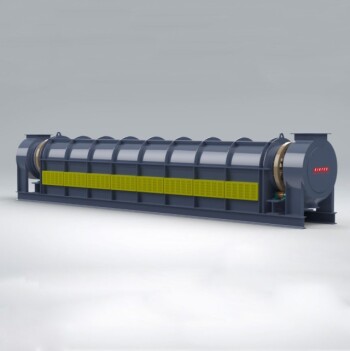
Rapid Thermal Processing (RTP) tube furnaces provide a transformative advantage for photoelectrode fabrication through ultra-fast thermal cycling and precise atmospheric isolation. These systems allow researchers to reach target temperatures in seconds, minimizing the formation of unwanted intermediate phases and suppressing deleterious element diffusion at material interfaces. By decoupling thermal history from processing temperature, RTP ensures high-purity absorber layers with optimized grain orientation and superior charge-carrier dynamics.
Core Takeaway: The primary technical advantage of RTP tube furnaces lies in their ability to provide precise kinetic control over chemical reactions and crystallization. This allows for the synthesis of high-density, low-defect photoelectrodes while preventing the interfacial degradation typical of conventional, slow-heating furnaces.
Kinetic Control and Phase Management
Minimizing Secondary Phase Formation
In the preparation of complex materials like Copper Zinc Tin Sulfide (CZTS), slow heating rates often lead to the formation of undesirable intermediate phases. RTP furnaces bypass these kinetic bottlenecks by utilizing rapid temperature ramps that transition the material directly to the desired crystalline state. This results in an absorber layer with significantly higher phase purity and lower defect density.
Accelerated Deposition and Evaporation
For materials such as Sb2Se3, RTP systems allow raw materials to reach evaporation temperatures almost instantaneously. This facilitates rapid thin-film deposition, which reduces the overall thermal exposure of the substrate. Such speed is critical for maintaining the integrity of the underlying conductive layers while ensuring the photoactive material forms correctly.
Precise Sintering Control
Traditional furnaces require hours for sintering, which can lead to grain overgrowth or thermal degradation. RTP reduces sintering time to seconds, providing a brief thermal history that preserves the structural integrity of high-capacity materials. This "flash" processing is essential for achieving the specific nanostructures required for high-efficiency charge separation.
Structural and Interfacial Integrity
Suppressing Deleterious Interfacial Diffusion
In multi-layer photoelectrodes, long-term heating often causes cross-contamination and the diffusion of ions across interfaces. RTP’s brief processing window prevents excessive diffusion, avoiding the formation of inactive interfacial phases that typically hinder charge transport. This ensures that the junction between the light harvester and the charge collector remains chemically sharp and electronically active.
Enhancing Grain Orientation and Density
The rapid energy input of an RTP furnace allows for more effective control over the nucleation and growth orientation of crystals. This results in thin films with higher density and preferential grain alignment. For photoelectrodes, well-oriented grains provide a direct pathway for photogenerated carriers, significantly reducing recombination losses.
Uniformity through Advanced Geometry
The cylindrical design of a tube furnace, combined with RTP heating elements, ensures a highly uniform temperature profile across the sample. Advanced systems with multiple, individually controlled heating zones can even create precise temperature gradients. This uniformity is vital for producing large-area photoelectrodes with consistent performance across the entire surface.
Atmospheric Precision and Purity
Oxygen-Free Sulfurization and Selenization
RTP tube furnaces feature sophisticated argon gas circulation and exhaust systems to maintain a strictly controlled environment. This allows for sulfurization or selenization in an oxygen-free atmosphere, which is critical for preventing oxide impurities. High-purity environments directly correlate to improved carrier lifetimes and higher open-circuit voltages in the final device.
Efficient Gas Diffusion and Consumption
The high-speed processing of RTP systems, when combined with optimized gas flow, ensures that reactive gases interact efficiently with the film surface. This reduces total gas consumption compared to conventional static processes. The result is a more cost-effective and controlled chemical environment for sensitive thin-film growth.
Understanding the Trade-offs
Thermal Stress and Substrate Fragility
The most significant challenge with RTP is the induced thermal stress caused by rapid expansion and contraction. Brittle substrates or materials with mismatched thermal expansion coefficients may crack or delaminate during the fast cooling phase. Careful calibration of the cooling ramp is often required to balance throughput with mechanical stability.
System Complexity and Throughput Limits
RTP tube furnaces are technically more complex than standard muffle or tube furnaces, requiring advanced PID controllers and high-power heating elements. While they offer superior speed per cycle, they are often designed for batch processing of single or small groups of samples. For industrial-scale continuous production, the integration of RTP requires specialized material handling systems.
How to Apply RTP to Your Photoelectrode Project
Making the Right Choice for Your Goal
- If your primary focus is phase purity in complex sulfides: Utilize the maximum heating rate to bypass low-temperature intermediate phases.
- If your primary focus is interfacial engineering: Minimize the "hold time" at peak temperature to prevent cross-diffusion between the absorber and the charge-transport layer.
- If your primary focus is grain alignment: Experiment with rapid cooling rates to "freeze" the desired crystal orientation immediately after high-temperature annealing.
- If your primary focus is substrate protection: Use a carrier plate with high thermal mass to buffer the thermal shock while still benefiting from the fast ambient heating.
By leveraging the kinetic advantages of Rapid Thermal Processing, researchers can move beyond the limitations of equilibrium thermodynamics to create photoelectrodes with unprecedented electronic quality and structural precision.
Summary Table:
| Technical Advantage | Mechanism of Action | Impact on Photoelectrode Performance |
|---|---|---|
| Phase Management | Ultra-fast heating ramps | Bypasses intermediate phases; ensures high phase purity. |
| Interfacial Integrity | Brief processing window | Suppresses deleterious ion diffusion and cross-contamination. |
| Structural Quality | Kinetic nucleation control | Improves grain orientation and density for better charge transport. |
| Atmospheric Purity | O2-free gas circulation | Prevents oxide impurities and extends charge carrier lifetimes. |
Elevate Your Thin-Film Research with KINTEK Precision
Unlock the full potential of your photoelectrode fabrication with KINTEK’s advanced thermal solutions. Whether you are aiming for precise phase control in CZTS or suppressing diffusion in complex multi-layer junctions, our Rapid Thermal Processing (RTP) tube furnaces provide the kinetic precision your research demands.
Why choose KINTEK? As specialists in laboratory equipment, we offer a comprehensive portfolio including:
- High-Temperature Furnaces: Muffle, tube, vacuum, CVD, PECVD, and atmosphere-controlled systems.
- Material Preparation: Hydraulic presses (pellet, hot, isostatic), crushing/milling systems, and high-purity crucibles.
- Specialized Tools: High-pressure reactors, electrolytic cells, and battery research consumables.
Don't let thermal lag or interfacial degradation limit your efficiency. Contact KINTEK today to discuss how our customized RTP systems and high-purity laboratory consumables can accelerate your breakthroughs.
Contact Our Technical Experts Today
References
- Hongzheng Dong, Zhigang Zou. Potential window alignment regulating ion transfer in faradaic junctions for efficient photoelectrocatalysis. DOI: 10.1038/s41467-023-43916-6
This article is also based on technical information from Kintek Solution Knowledge Base .
Related Products
- Laboratory Rapid Thermal Processing (RTP) Quartz Tube Furnace
- Rotary Tube Furnace Split Multi Heating Zone Rotating Tube Furnace
- Laboratory Vacuum Tilt Rotary Tube Furnace Rotating Tube Furnace
- Vacuum Sealed Continuous Working Rotary Tube Furnace Rotating Tube Furnace
- Laboratory High Pressure Vacuum Tube Furnace
People Also Ask
- How does a quartz tube furnace facilitate the synthesis of rGO? Optimize Your Cathode Matrix with Precise Pyrolysis
- What is the temperature of a quartz tube furnace? Master the Limits for Safe, High-Temp Operation
- What are the advantages of using an electric heating furnace with a quartz tube for liquid bismuth corrosion control?
- What is the maximum temperature for a quartz tube furnace? Key Limits for Safe & Efficient Operation
- What role does a quartz tube furnace play in the post-processing of gold films? Optimize Nanostructures for SERS