A high-vacuum turbomolecular pump acts as the critical gatekeeper of purity in Atomic Layer Deposition (ALD). By maintaining an extremely low base pressure—typically around $10^{-5}$ mbar—it ensures that chemical reactions occur strictly on the substrate surface rather than in the open volume of the chamber. The system’s ability to rapidly evacuate residual precursors and byproducts between reaction pulses is the primary mechanism for preventing contamination and guaranteeing the structural integrity of the coating.
The turbomolecular pump prevents gas-phase mixing of precursors by ensuring rapid, total evacuation between cycles. This creates a strictly surface-controlled reaction environment, which is the defining requirement for producing defect-free, high-density ALD films.
The Mechanics of Reaction Control
Achieving Deep Vacuum
The primary function of the turbomolecular pump is to establish a high-vacuum environment before the process begins.
It drives the reactor pressure down to approximately $10^{-5}$ mbar, removing atmospheric contaminants that could interfere with the deposition.
This creates a pristine "canvas" for the chemical process, ensuring the substrate is the only active site for the reaction.
Managing the Sequential Cycle
ALD relies on a distinct, multi-step cycle: precursor pulse, purge, reactant pulse, and purge.
The pump must rapidly clear the chamber of the first precursor before the second reactant is introduced.
This rapid evacuation removes unreacted molecules and reaction byproducts, resetting the chamber for the next layer.
Preventing Gas-Phase Reactions
The most critical role of the pump is preventing "gas-phase contact" between precursors and reactants.
If the pump fails to evacuate the chamber fully, residual gases from the first pulse will mix with the second pulse in the air, rather than on the surface.
This leads to chemical vapor deposition (CVD) effects, creating dust or powder rather than a clean atomic layer.
Impact on Coating Quality
Eliminating Pinhole Defects
By preventing gas-phase reactions, the pump ensures that film growth is perfectly conformal and self-limiting.
This strictly surface-based growth eliminates pinhole defects, which are microscopic gaps in the coating that compromise barrier performance.
A high-quality vacuum system ensures the film is continuous, even at extremely thin gauges.
Enhancing Film Density
The immediate removal of reaction byproducts prevents them from becoming trapped within the growing film lattice.
This results in a coating with superior material density.
High density is essential for applications requiring robust physical protection or electrical insulation.
Understanding the Trade-offs
Process Speed vs. Film Quality
While the turbomolecular pump ensures quality, the requirement for deep evacuation impacts process speed.
ALD is inherently slower than other deposition methods because the pump must fully purge the chamber after every single atomic layer.
Accelerating this cycle to save time risks incomplete evacuation, which immediately degrades film quality by allowing gas-phase mixing.
Making the Right Choice for Your Goal
To optimize your ALD system, you must balance the pump's evacuation speed with the ultimate pressure requirements of your specific coating.
- If your primary focus is Barrier Performance: Prioritize a pump system capable of maintaining the lowest possible base pressure ($10^{-5}$ mbar or lower) to minimize pinholes.
- If your primary focus is Throughput: Prioritize a pump with high pumping speed (conductance) to shorten the purge times between pulses without sacrificing evacuation completeness.
The quality of your vacuum system dictates the limit of your film's purity; in ALD, you cannot compromise on the pump without compromising the layer.
Summary Table:
| Feature | Role in ALD Quality | Impact on Coating |
|---|---|---|
| Base Pressure ($10^{-5}$ mbar) | Removes atmospheric contaminants | Ensures a pristine, reactive-only surface |
| Rapid Evacuation | Clears residual precursors & byproducts | Prevents gas-phase mixing (CVD effects) |
| Cyclic Purging | Resets chamber between pulses | Guarantees self-limiting, conformal growth |
| Contamination Control | Eliminates unreacted molecules | Results in high-density, defect-free films |
Elevate Your Thin-Film Precision with KINTEK
Don't let vacuum inefficiencies compromise your ALD coating integrity. KINTEK specializes in high-performance laboratory solutions, providing the high-vacuum systems and specialized tools necessary for advanced material research. From CVD and PECVD systems to high-pressure reactors and precision cooling, we empower researchers to achieve superior material density and defect-free results.
Ready to optimize your deposition process? Contact our technical experts today to discover how our comprehensive range of high-temperature furnaces and vacuum solutions can enhance your lab's capabilities.
References
- Véronique Cremers, Christophe Detavernier. Corrosion protection of Cu by atomic layer deposition. DOI: 10.1116/1.5116136
This article is also based on technical information from Kintek Solution Knowledge Base .
Related Products
- Laboratory High Pressure Vacuum Tube Furnace
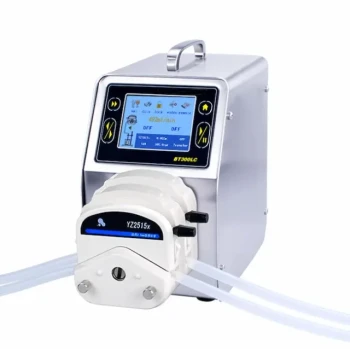
- Variable Speed Peristaltic Pump
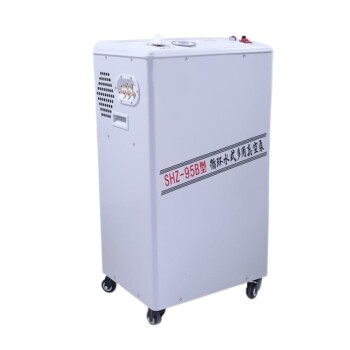
- Laboratory Vertical Water Circulating Vacuum Pump for Lab Use
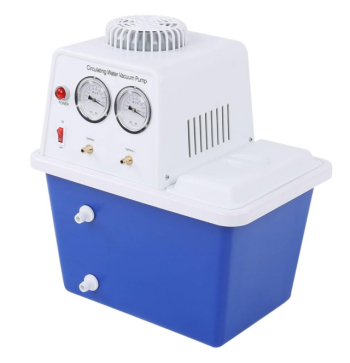
- Circulating Water Vacuum Pump for Laboratory and Industrial Use
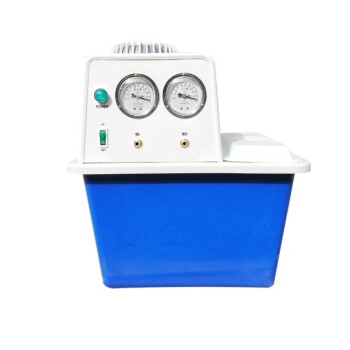
- Laboratory Benchtop Water Circulating Vacuum Pump for Lab Use
People Also Ask
- What role does a high-vacuum tube furnace play in synthesizing manganese nitride? Achieve Precise Phase & Stoichiometry.
- What is the primary function of a high-vacuum tube furnace in CVD synthesis of Sb-doped Bi2Se3? Precision Growth Control
- What is the role of a high-vacuum tube furnace in preparing Co3S4@NiS2/C composite materials? Expert Synthesis Insights
- Role of High-Pressure Tube Furnace in Ru/OMC Synthesis: Achieve Precise Reduction & Nanostructure Control
- What are the primary functions of a high-pressure tube furnace? Expert Guide to MWCNT/Metal Oxide Synthesis