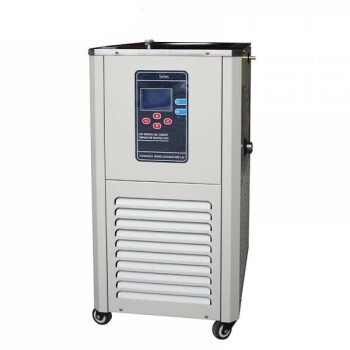
The hydrothermal reactor serves as the critical control vessel that enables the synthesis of high-quality porous hydroxyapatite (HA) by maintaining a sealed, high-pressure environment. By allowing aqueous solutions to react at temperatures significantly above their atmospheric boiling points, the reactor facilitates precise manipulation of the material's phase composition, crystal growth, and dopant integration.
Core Takeaway The reactor’s primary function is to create a subcritical or near-supercritical aqueous state that enhances precursor solubility and reaction kinetics. This controlled environment ensures the reproducible formation of porous structures with high specific surface areas and enables the stable doping of active agents, such as molybdate anions, into the crystal lattice.
Creating the Optimal Reaction Environment
Exceeding Atmospheric Limits
The fundamental role of the reactor is to provide a high-pressure, sealed physical environment. This allows phosphate aqueous solutions to reach temperatures far exceeding their normal atmospheric boiling point without evaporating.
Achieving the Subcritical State
By raising temperature and pressure simultaneously, the reactor brings the reaction liquid into a subcritical or near-supercritical state. This unique physical state significantly enhances the solubility of raw materials and accelerates reaction kinetics, which is impossible to achieve in open-vessel synthesis.
Driving Dissolution and Recrystallization
The constant high-temperature and high-pressure environment promotes a continuous cycle of dissolution and recrystallization of the raw materials. This ensures that the reaction proceeds in an equilibrium state, which is essential for uniform material synthesis.
Controlling Structural and Chemical Properties
Regulating Phase Composition
The reactor allows researchers to strictly regulate internal conditions. By adjusting these parameters, you can precisely control the phase composition of the final product, ensuring the hydroxyapatite forms correctly without unwanted secondary phases.
Evolving the Pore Structure
The reactor guides the self-assembly of hydroxyapatite crystals. This control over the "evolution" of the structure is what allows for the formation of microporous and mesoporous architectures, resulting in materials with high specific surface areas necessary for catalysis.
Facilitating Stable Doping
A critical function of the reactor is promoting the doping of molybdate anions into the hydroxyapatite lattice. The high-pressure environment drives this spontaneous physicochemical process, ensuring the dopants are stably integrated rather than just physically mixed, which directly enhances heterogeneous catalytic activity.
Ensuring Reproducibility
Because the system is closed and the physical environment is strictly controlled, the reactor greatly improves reaction reproducibility. This ensures that the high-quality properties of the synthesized catalyst can be duplicated consistently across different batches.
Critical Operational Considerations
Sensitivity to Parameter Changes
While the reactor allows for control, the quality of the HA is highly sensitive to temperature and pressure adjustments. A slight deviation in these settings can alter the crystallization pathway, leading to undesirable phase compositions or poor morphology.
Balancing Exposure Time
The reactor does not produce instant results; it requires precise management of exposure duration. Inadequate exposure time in the high-pressure environment may result in incomplete doping or insufficient pore development, while excessive exposure could alter the crystal structure beyond the desired state.
Making the Right Choice for Your Goal
To maximize the utility of a hydrothermal reactor for HA synthesis, you must align your operational parameters with your specific material requirements.
- If your primary focus is Catalytic Activity: Prioritize precise temperature control to maximize the doping efficiency of molybdate anions into the lattice, as this dictates the material's chemical performance.
- If your primary focus is Adsorption Capacity: Focus on regulating the pressure and equilibrium state to guide the self-assembly of a high-surface-area mesoporous structure, which enhances ion exchange capabilities.
The hydrothermal reactor is not merely a vessel, but a precision tool that forces aqueous solutions into a physical state where advanced crystal engineering and stable chemical doping become possible.
Summary Table:
| Feature | Role of the Hydrothermal Reactor | Impact on HA Quality |
|---|---|---|
| Environment | Maintains subcritical/supercritical high-pressure states | Increases precursor solubility and reaction kinetics |
| Structural Control | Regulates dissolution and recrystallization cycles | Ensures uniform phase composition and pore formation |
| Chemical Doping | Facilitates stable integration of ions (e.g., molybdate) | Enhances catalytic activity and material stability |
| Consistency | Provides a sealed, controlled physical system | Delivers high reproducibility across production batches |
Elevate Your Material Research with KINTEK
Precision in hydrothermal synthesis starts with reliable equipment. KINTEK specializes in providing high-performance laboratory solutions designed to meet the rigorous demands of advanced material engineering.
Whether you are synthesizing porous hydroxyapatite, developing next-generation catalysts, or conducting battery research, our comprehensive range of high-temperature high-pressure reactors and autoclaves ensures the precise temperature and pressure control you need for reproducible results.
Our value to your laboratory includes:
- Expertly Engineered Reactors: Perfect for subcritical and supercritical synthesis.
- Complete Lab Ecosystem: From muffle furnaces and crushing systems to hydraulic presses and cooling solutions.
- Specialized Consumables: High-quality ceramics, crucibles, and PTFE products to support your most sensitive experiments.
Ready to achieve superior crystal engineering and stable chemical doping? Contact KINTEK today to discuss your equipment needs!
References
- Aleksandra Paveleva, D. N. Trunov. Research station for tomographic and radiographic studies of large objects and the possibilities of its application. DOI: 10.21175/rad.abstr.book.2023.27.3
This article is also based on technical information from Kintek Solution Knowledge Base .
Related Products
- High Pressure Laboratory Autoclave Reactor for Hydrothermal Synthesis
- Customizable Laboratory High Temperature High Pressure Reactors for Diverse Scientific Applications
- Custom PTFE Teflon Parts Manufacturer for Hydrothermal Synthesis Reactor Polytetrafluoroethylene Carbon Paper and Carbon Cloth Nano-growth
- Electric Rotary Kiln Small Rotary Furnace Biomass Pyrolysis Plant
- Customizable High Pressure Reactors for Advanced Scientific and Industrial Applications
People Also Ask
- What role does a high-pressure reactor (autoclave) play in the synthesis of NiCuFe-LDH? Master Hydrothermal Growth
- What Role Does a High-Pressure Reactor or Autoclave Play in HA Catalyst Synthesis? Achieve High Surface Area Materials
- What equipment is required for hydrothermal synthesis of Ga0.25Zn4.67S5.08? Optimize Your Semiconductor Production
- What is the function of a high-pressure reactor in the hydrothermal synthesis of boehmite? Expert Process Insights
- What role does an autoclave play in the synthesis of MnO2 nanofibers? Mastering Hydrothermal Growth