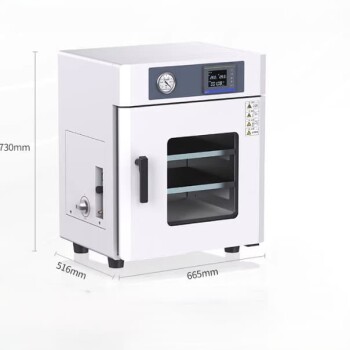
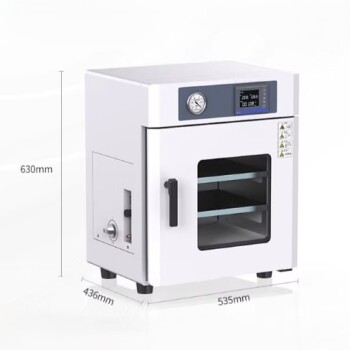
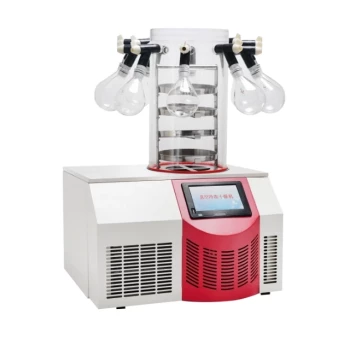
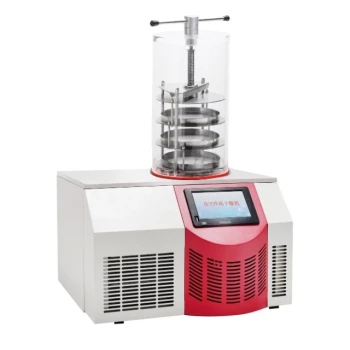
The laboratory drying oven serves as the critical stabilization agent in the transition from wet chemistry to thermal processing. It provides a constant-temperature environment, typically around 80°C, to systematically remove residual moisture and volatile organic solvents from washed zinc oxide precipitates. This transforms unstable wet gels or filter cakes into dry powder intermediates, making them chemically physically ready for the high-temperature calcination stage.
Core Takeaway The drying oven acts as the bridge between precipitation and calcination. Its primary function is to eliminate physically adsorbed water and solvents to prevent structural defects, ensuring the precursor is dry and stable enough to withstand the intense heat of final synthesis without cracking or rapid vaporization damage.
The Mechanism of Precursor Stabilization
Controlled Thermal Environment
The drying oven creates a constant-temperature environment, often set at 80°C for this specific application.
Reliable thermal consistency is required over an extended period. This ensures that the drying process permeates the entire sample volume, rather than just desiccating the surface.
Removal of Volatiles
The primary technical goal is the removal of residual moisture and volatile organic solvents.
These elements are left over from the washing and precipitation phases. If allowed to remain, they can interfere with the chemical purity of the final nanoparticle.
Phase Transformation
The oven facilitates a physical phase change in the material.
It converts the precursor from a wet gel or filter cake into a stable dry powder intermediate. This solid-state form is the necessary baseline for any subsequent high-temperature treatment.
Why Thorough Drying Matters
Prevention of Structural Defects
Thorough drying is not just about removing weight; it is about preserving structural integrity.
If water remains in the precursor during high-temperature sintering or calcination, it will vaporize rapidly. This rapid expansion can cause internal pores or cracking, compromising the final material's strength and density.
Preserving Sintering Activity
Proper drying maintains the potential of the powder for future processing.
By eliminating moisture in a controlled manner, the oven ensures the precursor retains its sintering activity. This allows for better densification and particle formation during the final heating stages.
Understanding the Trade-offs
The Risk of Agglomeration
While ovens are effective, they rely on heat evaporation, which introduces capillary forces.
As the solvent evaporates, surface tension can pull particles together. This frequently results in the formation of hard agglomerates, which can be difficult to break down later and may reduce the dispersibility of the final zinc oxide nanoparticles.
Potential for Rapid Dehydration Damage
If the temperature is too high or the drying too rapid, the precursor structure may suffer.
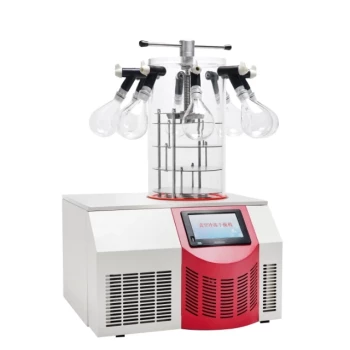
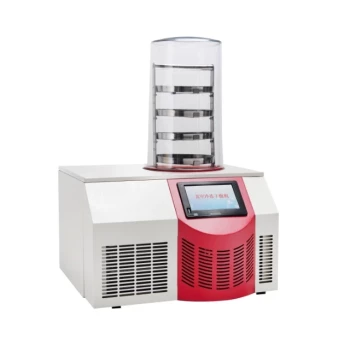
Rapid dehydration can collapse the delicate pore structure of the material. For highly sensitive precursors, a lower temperature (e.g., 40°C) or alternative methods like freeze-drying may be required to maintain a loose, porous structure.
Making the Right Choice for Your Goal
The drying oven is a standard tool, but your specific requirements should dictate how you use it.
- If your primary focus is standard synthesis efficiency: Use the oven at a constant 80°C to quickly convert wet precipitates into calcination-ready powder.
- If your primary focus is maximizing dispersibility: Monitor the precursor for hard agglomeration; if clumping is excessive, consider lowering the oven temperature to slow the drying rate or exploring freeze-drying alternatives.
By controlling the moisture removal process, you define the structural foundation of your final zinc oxide nanoparticles.
Summary Table:
| Stage | Process Function | Key Impact on ZnO Nanoparticles |
|---|---|---|
| Moisture Removal | Eliminates residual water & solvents | Prevents internal pores and cracking during calcination |
| Phase Change | Wet gel to dry powder intermediate | Prepares the chemical baseline for high-temperature treatment |
| Thermal Control | Constant 80°C environment | Ensures uniform desiccation and maintains sintering activity |
| Structural Prep | Capillary force management | Balances drying efficiency with the risk of hard agglomeration |
Elevate Your Nanomaterial Synthesis with KINTEK Precision
Don't let moisture compromise your material's integrity. From high-temperature muffle and tube furnaces for final calcination to precise laboratory drying ovens and freeze dryers for precursor stabilization, KINTEK provides the high-performance tools your research demands. Our comprehensive range of laboratory equipment and consumables, including ceramic crucibles and homogenizers, ensures consistent results from wet chemistry to final sintering.
Ready to optimize your drying and calcination workflows? Contact our technical experts today to discover how KINTEK’s advanced laboratory solutions can enhance your nanoparticle production efficiency and quality.
References
- Mengstu Etay Ashebir, Tesfakiros Woldu Gebreab. Structural, Optical, and Photocatalytic Activities of Ag-Doped and Mn-Doped ZnO Nanoparticles. DOI: 10.1155/2018/9425938
This article is also based on technical information from Kintek Solution Knowledge Base .
Related Products
- Laboratory Scientific Electric Heating Blast Drying Oven
- 56L Vertical Laboratory Vacuum Drying Oven
- 23L Laboratory Vacuum Drying Oven
- High Performance Laboratory Freeze Dryer
- High Performance Laboratory Freeze Dryer for Research and Development
People Also Ask
- How does a laboratory electric drying oven contribute to the formation of the initial coating? Expert Insights
- What role does a precision laboratory drying oven play in the synthesis of GO-PANI nanocomposites? Protect Material Integrity
- What is the necessity of using a laboratory drying oven when processing MoO3/GO composite nanopowders? Find out here.
- What is the role of a laboratory drying oven in cellulose citrate production? Ensure Material Stability & Purity
- Why is a laboratory drying oven essential for biomass liquefaction? Ensure Accurate Conversion Rate Calculations