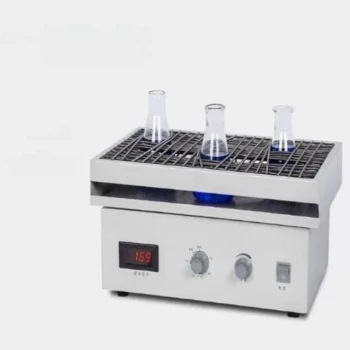
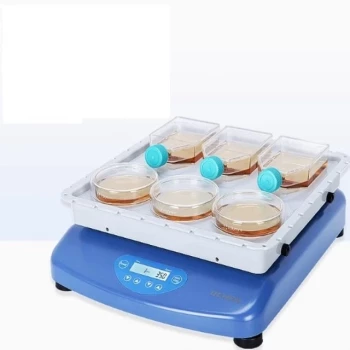
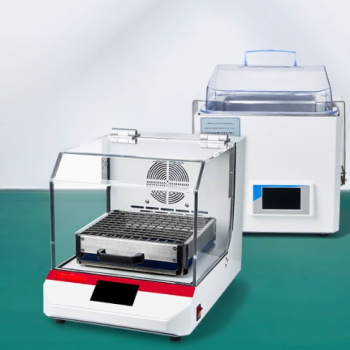
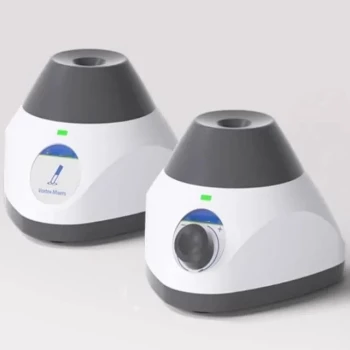
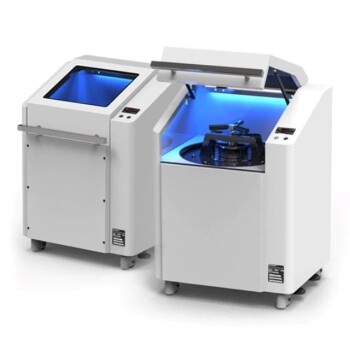
A laboratory shaker serves as the critical driver of mass transfer during the in-situ synthesis of Selenium-functionalized Polyphenylene Sulfide (Se/PPS) fabrics. It provides continuous mechanical assistance to agitate the reaction solution, forcing precursor ions to move beyond the fabric's surface and penetrate deep into the porous fiber structure. Without this mechanical energy, the synthesis would likely result in superficial coating rather than true internal functionalization.
By transforming a passive chemical bath into a dynamic environment, the laboratory shaker ensures that the functionalization process is not limited by natural diffusion rates. It guarantees that the selenium reaction occurs uniformly throughout the fiber matrix, resulting in high-density loading rather than patchy surface deposits.
The Mechanics of Diffusion and Penetration
To understand the necessity of the shaker, one must understand the barrier presented by the fabric itself. PPS fabric contains a complex, porous fiber structure that resists passive chemical entry.
Overcoming Structural Resistance
The porous nature of Polyphenylene Sulfide (PPS) fibers creates physical resistance to liquid penetration. Continuous mechanical agitation overcomes this resistance by physically pushing the reaction solution against and into the fiber boundaries.
Facilitating Active Transport
Left static, precursor ions rely solely on slow, natural diffusion to reach the inner surfaces of the fabric. The shaker promotes active diffusion and penetration, significantly increasing the rate at which ions enter the microstructure of the fibers.
Achieving Uniformity and Density
The ultimate goal of Se/PPS synthesis is to create a material with consistent properties across its entire surface and volume. The shaker is the primary variable controlling this consistency.
Ensuring Homogeneity
In a static solution, concentration gradients can form, leading to areas of high reaction and areas of low reaction. Agitation ensures the chemical composition remains constant around every fiber, ensuring the reaction occurs uniformly throughout the fabric.
Maximizing Selenium Loading
Performance usually correlates with how much selenium is successfully integrated into the PPS. By driving precursors deep into the pores, the shaker enables a high-density loading of selenium that is evenly distributed, rather than just coating the exterior.
Understanding the Risks of Inadequate Agitation
While the shaker is a simple tool, its misuse or omission is a common failure point in synthesis protocols.
The Pitfall of Static Synthesis
If the agitation is paused or insufficient, the "diffusion-limited" nature of the reaction takes over. This results in a fabric where the outer fibers are reacted, but the inner core remains strictly PPS, leading to poor overall performance.
Inconsistent Reaction Kinetics
Without constant mixing, local depletion of precursor ions occurs near the fabric surface. This slows down the reaction rate unpredictably, making it difficult to replicate successful batches or achieve the desired even loading.
Making the Right Choice for Your Synthesis
To optimize your Se/PPS fabric production, consider how the shaker aligns with your specific material requirements.
- If your primary focus is Durability: Ensure rigorous, continuous agitation to force deep penetration, preventing the selenium layer from easily flaking off the surface.
- If your primary focus is Consistency: Prioritize a shaker setting that maintains fluid motion without creating dead zones, ensuring every inch of fabric receives equal chemical exposure.
The laboratory shaker is not merely a mixing device; it is the mechanism that ensures functionalization reaches the core of the material.
Summary Table:
| Feature | Role of Shaker in Se/PPS Synthesis | Outcome |
|---|---|---|
| Mass Transfer | Overcomes structural resistance of porous PPS fibers | Deep internal penetration |
| Ion Distribution | Eliminates local concentration gradients | Uniform chemical homogeneity |
| Reaction Kinetics | Promotes active transport over passive diffusion | High-density selenium loading |
| Consistency | Prevents local depletion of precursor ions | Consistent, repeatable results |
Elevate Your Advanced Material Synthesis with KINTEK
Maximize the performance of your functionalized materials with precision-engineered laboratory solutions. KINTEK specializes in high-performance laboratory equipment designed to meet the rigorous demands of material science. From high-stability laboratory shakers and shakers that ensure uniform reaction kinetics to high-temperature furnaces, crushing systems, and electrolytic cells, we provide the tools necessary for deep-core functionalization.
Whether you are developing Selenium-functionalized fabrics, battery components, or high-pressure reactors, our comprehensive portfolio ensures your research is backed by reliability and innovation. Contact us today to optimize your lab's efficiency and discover how our advanced consumables and equipment can transform your synthesis outcomes.
References
- Hailong Li, Jianping Yang. Biomimetic mercury immobilization by selenium functionalized polyphenylene sulfide fabric. DOI: 10.1038/s41467-024-45486-7
This article is also based on technical information from Kintek Solution Knowledge Base .
Related Products
- Laboratory Multifunctional Small Speed-Adjustable Horizontal Mechanical Shaker for Lab
- Laboratory Vibratory Sieve Shaker Machine for Dry and Wet Three-Dimensional Sieving
- Laboratory Oscillating Orbital Shaker
- Shaking Incubators for Diverse Laboratory Applications
- Laboratory Vibratory Sieve Shaker Machine Slap Vibrating Sieve
People Also Ask
- How do static culture and shaking culture affect the morphology of BC? Optimize Lab Shaker Results
- What is the role of a laboratory shaker in silane sol preparation? Master Uniform Aramid Fabric Coating
- Why is a laboratory shaker required for continuous 24-hour catalyst treatment? Achieve Deep Uniform Impregnation
- What is the function of a laboratory shaker in evaluating Fe-C@C nanoparticles? Optimize Methylene Blue Adsorption
- How do laboratory shakers or stirrers influence the efficiency of hydrogen production during dark fermentation?