A PTFE-lined stainless steel autoclave acts as the essential reaction vessel for UIO-66 synthesis, enabling the creation of a "superheated" solvothermal environment. It hermetically seals the reaction mixture, allowing the solvent (typically DMF) to remain in a liquid state at temperatures that facilitate the dissolution of metal salts and organic ligands, while simultaneously preventing chemical contamination.
The Core Takeaway The autoclave serves a dual purpose: the stainless steel shell provides the mechanical strength to contain high autogenous pressure, while the PTFE liner ensures chemical inertness. This combination allows for the high-temperature crystallization necessary to produce UIO-66 nanocrystals with high structural integrity and uniform size, without introducing metallic impurities.
Creating the Solvothermal Environment
Maintaining Liquid State at High Temperatures
The primary function of the autoclave is to allow the reaction solvent, such as N,N-Dimethylformamide (DMF), to remain liquid at elevated synthesis temperatures (often around 120°C or higher).
In an open vessel, heating a solvent this high would cause it to boil away or evaporate. The sealed autoclave traps the vapor, keeping the solvent density high and ensuring the reaction medium stays liquid.
Generating Autogenous Pressure
As the temperature rises inside the sealed vessel, the vapor pressure of the solvent increases, creating "autogenous pressure."
This high-pressure environment significantly enhances the solubility of the reactants—specifically the zirconium salts and organic linkers used in UIO-66. By increasing solubility, the system lowers the energy barrier required for nucleation, facilitating the reaction.
The Critical Role of Materials
The Stainless Steel Shell: Mechanical Containment
The external stainless steel sleeve provides the necessary mechanical strength to withstand the internal pressures generated during the reaction.
Without this high-strength casing, the pressure generated by heating the solvent in a closed system could cause a vessel failure. It ensures the physical safety of the high-temperature process.
The PTFE Liner: Chemical Purity
The internal Polytetrafluoroethylene (PTFE) liner offers exceptional chemical inertness and corrosion resistance.
This is vital for UIO-66 synthesis because it prevents the corrosive precursors or solvents from reacting with the steel shell. Furthermore, it prevents metal ions (like iron or chromium) from the steel shell leaching into the solution, ensuring the final MOF crystals are pure and free of contamination.
Impact on Crystal Quality
Facilitating Uniform Growth
The high-temperature and high-pressure environment created by this equipment promotes controlled crystallization.
According to technical analysis, this specific environment is essential for producing nanocrystals with structural integrity. It allows for a consistent growth rate, resulting in UIO-66 particles with a uniform size distribution.
Enhancing Reactivity
The elevated temperatures accelerate the kinetics of the coordination reaction between the metal nodes and organic linkers.
Because the autoclave allows these temperatures to be reached without solvent loss, the reactants dissolve more completely and react more efficiently than they would under standard reflux conditions.
Understanding the Trade-offs
Temperature Limitations
While PTFE is highly chemically resistant, it has thermal limitations compared to the steel shell.
PTFE liners can soften or deform at extremely high temperatures (typically above 200°C–250°C). You must ensure your synthesis temperature does not exceed the deformation point of the specific liner you are using.
Safety and Pressure Management
The "closed system" nature of an autoclave introduces safety risks regarding over-pressurization.
If the filling factor (the volume of liquid relative to the vessel size) is too high, the expansion of the liquid upon heating can lead to dangerous pressure spikes. It is critical to calculate the correct filling ratio to leave headspace for vapor expansion.
Making the Right Choice for Your Goal
To optimize your UIO-66 synthesis, consider the following based on your specific objectives:
- If your primary focus is Crystal Purity: Ensure your PTFE liner is inspected for scratches or wear before use, as surface defects can trap contaminants or expose the underlying vessel.
- If your primary focus is Particle Uniformity: Maintain a consistent temperature profile; the autoclave's ability to hold heat is useless if the external oven fluctuates, as stable pressure relies on stable temperature.
Ultimately, the autoclave is not just a container; it is a thermodynamic tool that forces reactants to dissolve and crystallize under conditions impossible to achieve on a benchtop.
Summary Table:
| Component | Material | Primary Function in UIO-66 Synthesis |
|---|---|---|
| Outer Shell | Stainless Steel | Provides mechanical strength to contain high autogenous pressure. |
| Inner Liner | PTFE (Teflon) | Ensures chemical inertness and prevents metallic contamination. |
| Sealing Mechanism | Hermetic Seal | Maintains solvent in a liquid state at temperatures above boiling point. |
| Reaction Environment | Solvothermal | Enhances reactant solubility and facilitates uniform crystal growth. |
Elevate Your MOF Synthesis with KINTEK Precision
Precision in material science starts with the right equipment. KINTEK specializes in high-performance laboratory solutions, providing the high-temperature high-pressure reactors and autoclaves essential for advanced research like UIO-66 synthesis. Our PTFE-lined stainless steel autoclaves are engineered for durability, safety, and chemical purity, ensuring your nanocrystals achieve maximum structural integrity and uniformity.
From high-temperature furnaces and crushing systems to specialized PTFE products and ceramics, KINTEK is your partner in laboratory excellence. Don't let equipment limitations compromise your results.
Contact KINTEK today to find the perfect autoclave for your lab!
Related Products
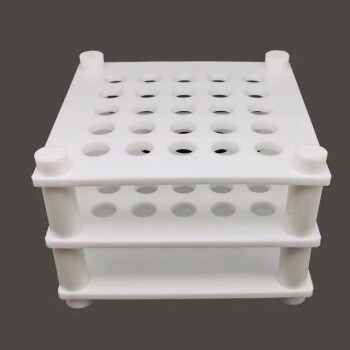
- Custom PTFE Teflon Parts Manufacturer for Centrifuge Tube Racks
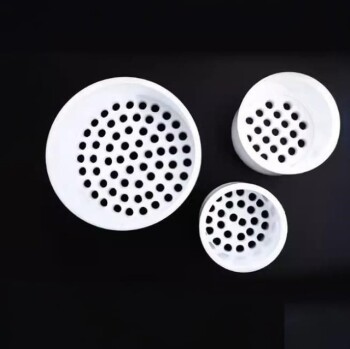
- Custom PTFE Teflon Parts Manufacturer for PTFE Mesh F4 Sieve
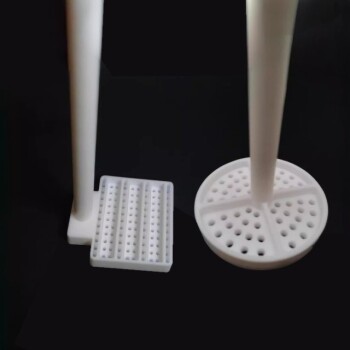
- Custom PTFE Teflon Parts Manufacturer Corrosion Resistant Cleaning Rack Flower Basket
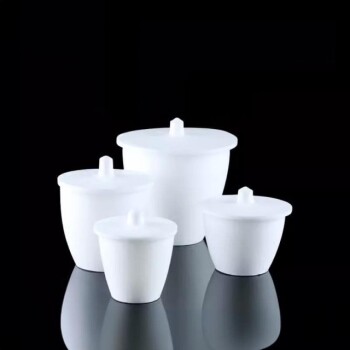
- Custom Machined and Molded PTFE Teflon Parts Manufacturer with PTFE Crucible and Lid
- Custom PTFE Teflon Parts Manufacturer for Cleaning Racks
People Also Ask
- Why is slender PTFE tubing necessary for flow control in multi-channel catalyst aging? Ensure Equal Gas Distribution
- Why are PTFE containers required for PCT leaching tests? Ensure Chemical Inertness and Analytical Precision
- Why are PTFE containers necessary for selective HF etching of MAX phases? Ensure Safe & Pure MXene Synthesis
- What role do PTFE containers play in trace metal detection? Ensure Analytical Precision in Photocatalysis Studies
- Why is a PTFE container required for acid leaching of silicon nanosheets? Ensure High Purity and Safety