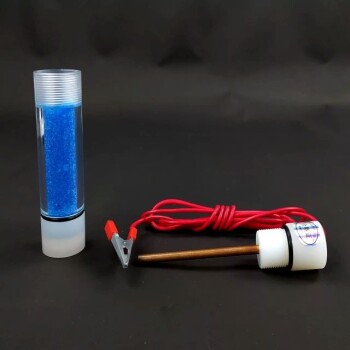
The Saturated Calomel Electrode (SCE) serves as the critical reference standard in the electrochemical noise monitoring of pipeline steel. It provides a fixed, non-fluctuating potential baseline that allows for the accurate measurement of potential noise generated by coupled working electrode pairs. By maintaining this stable "zero point," the SCE ensures that observed voltage changes are attributed to actual corrosion processes on the steel, rather than artifacts of the measurement system.
In electrochemical noise monitoring, the SCE acts as the anchor for signal fidelity. Its primary function is to guarantee that spontaneous potential fluctuations are correctly identified as specific surface events—such as micro-crack initiation or hydrogen bubble desorption—rather than drifts in the reference system itself.
The Mechanics of Accurate Detection
Establishing a Stable Baseline
To monitor pipeline steel effectively, you must measure minute changes in electrical potential. The SCE provides an extremely stable and known potential baseline essential for these measurements.
Because the potential of the SCE does not fluctuate with the current in the test circuit, it isolates the activity of the working electrodes. This allows researchers to determine the precise potential noise of the coupled steel samples without interference.
Deciphering Electrochemical Behaviors
The true value of the SCE lies in its ability to validate potential transient signals. These are short-lived voltage spikes that indicate specific physical changes on the metal surface.
With a stable SCE reference, you can confidently attribute these fluctuations to specific electrochemical behaviors. This includes identifying hydrogen bubble desorption or the initiation of micro-cracks within the pipeline steel. Without this reference stability, these critical early warning signs could be lost in the noise floor.
Why Reference Stability is Non-Negotiable
Eliminating System Drift
A common pitfall in electrochemical monitoring is "drift"—a slow, erroneous change in reported potential caused by the instrument rather than the sample.
The SCE specifically counters this issue. By acting as a robust reference, it ensures that long-term data trends reflect actual changes in the steel's condition, not the degradation of the monitoring equipment.
Ensuring Data Comparability
Reliable data requires context. The stability of the SCE allows for the precise measurement of corrosion potential across different time periods and experimental batches.
This consistency ensures that data collected today can be accurately compared to data collected months from now, which is vital for assessing the long-term integrity of pipeline infrastructure.
Making the Right Choice for Your Goal
To maximize the value of your electrochemical noise monitoring setup:
- If your primary focus is Fault Diagnosis: Rely on the SCE's stability to distinguish between sharp transients (indicating micro-cracks or bubbles) and general system noise.
- If your primary focus is Long-Term Integrity: Use the SCE to validate that slow shifts in potential are genuine indicators of changing corrosion rates or passivation zones, not reference drift.
The SCE is not just a passive tool; it is the active control that transforms raw electrical noise into actionable corrosion intelligence.
Summary Table:
| Feature | Role of SCE in Electrochemical Noise Monitoring |
|---|---|
| Primary Function | Acts as a stable, non-fluctuating potential reference baseline. |
| Signal Fidelity | Ensures potential transients represent real events (e.g., micro-cracks). |
| Data Integrity | Eliminates system drift to ensure long-term trend accuracy. |
| Key Measurements | Detects hydrogen bubble desorption and corrosion potential shifts. |
| System Stability | Isolates working electrode activity from measurement artifacts. |
Elevate Your Electrochemical Research with KINTEK
Precision in pipeline integrity and corrosion analysis starts with high-quality instrumentation. KINTEK specializes in advanced laboratory equipment, offering a comprehensive range of electrolytic cells and electrodes specifically designed for reliable electrochemical monitoring.
Whether you are studying micro-crack initiation or long-term corrosion rates, our high-performance tools ensure your data is accurate and reproducible. Beyond electrodes, we provide a complete ecosystem for materials science, including high-temperature furnaces, high-pressure reactors, and battery research consumables.
Ready to optimize your lab’s monitoring capabilities? Contact us today to find the perfect solution for your research needs!
References
- Andrés Carmona-Hernández, Ricardo Galván-Martínez. Electrochemical Noise Analysis of the X70 Pipeline Steel under Stress Conditions Using Symmetrical and Asymmetrical Electrode Systems. DOI: 10.3390/met12091545
This article is also based on technical information from Kintek Solution Knowledge Base .
Related Products
- Reference Electrode Calomel Silver Chloride Mercury Sulfate for Laboratory Use
- Copper Sulfate Reference Electrode for Laboratory Use
- Gold Disc Electrode
- Platinum Sheet Electrode for Laboratory and Industrial Applications
- Platinum Auxiliary Electrode for Laboratory Use
People Also Ask
- What is the function of a reference electrode? Master Precision in Three-Electrode Reactor Reconstruction
- What is the recommended maintenance for the filling solution of a reference electrode? A Guide to Stable & Accurate Readings
- Which electrode is used as a ground reference? Master the Key to Accurate Electrochemical Measurements
- What is the reference electrode in potentiometry? The Key to Stable & Accurate Measurements
- Which electrode is used as a reference? A Guide to Accurate Electrochemical Measurements