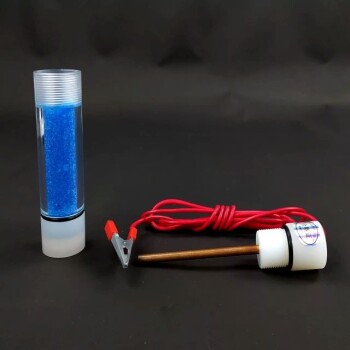
The Saturated Calomel Electrode (SCE) is utilized in microbial fuel cell (MFC) research primarily to establish a stable, well-defined potential reference. It acts as an anchor point for electrochemical workstations, enabling researchers to precisely set the potential of the working electrode during advanced testing procedures like cyclic voltammetry and delayed polarization.
The SCE ensures that the electrical environment surrounding the biofilm is strictly controlled. By providing a constant reference point, it guarantees that data regarding bacterial performance is accurate, reproducible, and comparable across different experimental studies.
The Necessity of Stability in MFC Research
Establishing a Fixed Baseline
In electrochemical research, measuring the voltage of a "working" electrode (where the biofilm resides) requires a comparison against a point that does not change. The SCE provides this stable and well-defined potential.
Without this stable reference, voltage readings would fluctuate based on external variables, making it impossible to distinguish between changes in bacterial activity and system noise.
Quantitative Control of the Biofilm
To understand how bacteria generate electricity, researchers must manipulate the environment they live in. The SCE allows for quantitative control over the biofilm environment.
By referencing the SCE, an electrochemical workstation can "clamp" the voltage at a specific level, forcing the bacteria to operate under precise conditions to observe their metabolic response.
Enabling Advanced Electrochemical Testing
Precision in Polarization and Cyclic Voltammetry
The primary reference highlights that SCEs are essential during specific analytical techniques, such as delayed polarization and cyclic voltammetry tests.
These tests involve ramping or stepping voltages up and down to map the system's performance. The SCE ensures that when a researcher sets a specific potential, the system achieves that exact value at the working electrode.
Ensuring Data Comparability
Scientific progress relies on the ability to compare results between different laboratories. Because the SCE provides a known standard, it allows for data comparability across different experimental sets.
A voltage reading taken against an SCE in one lab means exactly the same thing in another, eliminating ambiguity in reported results.
Understanding the Trade-offs
Equipment Dependency
The use of an SCE is intrinsically linked to the use of electrochemical workstations. It is a tool designed for rigorous analytical control rather than passive observation.
Consequently, utilizing an SCE implies a need for complex experimental setups. It moves the research from simple voltage monitoring to active electrochemical manipulation, requiring specialized equipment to interpret the data relative to the reference potential.
Making the Right Choice for Your Goal
If you are designing an experimental protocol for microbial fuel cells, consider how the SCE aligns with your objectives:
- If your primary focus is Mechanism Analysis: Use the SCE to perform cyclic voltammetry, ensuring you can precisely correlate bacterial activity with specific voltage potentials.
- If your primary focus is Reproducibility: Incorporate the SCE to standardize your measurements, making your data valid for comparison against broader scientific literature.
The Saturated Calomel Electrode is not just a measurement tool; it is the control mechanism that transforms a biological observation into a quantifiable electrochemical dataset.
Summary Table:
| Feature | Benefit in MFC Research |
|---|---|
| Stable Potential | Provides a fixed baseline to distinguish bacterial activity from system noise. |
| Quantitative Control | Allows workstations to 'clamp' voltage for precise biofilm environment manipulation. |
| Advanced Testing | Enables accurate cyclic voltammetry and delayed polarization analysis. |
| Data Comparability | Standardizes results for consistency across different labs and experimental sets. |
Elevate Your Electrochemical Research with KINTEK
Precision is the backbone of groundbreaking microbial fuel cell research. At KINTEK, we specialize in providing high-performance laboratory equipment and consumables designed for rigorous analytical control. From electrolytic cells and precision electrodes to advanced battery research tools and high-temperature furnaces, our solutions ensure your data is accurate and reproducible.
Whether you are performing complex mechanism analysis or scaling up your MFC prototypes, KINTEK offers the specialized tools you need, including:
- Comprehensive Electrode Selections for stable electrochemical measurements.
- High-Temperature & High-Pressure Reactors for diverse experimental conditions.
- Crushing, Milling, and Sieving Systems for material preparation.
- Premium Consumables like PTFE products, ceramics, and crucibles.
Ready to transform your biological observations into quantifiable datasets? Contact our technical experts today to find the perfect equipment for your laboratory.
References
- Youssef Naimi, İlhan Garip. Effects of Open Circuit Potential and Characterization of Electro-Active Biofilm for Microbial Fuel Cells using Compost Leachate. DOI: 10.20508/ijrer.v13i3.14059.g8795
This article is also based on technical information from Kintek Solution Knowledge Base .
Related Products
- Reference Electrode Calomel Silver Chloride Mercury Sulfate for Laboratory Use
- Copper Sulfate Reference Electrode for Laboratory Use
- Gold Disc Electrode
- Platinum Sheet Electrode for Laboratory and Industrial Applications
- Platinum Auxiliary Electrode for Laboratory Use
People Also Ask
- What is the function of a reference electrode? Master Precision in Three-Electrode Reactor Reconstruction
- What is the recommended maintenance for the filling solution of a reference electrode? A Guide to Stable & Accurate Readings
- Which electrode is used as a ground reference? Master the Key to Accurate Electrochemical Measurements
- What is the reference electrode in potentiometry? The Key to Stable & Accurate Measurements
- Which electrode is used as a reference? A Guide to Accurate Electrochemical Measurements